When I first started making shrimp fried rice, I learned pretty quickly that the rice itself is the unsung hero. If it’s too soft or clumpy, the whole dish feels off, like it’s melting into a mess rather than standing proud. I’ve come to believe that the secret is in the rice—using a day-old, long-grain type that’s been chilled, so it’s firm and a little dry, ready to soak up those savory flavors without turning mushy.
This dish isn’t just about quick cooking; it’s about texture. The way each grain stays separate yet tender, with just enough chew, makes all the difference. It’s comfort in every bite, but it’s also a little magic—how the rice’s crisp edges catch the heat, and the shrimp get that perfect pink glow, all in a single skillet. That’s when I know I’ve nailed it.
Focusing on the overlooked importance of the rice’s texture—how the specific type of rice and its cooking method can make or break the dish’s authenticity and mouthfeel, transforming a simple stir-fry into a culinary comfort that’s both nostalgic and reliably satisfying.
The overlooked power of rice
- Cooking this dish always reminds me of busy Sunday nights in my childhood kitchen, where the smell of garlic and shrimp would fill the air, making everything feel simpler.
- There’s a strange pride in perfecting my fried rice—seeing each grain stay separate, yet tender, feels like a small victory every time.
- This recipe is my go-to when I need comfort—something familiar, quick, and packed with flavor that hits just right.
- I used to think fried rice was just a quick fix, but now I see it as a canvas for experimenting with flavors and textures I love.
- Every time I make this, I feel a bit of relief—knowing I can throw together something satisfying with just a handful of ingredients.
The story behind this recipe
- Making shrimp fried rice always takes me back to a tiny hole-in-the-wall in a bustling Asian market. The smell of garlic and shrimp simmering, the sizzle of rice hitting the hot wok—those smells and sounds felt like a secret handshake, a language I was eager to learn. I started experimenting with my own version when I wanted a quick dinner that didn’t feel so rushed, but still had that homey, smoky aroma.
- One particular night, I was tired, but I threw together this dish almost on instinct. The rice was perfectly dry, each grain separate but tender, with a slight char that made the edges crispy. That moment of realizing I’d captured that elusive wok hei in my own kitchen made me appreciate the simple magic of good ingredients and a hot pan.
- heading: ‘The inspiration behind this dish’
Fascinating origins of shrimp fried rice
- Shrimp fried rice likely originated from Cantonese stir-fry traditions, where rice was often cooked daily and leftovers transformed with quick cooking techniques.
- The dish became a global comfort food, especially in Chinese-American cuisine, adapting local ingredients and tastes into a quick, satisfying meal.
- In many Asian cultures, fried rice is a way to repurpose cold, leftover rice—highlighting its practical roots in resourcefulness and frugality.
Ingredient breakdown: key components
- Shrimp: I like to use deveined, tail-on shrimp for a better grip and flavor. Their sweet, briny aroma when cooked makes everything special. If yours are frozen, thaw and pat dry—wet shrimp steam instead of sear.
- Rice: Day-old jasmine rice is my go-to. It’s fluffy, dry enough to stay separate, and has that fragrant aroma. If you only have fresh rice, spread it on a tray and let it cool for at least 30 minutes before stir-frying.
- Eggs: Lightly beaten eggs are quick to scramble and add a silky texture. For a richer flavor, add a splash of soy or sesame oil when cooking, but skip if you want a cleaner finish.
- Soy Sauce: I prefer dark soy for deep color and umami, but a dash of light soy can brighten the flavor. Go easy; too much will make the rice soggy and salty. Brighten with a squeeze of lemon if you like a tang.
- Garlic & Scallions: Fresh garlic and scallions are my flavor foundation. The garlic should become fragrant, golden, not burned. Scallions add a fresh bite—add them at the end for a bright, crisp finish.
- Oil: Use a high-smoke-point oil like peanut or vegetable. It makes the rice shimmer and crisps up the edges. If it smokes too much, your heat is too high—dial it down slightly.
- Optional: A dash of sesame oil at the end adds a nutty aroma, but use sparingly. It’s all about balancing that smoky, savory scent without overpowering the dish.
Spotlight on key ingredients
Shrimp:
- I prefer deveined, tail-on shrimp for better grip and flavor. Their sweet, briny aroma when cooked makes everything special. If frozen, thaw thoroughly and dry well—wet shrimp steam instead of sear.
- ingredient
Rice:
- Day-old jasmine rice is my secret—firm, fluffy, and slightly dry, ready to soak up flavors without turning mushy. Fresh rice needs to be spread on a tray and cooled at least 30 minutes before stir-frying.
- ingredient
Notes for ingredient swaps
- Protein: Chicken or tofu can replace shrimp, offering different textures but still absorbing flavors well.
- Rice: Cold jasmine rice works best, but leftover basmati or long-grain rice is a decent substitute if you dry it out beforehand.
- Soy Sauce: Tamari or coconut aminos are good gluten-free swaps, though they might alter the saltiness and depth slightly.
- Oil: Peanut or vegetable oil is ideal for high heat, but light olive oil can work if you’re careful not to burn it.
- Eggs: Silken tofu can be a vegan alternative, adding creaminess without the scramble, but skip if you want that classic texture.
- Scallions: Chives or leeks add a similar fresh onion note, though they won’t have the same bright, grassy punch.
- Sesame Oil: A splash of toasted sesame oil is key for aroma, but you can omit or replace with a bit of toasted peanut butter for nuttiness.
Equipment & Tools
- Wok or large skillet: High heat, quick tossing, even cooking.
- Spatula: Stirring and flipping ingredients efficiently.
- Small bowl: Beating eggs, mixing sauces.
- Knife: Preparing shrimp, scallions, garlic.
Step-by-step guide to shrimp fried rice
- Equipment & Tools: Gather a wok or large skillet, a spatula, a small bowl, and a knife. The wok’s high sides help toss the rice easily, and the spatula ensures quick, even stir-frying.
- Prep the ingredients. Thaw and dry the shrimp thoroughly—wet shrimp will steam instead of sear. Slice scallions thin and beat eggs lightly with a pinch of salt.
- Heat the wok over high heat until it shimmers (~200°C/392°F). Add a tablespoon of oil, swirling to coat. When just starting to smoke, add shrimp. Cook for 1-2 minutes per side until pink and opaque. Remove and set aside.
- Add a bit more oil if needed. Toss in minced garlic and sliced scallions. Cook for 20-30 seconds until fragrant, golden but not burnt. The smell should be rich and aromatic.
- Push garlic and scallions to one side. Pour beaten eggs into the empty side. Let sit for 10 seconds, then scramble gently until just set. Mix with garlic and scallions. If eggs stick, add a tiny splash of oil.
- Add rice. Break up clumps with the spatula. Toss vigorously for 2-3 minutes, allowing the rice to crackle and turn slightly golden at edges. If it looks soggy, increase heat and keep tossing.
- Return shrimp to the pan. Drizzle soy sauce over everything, about 1-2 tablespoons. Toss to combine and heat through for another minute. The rice should be evenly coated, glossy, and fragrant.
- Taste and adjust seasoning with more soy or a splash of sesame oil if desired. The rice should be hot, slightly crispy at edges, and grains separate but tender. Check for even shrimp pink and aroma balance.
- Resting & Finishing: Turn off heat. Let the fried rice sit for 1-2 minutes to settle. Garnish with sliced scallions or a squeeze of lemon for brightness. Serve hot, directly from the pan.
Let the fried rice rest for a minute to settle. Garnish with scallions or a lemon squeeze. Serve hot, straight from the pan for best texture and flavor.
How to Know It’s Done
- The rice grains are firm, separate, and slightly crispy at edges.
- Shrimp is opaque, pink, and has a briny aroma.
- The dish smells savory with garlic and soy, not burnt or overly salty.
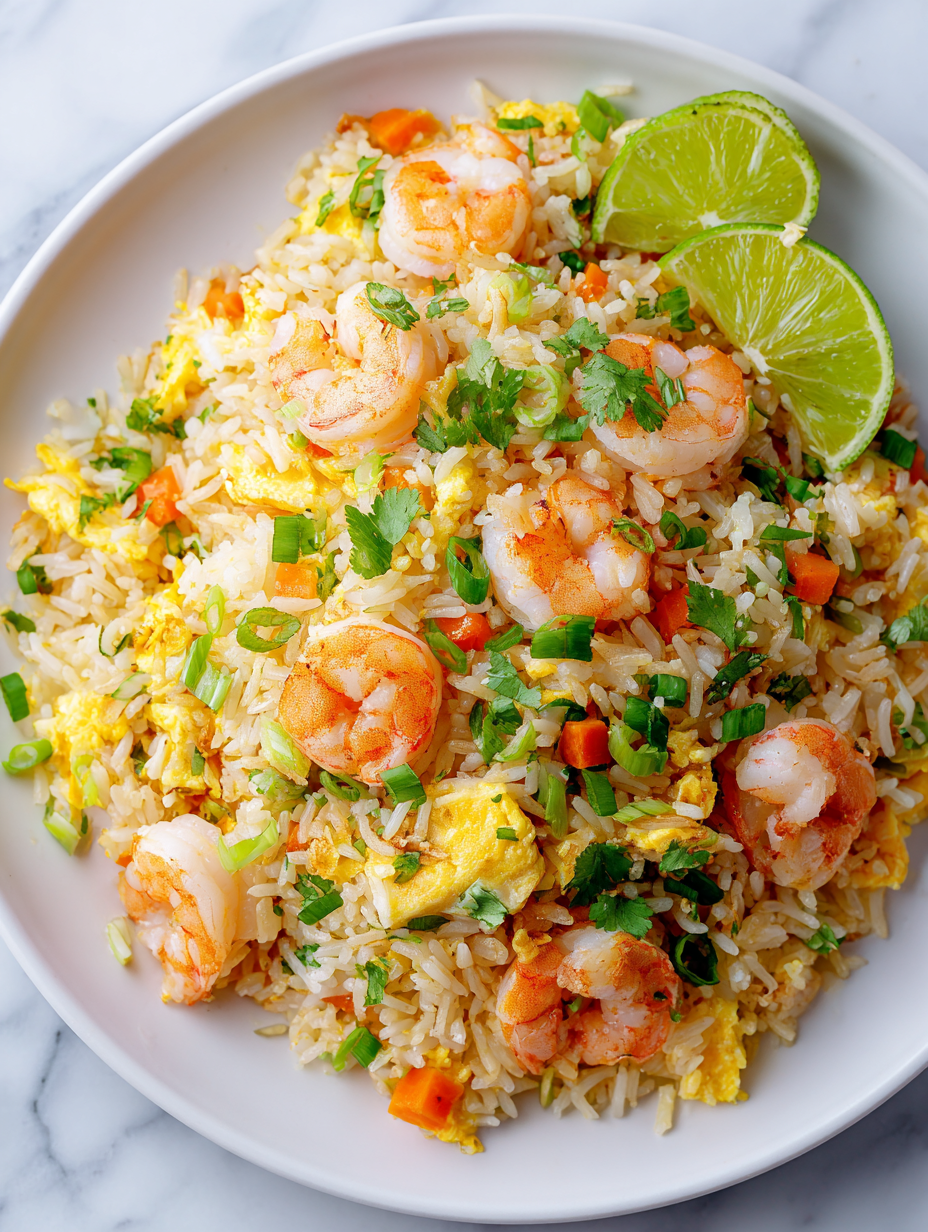
Shrimp Fried Rice
Ingredients
Equipment
Method
- Gather all your ingredients: thaw and dry the shrimp thoroughly, slice scallions thin, and beat the eggs lightly with a pinch of salt.
- Heat your wok or large skillet over high heat until it shimmers, then add a tablespoon of oil, swirling to coat the surface.
- Add the shrimp to the hot pan, cooking for about 1-2 minutes per side until they turn pink and opaque. You should hear a sizzle and see them brown slightly. Remove and set aside.
- In the same pan, toss in the minced garlic and sliced scallions. Cook for about 20-30 seconds until fragrant and golden, the aroma filling the air.
- Push the garlic and scallions to one side of the pan. Pour the beaten eggs into the empty space, letting them sit for a few seconds before gently scrambling with your spatula until just set and slightly fluffy.
- Add the chilled, cooked rice to the pan, breaking up any clumps with your spatula. Toss vigorously for 2-3 minutes until the grains are hot, slightly golden, and each grain stays separate.
- Return the cooked shrimp to the pan, then drizzle soy sauce over the mixture. Toss everything together quickly, ensuring the rice and shrimp are coated evenly and heated through, about 1 minute.
- Finish by drizzling sesame oil, if using, and tossing once more to distribute the flavor. Taste and adjust with more soy if needed.
- Remove from heat, garnish with chopped scallions, and serve hot directly from the pan, enjoying the crispy edges and tender grains in every bite.
Pro tips for perfect shrimp fried rice
- Bolded tip: Use high heat to quickly sear shrimp and create a smoky aroma that enhances flavor.
- Bolded tip: Toss the rice vigorously to crackle and develop crispy edges, but avoid overcrowding the pan.
- Bolded tip: Add soy sauce in stages—start with a small amount, then taste and adjust to prevent sogginess.
- Bolded tip: Incorporate scallions at the end for a fresh, bright contrast that balances the savory notes.
- Bolded tip: Use a spatula to gently fold ingredients, preventing rice from breaking and maintaining texture.
- Bolded tip: Rest the fried rice for a minute after cooking to allow flavors to meld and grains to settle.
- Bolded tip: If rice is clumping, break up with the back of the spatula and toss quickly to separate grains.
Common mistakes and how to fix them
- FORGOT to dry shrimp → Steamed instead of seared. Pat dry for better browning.
- DUMPED too much soy → Use sparingly; too much makes rice soggy and salty.
- OVER-TORCHED rice edges → Lower heat slightly and toss more vigorously.
- MISSED resting time → Let fried rice sit 1-2 minutes before serving for flavor meld.
Quick fixes and pantry swaps
- When rice clumps, splash a tiny bit of water and toss vigorously to loosen grains.
- If shrimp isn’t searing properly, splash a little oil and increase heat; avoid overcrowding.
- Dumped too much soy? Fix by adding a splash of water and tossing to balance saltiness.
- Over-torched edges? Patch with a squeeze of lemon to brighten flavors and mask slight bitterness.
- Splash a few drops of sesame oil at the end to add aroma if dish feels dull or flat.
Prep, store, and reheat tips
- Prep the rice and shrimp ahead by cooking and cooling the rice the day before; it’s firmer and less likely to clump when stir-frying. Keep refrigerated for up to 24 hours.
- Peel and devein the shrimp early, then dry thoroughly. Store in an airtight container in the fridge for up to 1 day to prevent excess moisture and sogginess.
- Chop scallions and garlic in advance. Keep separate in sealed containers for up to 2 days; fresh aromatics lose some punch over time.
- Refrigerate leftover fried rice in an airtight container for up to 2 days. The rice may lose some of its crispness but will still be flavorful.
- Reheat in a hot skillet or wok over high heat, adding a splash of oil. Stir constantly until sizzling and heated through, about 2-3 minutes. Expect a fragrant aroma and slightly crispy edges.
Top questions about shrimp fried rice
1. Why does my rice turn mushy?
Use day-old, chilled long-grain rice for the best texture—firm, separate grains that don’t turn mushy.
2. How do I know when shrimp are done?
Cook the shrimp over high heat until pink and opaque, about 2 minutes per side, for that perfect sear.
3. How much soy sauce should I use?
Add soy sauce gradually, tasting as you go, to prevent the rice from becoming too salty or soggy.
4. How do I keep eggs from overcooking?
Cook the eggs separately and scramble quickly until just set—overcooked eggs turn rubbery and dull the dish.
5. How do I get crispy rice edges?
Toss the rice vigorously in a hot pan to create crispy edges and prevent clumping, about 2-3 minutes.
6. When should I add scallions?
Add scallions at the end of cooking for a fresh, bright flavor that balances the savory aroma of garlic and soy.
7. How do I reheat fried rice without sogginess?
Reheat leftovers in a hot skillet with a splash of oil, stirring constantly until sizzling and hot, about 2-3 minutes.
8. What’s the best equipment for stir-frying?
Use a wok or large skillet for quick, even cooking and tossing — the high sides help keep everything contained.
9. Why do my ingredients burn quickly?
Ensure all ingredients are prepped and ready before cooking — stir-fries move fast and require quick action.
10. My rice is sticking—what do I do?
If rice sticks or clumps, add a splash of water and toss vigorously to loosen grains without over-wetting.
This shrimp fried rice isn’t just a quick dinner; it’s a reminder that the simplest ingredients, treated right, can turn into something deeply satisfying. The way the rice stays separate and has that slight smoky edge makes every bite feel just right, even when made in a busy kitchen.
In the end, it’s about those small details—dry rice, hot pan, careful tossing—that make all the difference. It’s a dish that’s rooted in memory but also adaptable, perfect for a weeknight or a lazy weekend treat.

Hi, I’m Lucas Foster, the cook, writer, and everyday food enthusiast behind Totally in the Zone. This space is where my love for cooking meets my belief that food should fit into real life. Not rushed. Not overcomplicated. Just thoughtful, satisfying, and made with intention.