There’s something electric about the smell of fresh basil sizzling in hot oil, especially when paired with the briny snap of shrimp. This dish is all about that moment—when the herbs release their aromatic punch and the heat amplifies it into something almost intoxicating. I’ve learned that the secret isn’t just in the ingredients but in the quick, confident stir that locks in freshness and flavor.
Cooking this Thai Basil Shrimp feels like a little dance in the kitchen—fast, fragrant, and a bit chaotic. It’s a recipe that rewards attention to detail: the timing, the heat, and how you handle the basil. When done right, it’s a punch of bright, smoky, herbaceous goodness that can make even a weekday dinner feel special. I keep coming back to it because it’s honest, straightforward, and endlessly adaptable.
Focusing on the sensory experience of balancing fresh basil’s aromatic punch with the smoky heat of the stir-fry, this recipe explores how the right technique can elevate simple shrimp into a vibrant, fragrant dish that awakens the senses and transports you to a busy Thai street food stall.
A Stir-Fry Sensory Journey
- This dish always reminds me of my first trip to Thailand, where the smell of basil and shrimp mingled in the street markets.
- Cooking this vibrant stir-fry feels like a celebration of simple, fresh ingredients coming together in a quick, fiery dance.
- There’s a pure joy in chopping fresh basil and hearing that satisfying crackle when it hits the hot oil.
- It’s a relief to have a go-to recipe that’s both lively and forgiving, perfect for busy weeknights or spontaneous gatherings.
- Every time I make it, I’m reminded how a handful of fresh herbs can transform a humble meal into something unforgettable.
A Spur-of-the-Moment Inspiration
- This recipe was born out of a rainy afternoon craving something bright and fresh but quick. I remember rummaging through my fridge, spotting that bunch of basil I’d almost forgotten, and thinking, ‘What if I just threw everything together and called it good?’ The aroma of sizzling garlic and basil was an instant reminder of a trip to Thailand, where street vendors toss herbs into hot woks with reckless joy.
- I’ve come to love how this dish captures that spontaneous, vibrant energy of street food—fast, fragrant, a little chaotic. It’s become my go-to when I want a burst of flavor with minimal fuss. The trick is in the timing—getting the basil just right so it’s aromatic but still vibrant, not wilted or bitter.
- heading: The story behind this recipe
Trivia and Cultural Roots
- Thai cuisine’s use of fresh herbs like basil stems from its vibrant street food culture, where quick, aromatic dishes are king.
- This dish is a modern twist on classic Thai stir-fries that date back centuries, blending local flavors with contemporary fast-cooking techniques.
- Basil was introduced to Thailand through trade routes, quickly becoming a staple in the fragrant, fiery dishes the country is famous for.
- The combination of shrimp and basil in this recipe echoes traditional coastal Thai dishes, where seafood and herbs take center stage.
Key Ingredients Breakdown
- Fresh Thai basil: Its fragrant, peppery aroma is what makes this dish sing. Skip it, and you lose that vital punch of herbaceous brightness.
- Shrimp: I prefer large, juicy shrimp for that satisfying snap. If you only have smaller ones, just be mindful of cook time to avoid overdoing it.
- Garlic: The more pungent and fresh, the better. I love crushing it just before chopping—releases a vibrant, aromatic oil that hits the pan with a pop.
- Bird’s eye chilies: They deliver that smoky, fiery kick. Use fewer if you’re sensitive, but don’t skip them if you want authentic heat.
- Fish sauce: It’s the umami backbone—salty, tangy, and a little funky. Substitute soy if needed, but it’ll lack that depth and complexity.
- Oyster sauce: Adds a sweet, savory richness. If you’re out, a splash of hoisin can work but will alter the flavor slightly.
- Oil: I stick to a neutral oil with a high smoke point—canola or grapeseed—so the high heat brings out those smoky, charred notes without burning.
Spotlight on key ingredients
Thai Basil:
- Fresh Thai basil: Its fragrant, peppery aroma is what makes this dish sing. Skip it, and you lose that vital punch of herbaceous brightness.
- Basil’s leaves release a spicy, sweet aroma when hit with heat, and they can turn bitter if overcooked. Add at the last moment for maximum punch.
Shrimp:
- I prefer large, juicy shrimp for that satisfying snap. They turn opaque and firm quickly, around 2-3 minutes over high heat.
- Shrimp’s natural briny sweetness and slight chew make or break this dish. Overcooking makes them rubbery, so watch that timing closely.
Notes for ingredient swaps
- Fresh herbs: If Thai basil isn’t available, sweet basil or even mint can add a fresh note, but won’t have that peppery punch. For the most authentic flavor, look for basil with purple stems and fragrant leaves.
- Shrimp: Use peeled, deveined large prawns or scallops if shrimp isn’t on hand. Just adjust cooking time—scallops need less time, around 2 minutes per side at high heat, until opaque and firm.
- Garlic: Fresh garlic is best, but garlic paste or garlic powder can work in a pinch. You’ll miss out on that pungent, aromatic oil when crushed fresh, so use a bit more to compensate.
- Chilies: If bird’s eye chilies are too fiery, try serranos or jalapeños—less smoky heat. Dried red pepper flakes can add a quick kick, but watch for bitterness if overused.
- Fish sauce: Soy sauce or tamari can be an umami stand-in, but you’ll lose that funky, complex saltiness. Add gradually, tasting as you go, to avoid oversalting.
- Oyster sauce: Hoisin or a splash of soy mixed with a dash of sugar can mimic some sweetness, but the richness and depth will be different—less smoky, more syrupy.
- Oil: Neutral oils like canola or vegetable are reliable. If you want a hint of sesame flavor, add a drop of toasted sesame oil at the end—use sparingly, for aroma only.
Equipment & Tools
- Wok or large skillet: To cook everything quickly at high heat, mimicking stir-fry motion.
- Spatula or stir-fry spoon: To toss and stir ingredients rapidly for even cooking.
- Chef’s knife: For chopping garlic, chilies, and prepping shrimp.
- Small bowl: To mix sauces or hold chopped ingredients temporarily.
Step-by-step guide to Thai Basil Shrimp
- Gather all ingredients: shrimp, basil, garlic, chilies, fish sauce, oyster sauce, oil. Prep by peeling and deveining shrimp; roughly chop garlic and chilies. Have everything within arm’s reach.
- Heat a wok or large skillet over high heat until shimmering (~200°C / 392°F). Add 1-2 tbsp oil. Swirl to coat the pan.
- Add garlic and chilies first. Cook for 15-20 seconds until fragrant and slightly blistered, with a smoky aroma. Be careful not to burn; if so, lower heat slightly.
- Toss in shrimp. Stir quickly, spreading them out. Cook for 2-3 minutes, until they turn pink and opaque around the edges, with a slight jiggle. If overcooked, they turn rubbery—remove immediately.
- Pour in fish sauce and oyster sauce. Stir briskly to coat shrimp and infuse the pan with a salty, umami aroma. Look for a shiny glaze on the shrimp.
- Add basil leaves. Toss vigorously for 10-15 seconds until basil is wilted and fragrant, but still vibrant green. Smell should be peppery and fresh, with basil releasing its aromatic punch.
- Taste and adjust seasoning—more fish sauce if needed. Remove from heat instantly to prevent basil from wilting into bitterness.
- Rest for 1 minute. Plate immediately, garnishing with extra basil if desired. Serve hot, with rice or alone.
Serve immediately on a warm plate. Garnish with extra basil if desired. Let rest for a minute to settle flavors before eating.
How to Know It’s Done
- Shrimp are pink, firm, and opaque at the center.
- Basil is wilted but still vibrant and fragrant.
- Sauce is glossy and coats shrimp evenly, not watery or burnt-smelling.
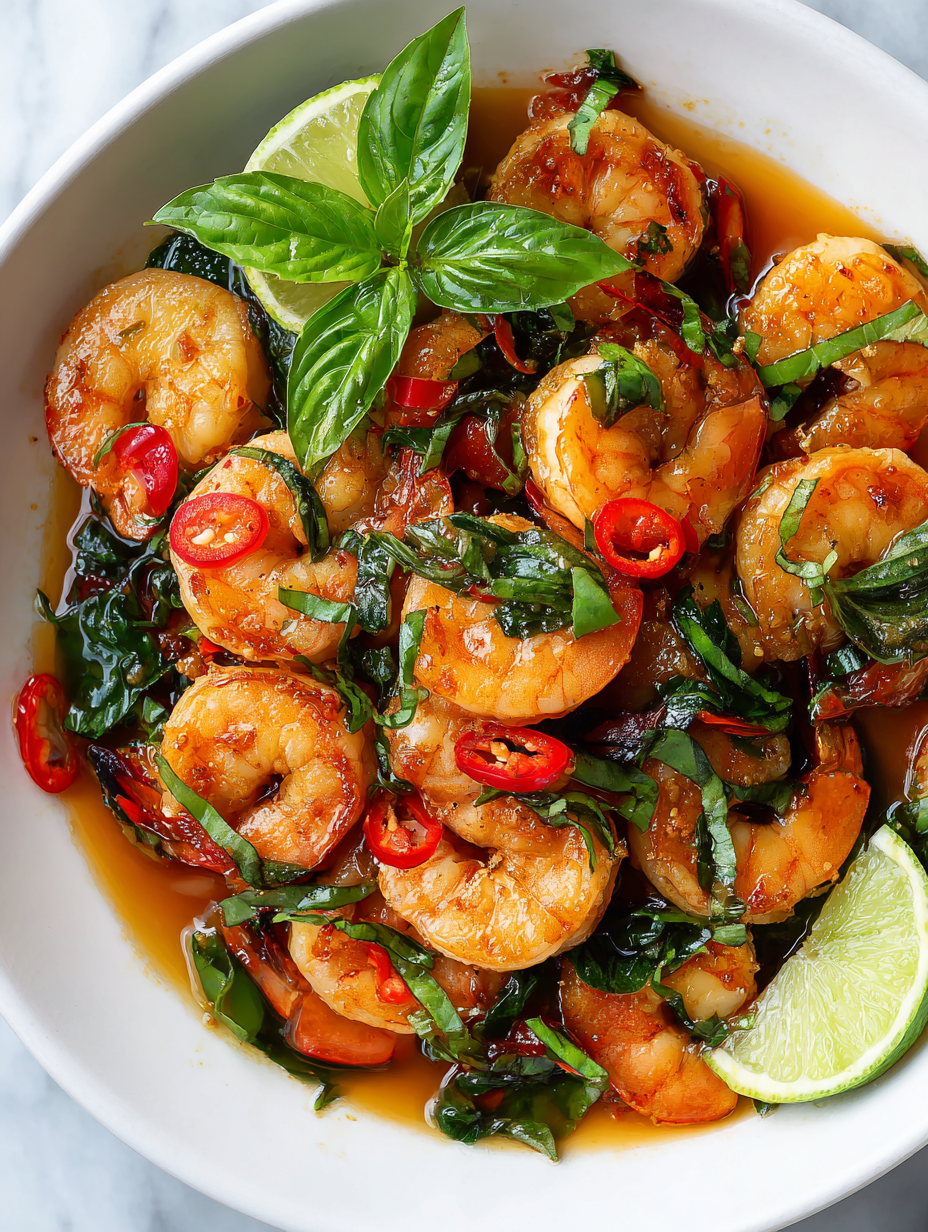
Thai Basil Shrimp
Ingredients
Equipment
Method
- Start by heating your wok or skillet over high heat until shimmering, then add the oil and swirl to coat the surface.
- Add the crushed garlic and sliced chilies to the hot oil. Cook for about 15-20 seconds, until fragrant and slightly blistered, with a smoky aroma filling the air.
- Quickly toss in the shrimp, spreading them out in a single layer. Cook for 2-3 minutes, stirring constantly, until they turn pink and opaque with a slight jiggle in the center.
- Pour in the fish sauce and oyster sauce, stirring briskly to coat the shrimp evenly and create a glossy, flavorful glaze.
- Add the torn basil leaves to the pan, tossing vigorously for about 10-15 seconds until wilted and fragrant, but still vibrant green.
- Taste the dish and adjust the seasoning if needed. Remove from heat immediately to prevent basil from turning bitter.
- Serve the hot, fragrant stir-fry immediately, garnished with extra basil if desired, alongside steamed rice or on its own.
Pro tips for perfect Thai Basil Shrimp
- High heat: Crank your stove up to maximum—this quick sizzle is key to that smoky, vibrant flavor.
- Add basil last: Toss fresh basil in right at the end; it releases aroma without turning bitter or soggy.
- Smell for readiness: Garlic and chilies should smell fragrant and slightly blistered—if it burns, lower the heat immediately.
- Don’t overcook shrimp: Turn off heat when they just turn pink and opaque—resist the urge to cook longer, or they’ll become rubbery.
- Use a wide pan: A large skillet or wok gives space for quick, even stir-frying, preventing ingredients from steaming instead of searing.
- Taste as you go: Adjust fish sauce and chilies at the end—flavor intensifies quickly, and you want it just right.
- Prep basil properly: Tear basil leaves with your hands—this releases more essential oils than chopping, boosting aroma.
Common mistakes and how to fix them
- FORGOT to adjust heat during stir-fry → Keep high heat, but lower if basil burns.
- DUMPED all ingredients at once → Add garlic and chilies first, then shrimp, for better flavor buildup.
- OVER-TORCHED basil → Remove from heat immediately once fragrant to prevent bitterness.
- MISSED the sauce timing → Pour sauces when shrimp are just cooked for glossy coating and flavor.
Quick Fixes and Pantry Swaps
- When basil wilts quickly, splash a splash of lime juice to revive aroma and color.
- If sauce is too salty, rinse shrimp briefly in cold water before tossing again.
- DUMPED too much oil? Pat ingredients with a paper towel, then start fresh with a teaspoon of oil.
- Overcooked shrimp? Quickly reheat in a hot pan with a little water to rehydrate and soften.
- Splash soy sauce if fish sauce is missing; it adds salt but lacks that funky depth, so use sparingly.
Prep, store, and reheat tips
- Prep shrimp: peel, devein, and pat dry a day ahead; keep refrigerated for up to 24 hours. The less moisture, the better the sear.
- Chop garlic and chilies in advance; store in an airtight container in the fridge for up to 2 days. Aromatic oils may mellow slightly, but flavor remains punchy.
- Wash and dry basil leaves; store loosely in a paper towel inside a zip-top bag for 1-2 days. Basil retains aroma better when kept dry and cool.
- Sauces: Mix fish sauce and oyster sauce ahead and refrigerate for up to 3 days. Expect a subtle change in brightness—reheat gently to revive aroma.
- Reheating leftovers: Gently warm in a skillet over medium heat (~150°C / 300°F), stirring occasionally until hot and fragrant. Basil may darken slightly but still flavorful.
Top questions about Thai Basil Shrimp
1. Can I use regular basil instead of Thai basil?
Fresh basil gives the dish its signature peppery aroma and vibrant flavor. Use it at the end to keep that punch.
2. How do I know when the shrimp are perfectly cooked?
Shrimp should be pink, opaque, and firm. Overcooking makes them rubbery, so keep a close eye, about 2-3 minutes over high heat.
3. What’s the best way to stir-fry this dish?
Use a hot wok or skillet, ideally 200°C (392°F), to get that smoky stir-fry effect. Keep the heat high and move quickly.
4. Can I make this less spicy?
Bird’s eye chilies are fiery and smoky. Adjust to your heat tolerance or substitute with milder peppers or red pepper flakes.
5. What can I replace fish sauce with?
Fish sauce adds umami and saltiness. Substitutes like soy sauce work, but will lack some depth and funk.
6. When should I add the basil?
Add basil right before removing from heat to preserve aroma and color. Overcooking basil turns it bitter and soggy.
7. How do I get everything ready quickly?
Prep all ingredients beforehand: peel shrimp, chop garlic and chilies, wash basil. It makes stir-frying smoother and faster.
8. How should I plate and serve this dish?
Serve immediately to enjoy the fresh, fragrant herbs and tender shrimp. Let it rest for a minute to settle flavors.
9. Can I make this ahead of time?
Reheat gently in a skillet over medium heat, stirring until just hot. Basil may darken but flavor stays vibrant.
10. What if my basil burns or wilts too quickly?
If basil wilts too fast, splash a bit of lime juice or quick stir-fry for a fresh burst. Keep oil nearby for quick adjustments.
This dish is a quick burst of herbaceous, smoky goodness that feels like a little escape to a bustling Thai street stall. It’s bright, fresh, and surprisingly forgiving for weeknight cooking, making it a staple I keep coming back to.
Whenever I make this, I’m reminded how simple ingredients, handled with care and timing, can create something vibrant and satisfying. It’s an honest, lively dish that captures the essence of spontaneous flavor and fresh herbs, perfect for any season or moment.

Hi, I’m Lucas Foster, the cook, writer, and everyday food enthusiast behind Totally in the Zone. This space is where my love for cooking meets my belief that food should fit into real life. Not rushed. Not overcomplicated. Just thoughtful, satisfying, and made with intention.