Roasted asparagus with balsamic glaze is one of those dishes that feels deceptively fancy but is really just a handful of ingredients and a hot oven away from being on your table. The secret lies in the caramelization—those slightly charred edges bring out a natural sweetness that’s intensified during roasting, making each bite feel rich and almost smoky. Then, a drizzle of balsamic glaze ties everything together with a bright, tangy punch that cuts through the richness like a breath of fresh air.
I’ve loved this combo since I first discovered it at a tiny trattoria during a trip. There’s something about how the glaze clings to the tender stalks, pooling just slightly at the tips, that’s both satisfying and elegant. It’s a simple pleasure I keep returning to—perfect for busy weeknights when you want something quick but still crave that layered flavor experience.
Making this dish at home makes me appreciate the little things—how the asparagus sizzles as it roasts, how the smell of balsamic bubbling thickens into a glossy finish, and how a handful of ingredients can turn into something memorable. It’s a reminder that sometimes, the simplest foods are the most rewarding.
Focusing on how the caramelization of asparagus enhances its natural sweetness, this recipe explores the balance between smoky edges and the bright tang of balsamic glaze, making it a surprisingly sophisticated yet simple dish for weeknights.
The story behind this recipe
This dish came together one busy evening when I had a bunch of asparagus that needed using and a bottle of balsamic vinegar that was whispering to me from the pantry. I remembered how roasting can really amplify the natural sweetness of vegetables, and I wanted to see if a simple glaze could elevate that even more. The idea of combining those smoky, caramelized stalks with a glossy, tangy balsamic drizzle felt like a small act of culinary rebellion—simple, honest, and just a little indulgent. It’s one of those recipes that reminds me how a handful of ingredients, handled with a bit of care, can turn into something surprisingly special.
Key ingredients and tips
- Asparagus: I love how fresh asparagus smells grassy and almost sweet when raw, but roasting brings out a smoky, roasted aroma that makes the stalks irresistible. If yours smells too earthy, try peeling a little of the lower stem for a cleaner bite.
- Olive oil: I use a good drizzle to help the asparagus caramelize evenly and develop a slight crisp. If you prefer a richer flavor, a splash of hazelnut oil adds depth, but keep it light so it doesn’t overshadow the vegetable’s natural sweetness.
- Salt: A pinch of flaky sea salt elevates the natural flavors and enhances caramelization. For a subtle contrast, try finishing with a sprinkle of smoked salt—adds a subtle smoky punch that complements the charred edges.
- Balsamic glaze: I love a thick, syrupy balsamic because it clings beautifully and adds a sweet-tangy punch. If yours is too acidic, gently simmer it down with a touch of honey or maple syrup until glossy and balanced.
- Optional toppings: Parmesan or crushed pistachios add texture and complexity. For a dairy-free version, toasted pine nuts offer a buttery crunch that pairs beautifully with the smoky notes.
- Lemon (if using): A squeeze of fresh lemon brightens the dish just before serving. The zesty aroma and tang cut through the richness, accentuating the caramelized asparagus flavors.
- Black pepper: Freshly cracked pepper adds a subtle heat and depth. If you prefer a milder dish, skip it or use a pinch of smoked paprika for a subtle smoky warmth.
Spotlight on key ingredients
Balsamic glaze: I love a thick, syrupy balsamic because it clings beautifully and adds a sweet-tangy punch. If yours is too acidic, gently simmer it down with a touch of honey or maple syrup until glossy and balanced.:
- Asparagus: I love how fresh asparagus smells grassy and almost sweet when raw, but roasting brings out a smoky, roasted aroma that makes the stalks irresistible. If yours smells too earthy, try peeling a little of the lower stem for a cleaner bite.
- Olive oil: I use a good drizzle to help the asparagus caramelize evenly and develop a slight crisp. If you prefer a richer flavor, a splash of hazelnut oil adds depth, but keep it light so it doesn’t overshadow the vegetable’s natural sweetness.
- Salt: A pinch of flaky sea salt elevates the natural flavors and enhances caramelization. For a subtle contrast, try finishing with a sprinkle of smoked salt—adds a subtle smoky punch that complements the charred edges.
Ingredient swap ideas
- Dairy-Free: Skip cheese or creamy toppings for a clean, vegetable-forward bite that highlights the smoky sweetness.
- Vinegar Swap: Use apple cider vinegar instead of balsamic for a tangy, less sweet glaze with a fruity undertone.
- Oil Choices: Swap olive oil for avocado or walnut oil to add a richer, nuttier flavor that complements the asparagus.
- Sweetener Alternatives: Drizzle a tiny bit of honey or maple syrup into the balsamic reduction if you prefer a milder, floral sweetness.
- Herb Additions: Fresh thyme or basil can be added after roasting for a burst of herbal brightness, swapping out or complementing the balsamic.
- Salt Variants: Use smoked sea salt for a deeper smoky punch or flaky Maldon salt for a delicate crunch and subtle saltiness.
- Nut Toppings: Instead of pistachios, try toasted almonds or pecans for different textures and nutty flavors.
Equipment & Tools
- Baking sheet: To hold and roast the asparagus evenly in the oven.
- Parchment paper: To prevent sticking and make cleanup easier.
- Small saucepan: To simmer and reduce the balsamic vinegar into a glaze.
- Tongs: To flip and serve the hot asparagus without breaking the stalks.
- Measuring spoons: To measure olive oil, salt, and other seasonings accurately.
Step-by-step guide to roasting asparagus
- Preheat your oven to 220°C (430°F). Line a baking sheet with parchment paper for easy cleanup.
- Trim the woody ends off the asparagus stalks—about 1-2 inches from the base. Keep them uniform for even roasting.
- Arrange the asparagus in a single layer on the baking sheet. Drizzle generously with olive oil, then toss to coat evenly. Season with sea salt to taste.
- Place in the oven and roast for 12-15 minutes. Shake the pan halfway through to promote even caramelization. Look for slightly charred tips and a tender stalk.
- While the asparagus roasts, pour the balsamic vinegar into a small saucepan. Simmer over medium heat until thickened and syrupy, about 5-7 minutes. Remove from heat and let cool slightly.
- Once the asparagus is roasted, transfer to a serving platter. Drizzle the balsamic glaze over the top, focusing on the tips and edges for a glossy finish.
- Finish with a crack of freshly ground black pepper and, if desired, a sprinkle of grated Parmesan or crushed nuts for texture.
- Let the asparagus rest for 2-3 minutes. Serve warm, with the glaze still slightly sticky and fragrant.
Allow the roasted asparagus to rest for a couple of minutes so the glaze thickens slightly. Plate directly, drizzle with balsamic, and finish with pepper or optional toppings. Serve while still warm for maximum flavor and aroma.
How to Know It’s Done
- Asparagus tips are slightly charred and tender when pierced with a fork.
- Balsamic glaze is glossy, thick, and coats the back of a spoon.
- Asparagus stalks have a caramelized, smoky aroma with a hint of sweetness.
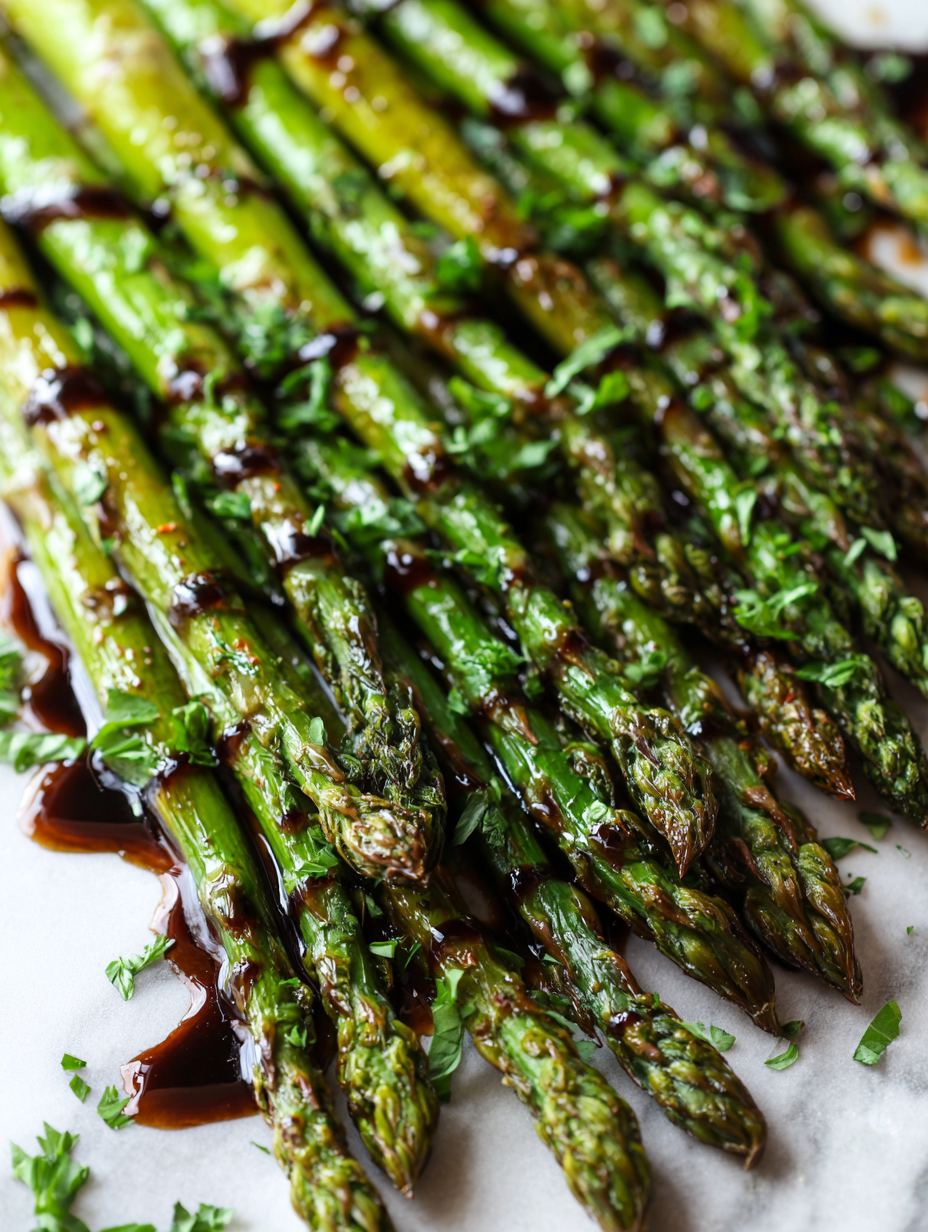
Roasted Asparagus with Balsamic Glaze
Ingredients
Equipment
Method
- Preheat your oven to 220°C (430°F). Line a baking sheet with parchment paper to keep things tidy.
- Trim the woody ends off the asparagus, about 1-2 inches from the bottom, ensuring all stalks are uniformly sized for even roasting.
- Arrange the asparagus in a single layer on the prepared baking sheet, then drizzle generously with olive oil. Toss gently to coat each stalk evenly and sprinkle with a pinch of flaky sea salt.
- Place the baking sheet in the oven and roast for 12-15 minutes. During roasting, you’ll hear a gentle sizzle; the tips will start to turn a deep golden brown and become slightly crispy.
- While the asparagus roasts, pour the balsamic vinegar into a small saucepan and bring to a gentle simmer over medium heat. Let it bubble and reduce for about 5-7 minutes until it thickens into a glossy, syrupy glaze that coats the back of a spoon.
- Once the asparagus is tender and has caramelized edges, remove it from the oven and transfer to a serving platter.
- Drizzle the thickened balsamic glaze over the asparagus, focusing on the tips and edges for a beautiful, glossy finish.
- If desired, sprinkle with freshly grated Parmesan or crushed pistachios for added texture and flavor.
- Serve immediately while warm, allowing the flavors of smoky, caramelized asparagus and tangy balsamic to shine through. Enjoy this simple yet elegant dish!
Pro tips for perfect asparagus
- Bolded mini-head: Use high heat → Ensures quick caramelization and crispy edges without overcooking.
- Bolded mini-head: Arrange asparagus evenly → Promotes uniform roasting and prevents soggy spots.
- Bolded mini-head: Watch for slight charring → Adds smoky flavor and visual appeal, but avoid burning the tips.
- Bolded mini-head: Drizzle oil generously → Helps with browning and prevents sticking, especially on parchment.
- Bolded mini-head: Reduce glaze if too runny → Simmer until thick enough to cling for a glossy finish.
- Bolded mini-head: Test doneness with a fork → Stalks should be tender yet still have a slight bite, edges charred lightly.
- Bolded mini-head: Rest briefly before serving → Lets flavors settle and the glaze set slightly for easier plating.
Common mistakes and how to fix them
- FORGOT to pat asparagus dry → causes steaming, not roasting—dry thoroughly for caramelization.
- DUMPED balsamic too early → wait until it thickens into a syrupy glaze before removing from heat.
- OVER-TORCHED asparagus → reduce oven temperature or shorten roasting time to prevent burning.
- MISSED resting time → let asparagus sit for 2 minutes to absorb flavors and avoid a soggy texture.
Quick fixes and pantry swaps
- If asparagus steam instead of roast → pat dry thoroughly before roasting.
- Splash balsamic early → wait until it thickens into a syrupy glaze.
- Dumped balsamic too early → reduce heat and simmer until glossy.
- Over-torched asparagus → lower oven temperature or shorten roasting time.
- Shield asparagus tips from direct heat → prevent burning by shifting position or covering.
Prep, store, and reheat tips
- Trim and prep the asparagus a day in advance; store wrapped in a damp paper towel inside a plastic bag in the fridge. Keeps stalks fresh and green for up to 24 hours.
- Roast the asparagus just before serving for maximum freshness and caramelization. Reheat gently if needed—spread on a baking sheet and warm at 180°C (350°F) for 5 minutes until just heated through, watching for loss of crispness.
- Prepare the balsamic glaze up to 2 days ahead; store in an airtight container in the fridge. Reheat briefly in a saucepan until just warm and glossy again, noting the aroma of concentrated vinegar.
- Asparagus can be roasted and glazed a few hours in advance; keep covered in the fridge. Serve at room temperature or rewarm lightly, but expect slight loss of crisp edges and caramel notes.
- The balsamic glaze may thicken further after refrigeration; stir gently and rewarm to restore its shiny, syrupy consistency before drizzling over reheated or cold asparagus. Sensory note: it should shimmer and cling with a sweet-tangy aroma.
Top questions about roasted asparagus with balsamic glaze
1. How do I choose the best asparagus for roasting?
Look for asparagus with firm stalks and tight tips. The smell should be fresh and grassy, not sour or earthy.
2. What’s the ideal oven temperature and time?
Roasting at 220°C (430°F) for 12-15 minutes usually yields tender yet slightly charred stalks. Keep an eye on the tips—they should be crisp and browned slightly.
3. How do I know when the balsamic glaze is ready?
The balsamic glaze should be thick enough to coat the back of a spoon and have a glossy, sticky appearance. It should smell rich and tangy, not vinegary or burnt.
4. Why are some parts of my asparagus burnt while others aren’t?
If the asparagus tips burn or turn black, reduce the oven temperature slightly or check the placement on the rack. For uneven roasting, toss halfway through.
5. Can I use different ingredients or flavors?
You can substitute with apple cider vinegar or red wine vinegar for a different tang. For oil, avocado or walnut oil add richness, but olive oil is classic.
6. What are the key ingredients’ best qualities?
Use fresh, firm asparagus and avoid overly woody stems. For the glaze, a good quality balsamic vinegar reduces better and develops a sweeter, richer flavor.
7. How can I tell if my asparagus is fresh?
Look for asparagus with bright green color, firm stalks, and tightly closed tips. Avoid stalks that are limp or tips that are flowering or mushy.
8. What if my glaze or roasting isn’t thick or caramelized enough?
If the glaze is too runny, simmer longer until it thickens. If the asparagus isn’t caramelized enough, increase oven time slightly or raise the heat briefly.
9. How do I know when the asparagus is perfectly roasted?
When finished, the asparagus should be tender with crispy, charred tips. The glaze should be sticky and cling to the stalks without pooling excessively.
10. Can I prepare this dish in advance?
Yes, roasting can be done ahead. Reheat in a 180°C (350°F) oven for 5 minutes until warm and crispy, or serve at room temperature for a more relaxed presentation.
This roasted asparagus with balsamic glaze is more than just a side—it’s a little reminder to keep things simple yet flavorful. The caramelized edges and tangy glaze make every bite feel special, even on a busy weeknight.
Whenever I make this, I’m reminded that good ingredients and a bit of patience in the oven can turn everyday vegetables into something memorable. It’s a dish that feels honest, satisfying, and just a little bit elegant—perfect for any season or occasion.

Hi, I’m Lucas Foster, the cook, writer, and everyday food enthusiast behind Totally in the Zone. This space is where my love for cooking meets my belief that food should fit into real life. Not rushed. Not overcomplicated. Just thoughtful, satisfying, and made with intention.