This creamy pea pasta is a little trick I’ve picked up for those evenings when I want something quick but still impressive. The secret lies in how the frozen peas transform—straight from the freezer, they hit the hot pasta and turn silky and sweet, almost like a fresh spring garden in every bite. It’s honest, simple cooking that surprises with its depth of flavor and freshness.
I love that this dish uses ingredients I always have around—frozen peas, good pasta, a splash of olive oil—and turns them into something vibrant and satisfying. It’s not about complicated techniques or fancy ingredients; it’s about how those humble peas become the star, their icy chill melting into creamy goodness. It’s a reminder that sometimes, the simplest things make the best meals.
Focusing on the unexpected richness that raw frozen peas bring to the dish, highlighting how they transform from icy to creamy in the heat, adding a fresh, sweet burst that elevates simple pasta into a vibrant, seasonal celebration.
The story behind this recipe
- This recipe came from a moment of realizing how frozen peas can be more than just a quick vegetable side. I was trying to make something that felt fresh and bright, even in the dead of winter. The idea was to harness that icy burst and let it melt into a creamy sauce that feels indulgent but is really just honest ingredients. It’s a dish that’s as much about rediscovering simple flavors as it is about comfort.
- One winter evening, I threw this together after a long day. The peas burst open with a sweet aroma, and I was struck by how something so humble could be so satisfying. It reminded me that the best recipes often come from just using what’s in the freezer and trusting those natural flavors to shine through.
- heading:
Ingredient breakdown: key components
- Frozen peas: I love how their icy burst hits the hot pasta, turning silky and sweet—use fresh if you want a brighter, more vibrant flavor.
- Good quality pasta: I prefer a sturdy shape like rigatoni or orecchiette that holds the sauce well—skip the cheap stuff for better texture.
- Olive oil: I use a mild, fruity extra virgin to build a rich base—don’t skimp, it’s the foundation of flavor here.
- Garlic: I like a generous amount, lightly sautéed until fragrant—skip burning it, or it’ll turn bitter and overpower the peas.
- Lemon juice: Brightens everything up—don’t forget to taste and adjust, a splash can lift the whole dish with a zesty shimmer.
- Parmesan: Freshly grated makes all the difference—try Pecorino for a sharper punch, but skip pre-grated to avoid dryness.
- Salt and pepper: Essential for balance—season gradually, tasting as you go, to bring out the peas’ sweetness and the pasta’s body.
Spotlight on key ingredients
Frozen peas:
- I love how their icy burst hits the hot pasta, turning silky and sweet—use fresh if you want a brighter, more vibrant flavor.
- Good quality pasta: I prefer a sturdy shape like rigatoni or orecchiette that holds the sauce well—skip the cheap stuff for better texture.
- Olive oil: I use a mild, fruity extra virgin to build a rich base—don’t skimp, it’s the foundation of flavor here.
Cheese and lemon:
- Parmesan: Freshly grated makes all the difference—try Pecorino for a sharper punch, but skip pre-grated to avoid dryness.
- Lemon juice: Brightens everything up—don’t forget to taste and adjust, a splash can lift the whole dish with a zesty shimmer.
Notes for ingredient swaps
- Dairy-Free: Swap Parmesan for nutritional yeast or a splash of cashew cream. It won’t have the same salty bite but adds richness.
- Vegan: Use olive oil instead of butter, and nutritional yeast instead of cheese. Keep in mind it’ll be less cheesy but still flavorful.
- Gluten-Free: Choose a gluten-free pasta, such as chickpea or rice pasta, for good texture and flavor. Adjust cooking time as needed.
- Fresh Peas: Replace frozen with fresh peas in season. They’re sweeter and firmer but may need slightly less cooking time.
- Lemon: Use lime or vinegar for acidity—adds brightness but different zing. Adjust to taste, start small.
- Herbs: Fresh basil or mint can brighten the sauce—chop finely and stir in at the end for a fresh herbal note.
- Olive Oil: Try avocado oil for a milder, buttery flavor—use the same amount, no change in texture.
Equipment & Tools
- Large pot: Boil pasta efficiently in plenty of salted water.
- Large skillet: Create the sauce base and toss pasta directly in it.
- Blender or immersion blender: Puree peas into a smooth, creamy sauce.
- Tongs: Toss and serve the pasta without breaking it.
- Measuring cups: Accurately measure pasta water and liquids.
- Grater: Freshly grate cheese for optimal flavor and texture.
Step-by-step guide to creamy pea pasta
- Equipment & Tools: Boil water pot with lid (for pasta), large skillet (for sauce), blender or immersion blender (for smooth pea purée), tongs, measuring cups, grater, and a spoon.
- Fill a large pot with 4 liters (about 4 quarts) of water. Add a generous tablespoon of salt. Bring to a rolling boil over high heat, around 100°C (212°F).
- Add 400g (14 oz) of pasta. Cook until just al dente, about 1 minute less than package instructions, until it has a slight bite. Test a piece for firmness.
- While pasta cooks, heat 2 tablespoons of olive oil in the large skillet over medium heat (about 160°C / 320°F). Add 3 minced garlic cloves. Sauté for 30 seconds until fragrant and lightly golden. Watch for burn marks; if garlic browns too quickly, reduce heat.
- Drain the frozen peas (about 200g / 7 oz). Transfer them immediately to the blender. Add 1/4 cup of pasta water, a squeeze of lemon juice, and a pinch of salt. Blend until smooth and creamy, about 15 seconds. Check for bright, smooth texture. If too thick, add a splash more pasta water.
- Drain pasta, reserving 1/2 cup of the cooking water. Add the pasta to the skillet with garlic and olive oil. Toss to coat over medium heat (about 160°C / 320°F).
- Pour the pea purée over the pasta. Toss quickly to coat, adding reserved pasta water a tablespoon at a time if needed to loosen the sauce. The sauce should cling glossy and silky. Cook for 1 minute, until heated through.
- Taste and adjust salt, pepper, and lemon juice. Grate fresh Parmesan or Pecorino over the top. Toss again gently to combine.
- Rest for 1–2 minutes off heat. Serve immediately, garnished with extra cheese and a drizzle of olive oil if desired.
Serve immediately, sprinkle with extra cheese and a drizzle of good olive oil. Rest for a minute to let flavors meld before eating.
How to Know It’s Done
- Pasta is al dente, with a slight firmness when bitten.
- Pea purée is smooth, bright, and shimmering, not grainy or dull.
- Sauce coats the pasta evenly, glossy and silky, without pooling or clumping.
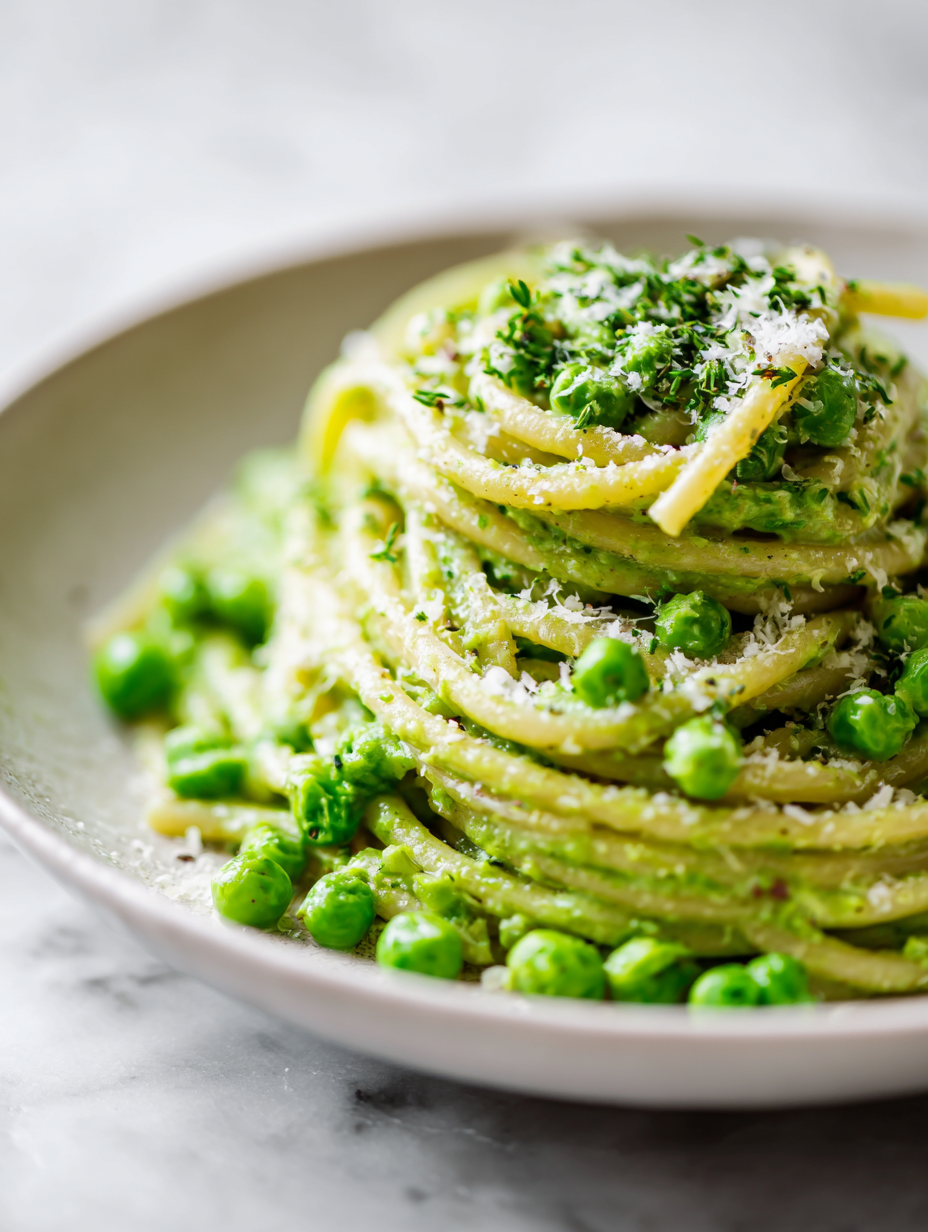
Creamy Pea Pasta
Ingredients
Equipment
Method
- Fill a large pot with water, add a generous pinch of salt, and bring it to a rolling boil over high heat.
- Add the pasta to the boiling water and cook until just al dente, about 1 minute less than package instructions. Stir occasionally to prevent sticking.
- While the pasta cooks, heat olive oil in a large skillet over medium heat. Add minced garlic and sauté for about 30 seconds until fragrant and lightly golden, filling your kitchen with a warm aroma.
- Drain the frozen peas, then immediately transfer them to a blender. Add a splash of the hot pasta water and a squeeze of lemon juice, along with a pinch of salt. Blend until smooth and bright green, about 15 seconds.
- Drain the pasta, reserving about 1/2 cup of the cooking water. Add the drained pasta to the skillet with garlic and olive oil, tossing gently to coat the noodles evenly.
- Pour the pea purée over the pasta in the skillet. Toss quickly, adding reserved pasta water a tablespoon at a time if needed to loosen the sauce until it’s silky and coats every piece of pasta, about 1 minute.
- Remove from heat, then stir in freshly grated Parmesan cheese, tasting and adjusting with salt, pepper, and lemon juice to brighten the dish.
- Serve immediately, garnished with extra cheese and a drizzle of olive oil if desired. Enjoy the vibrant, silky pasta that’s bursting with sweet pea flavor.
Tips for perfect creamy pea pasta
- Use frozen peas straight from the freezer—they turn silky and sweet when heated, no thawing needed.
- Sauté garlic gently over medium heat until fragrant—avoid browning to prevent bitterness.
- Reserve pasta water—it’s starchy and perfect for loosening the sauce to silky perfection.
- Purée peas until completely smooth—use an immersion blender directly in the pan for less cleanup.
- Toss pasta in the sauce over low heat—this helps the sauce cling and intensify with heat.
- Don’t skip tasting and adjusting lemon and salt—brighten and balance the sweetness of the peas.
- Finish with freshly grated cheese—adds a sharp, salty note that elevates the whole dish.
Common mistakes and how to fix them
- FORGOT to adjust heat during sautéing? Reduce immediately to avoid burning garlic.
- DUMPED in too much pasta water? Drain excess to prevent sauce from becoming watery.
- OVER-TORCHED peas? Rinse briefly in cold water to halt cooking and preserve color.
- MISSED stirring after adding pea purée? Toss gently to prevent sticking and ensure even coating.
Quick fixes and pantry swaps
- If sauce thickens too much, splash in hot pasta water to loosen it.
- When peas turn dull, quickly rinse with cold water to stop cooking and preserve color.
- Splash a bit of lemon juice if the dish tastes flat or dull.
- Patch over-salted sauce with a splash of plain pasta water or a pinch of sugar.
- Shield burnt garlic by removing from heat immediately and adding fresh garlic later.
Prep, store, and reheat tips
- Prep the sauce ingredients a day ahead—blend the pea purée until smooth, then store in an airtight container in the fridge for up to 24 hours. It will be bright and fresh when reheated.
- Cook the pasta al dente, drain, and toss with a little olive oil to prevent sticking. Store in a sealed container for up to 2 days in the fridge. Reheat with a splash of water or broth until steaming and silky.
- Frozen peas can be blended into the sauce ahead of time, then kept in the freezer for up to 3 months. Thaw briefly in the fridge or microwave before mixing with hot pasta.
- Reheating the dish gently on the stove over low heat helps restore creaminess. Stir often and taste for brightness—add a squeeze of lemon or fresh cheese if needed to revive flavor and texture.
Top questions about creamy pea pasta
1. Why use frozen peas instead of fresh?
Frozen peas turn silky and sweet when heated, giving the sauce a vibrant burst of flavor.
2. Can I use fresh peas?
Yes, you can substitute with fresh peas; just blanch them briefly before blending for a similar texture.
3. Is lemon necessary?
Adding lemon juice brightens the dish, balancing the sweetness of the peas with a zesty shimmer.
4. What pasta works best?
Use a good quality pasta that holds sauce well, like orecchiette or rigatoni, for best texture.
5. Can I substitute the cheese?
You can swap Parmesan for Pecorino or nutritional yeast, but the flavor profile will shift slightly.
6. How do I fix a thick sauce?
Stir in a splash of pasta water to loosen the sauce if it gets too thick or sticky.
7. How do I keep the peas vibrant?
Overcooking peas dulls their brightness; blend them quickly once heated and avoid excessive simmering.
8. Is there a dairy-free option?
For a dairy-free version, swap cheese for nutritional yeast or cashew cream, though it will be less rich.
9. How do I reheat leftovers?
Reheat the pasta gently on the stove with a splash of water to restore creaminess and flavor.
10. What if the sauce is grainy?
If the sauce is grainy, blend it again until smooth and check that peas are fully pureed.
This dish is a reminder that sometimes, the simplest ingredients create the most satisfying meals. The way the peas soften and turn silky against the pasta is a small magic moment in the kitchen.
It’s perfect for a quick weeknight dinner or when you want something fresh, bright, and comforting without much fuss. No matter the season, it feels like a little celebration of good, honest flavors.

Hi, I’m Lucas Foster, the cook, writer, and everyday food enthusiast behind Totally in the Zone. This space is where my love for cooking meets my belief that food should fit into real life. Not rushed. Not overcomplicated. Just thoughtful, satisfying, and made with intention.