This roasted carrots and asparagus recipe is all about embracing the beauty of simplicity. No fancy techniques, just good, honest roasting that highlights the natural sweetness of carrots and the tender, slightly smoky asparagus. It’s the kind of dish that feels rustic and unpolished, yet somehow elevates everyday eating.
There’s a certain satisfaction in watching these humble vegetables transform in the oven — edges caramelizing, colors deepening, aromas filling the kitchen with a welcoming, earthy scent. It’s a reminder that sometimes, the best meals come from trusting what’s in season and letting it speak for itself.
I like to keep things straightforward here, with just a splash of olive oil, a pinch of salt, and a squeeze of lemon to finish. It’s a dish that celebrates imperfectly perfect produce, perfect for those nights when you want something nourishing without fuss or pretension.
This recipe takes an unpolished, honest approach by emphasizing the imperfect beauty of roasted carrots and asparagus, celebrating their slightly charred edges and tender interiors as a reminder that good food often comes from simple, rustic techniques.
The story behind this recipe
I first started roasting carrots and asparagus after a chaotic market day, when I needed something simple but satisfying. The smell of caramelizing carrots mixed with the smoky asparagus was unexpectedly comforting. It became my go-to for nights when I wanted to keep it unpretentious but flavorful. Over time, I realized how these humble vegetables can turn into something special with just a bit of heat and patience.
Ingredient breakdown: key components
- Carrots: I pick firm, vibrant orange carrots—when roasted, their sweetness deepens and the edges get a crispy, caramelized bite. Swap in parsnips if you want a milder, earthier flavor.
- Asparagus: I prefer thin, fresh spears—they roast quickly and develop a smoky, tender snap. Thicker stalks can be a tad fibrous; trim the woody ends generously or cut into smaller pieces for even cooking.
- Olive oil: I use good-quality extra virgin for that fruity, peppery note that amplifies roasting—skip cheap oils, they dull the flavor and won’t crisp up nicely.
- Salt: I sprinkle coarse sea salt before roasting—enhances natural sweetness and adds a satisfying crunch. For a different twist, try smoked salt for a subtle, smoky finish.
- Lemon: I squeeze fresh lemon over hot vegetables—brightens everything with a zesty, fresh burst. Lime or vinegar can stand in if needed, but lemon feels just right here.
- Herbs (optional): A sprinkle of thyme or rosemary adds a fragrant, earthy layer. Dried herbs work in a pinch, but fresh really wakes up the dish with vivid aroma.
- Garlic (optional): I toss in a few smashed cloves—roasts into soft, mellow goodness with a hint of smoky sweetness. Skip if you prefer a more straightforward veggie flavor.
Spotlight on key ingredients
Salt: I sprinkle coarse sea salt before roasting—enhances natural sweetness and adds a satisfying crunch. For a different twist, try smoked salt for a subtle, smoky finish.:
- Carrots: I pick firm, vibrant orange carrots—when roasted, their sweetness deepens and the edges get a crispy, caramelized bite. Swap in parsnips if you want a milder, earthier flavor.
- Asparagus: I prefer thin, fresh spears—they roast quickly and develop a smoky, tender snap. Thicker stalks can be a tad fibrous; trim the woody ends generously or cut into smaller pieces for even cooking.
- Olive oil: I use good-quality extra virgin for that fruity, peppery note that amplifies roasting—skip cheap oils, they dull the flavor and won’t crisp up nicely.
Notes for ingredient swaps
- Dairy-Free: Swap butter for olive oil or coconut oil. Keeps the dish light and still flavorful.
- Vegan: Use balsamic vinegar instead of lemon juice for acidity and a smoky depth.
- Low-Sodium: Opt for salt-free seasoning blends and add salt sparingly to control sodium intake.
- Herb Variations: Fresh basil or parsley can replace thyme or rosemary for a different aromatic note.
- Sweetener: A drizzle of honey or maple syrup after roasting can enhance caramelization and add a touch of sweetness.
Equipment & Tools
- Baking sheet: Provides a flat surface for roasting and even heat distribution.
- Parchment paper: Prevents sticking and makes cleanup easier.
- Mixing bowl: Helps toss the vegetables evenly with oil and seasonings.
- Spatula: Turns or stirs vegetables during roasting for even cooking.
- Knife: Cuts vegetables into uniform pieces for consistent roasting.
Step-by-step roasting guide
- Preheat your oven to 220°C (430°F). Gather a baking sheet, a mixing bowl, and a spatula. Line the sheet with parchment for easy cleanup.
- Peel and cut carrots into uniform 1-inch pieces. Trim asparagus stalks, leaving some length for a rustic look. Toss both with 2 tablespoons olive oil, ensuring every piece is lightly coated.
- Spread the vegetables on the prepared baking sheet in a single layer, leaving space for air to circulate and promote even roasting. Sprinkle generously with coarse sea salt.
- Roast in the oven for 20-25 minutes. Check at 15 minutes and give them a gentle stir or flip. The carrots should be caramelized around the edges; the asparagus should be tender and slightly charred.
- While roasting, prepare a squeeze of lemon and optional herbs like thyme or rosemary. Keep nearby for finishing touches.
- Once done, remove from oven and transfer to a serving dish. Drizzle with lemon juice, sprinkle with herbs, and adjust seasoning if needed.
- Let the vegetables rest for 2 minutes—this helps the flavors settle. Serve warm, with a final drizzle of olive oil if desired, for that extra sheen and richness.
Let the roasted vegetables sit for a couple of minutes. Finish with a squeeze of lemon and a sprinkle of herbs. Plate directly or toss lightly for a rustic presentation, aiming for a balance of charred spots and tender interiors.
How to Know It’s Done
- Carrots are golden around edges, tender when pierced with a fork.
- Asparagus has a smoky aroma and slight crispness at the tips.
- Vegetables are evenly roasted with caramelized spots and a fragrant smell.
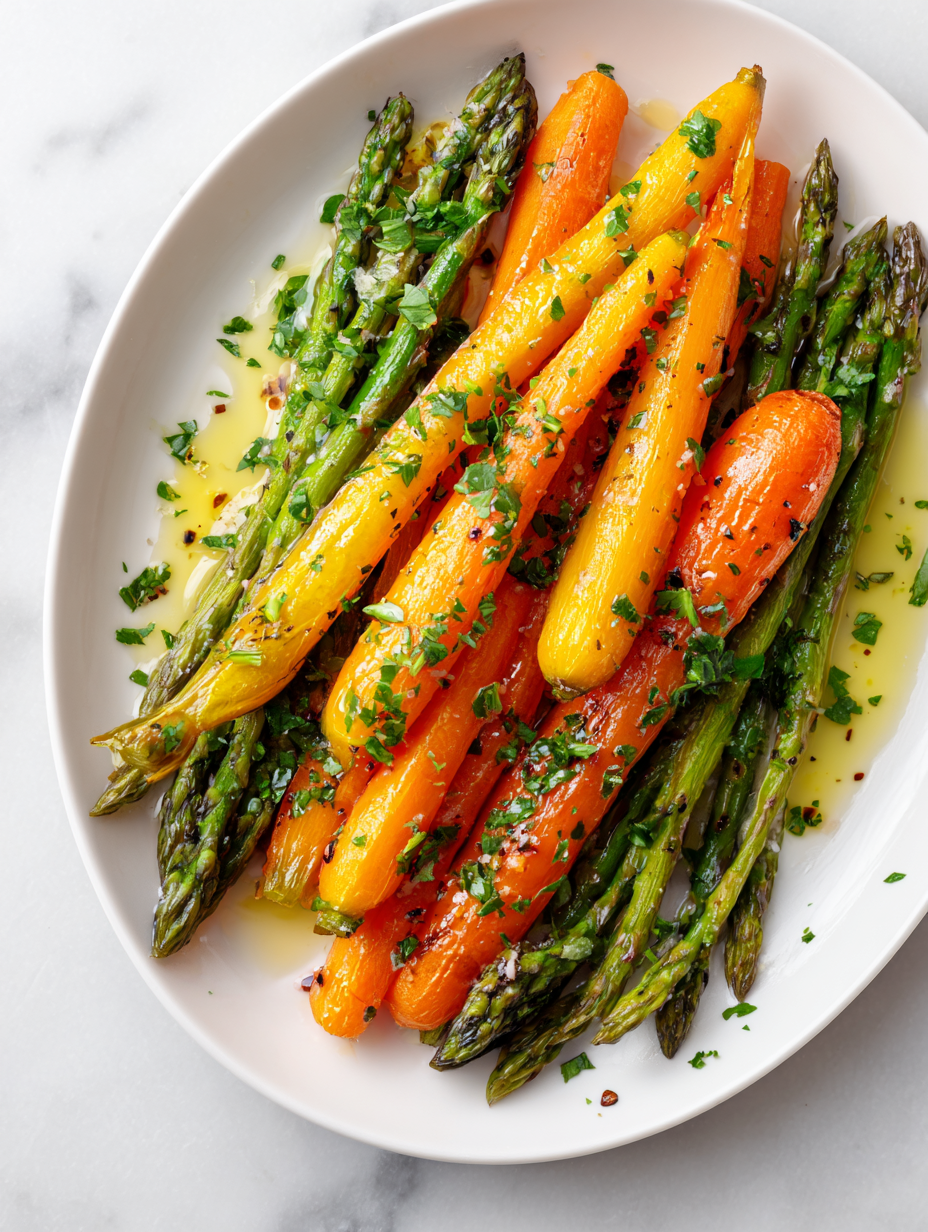
Roasted Carrots and Asparagus
Ingredients
Equipment
Method
- Preheat your oven to 220°C (430°F). Line a baking sheet with parchment paper and set aside.
- Peel the carrots and cut them into uniform 1-inch pieces, then place them in a mixing bowl.
- Trim the asparagus spears, cutting off any woody ends, and add them to the bowl with the carrots.
- Pour the olive oil over the vegetables and toss gently with a spatula until they are evenly coated.
- Spread the vegetables out on the prepared baking sheet in a single layer, ensuring space around each piece for even roasting.
- Sprinkle the coarse sea salt generously over the vegetables and place the tray in the oven.
- Roast for 20-25 minutes, checking at the 15-minute mark to give everything a gentle stir or flip, until the edges are caramelized and the vegetables are tender with slight charring.
- Remove the tray from the oven and transfer the roasted vegetables to a serving dish.
- Squeeze fresh lemon juice over the vegetables, add chopped herbs if using, and give a gentle toss to combine the flavors.
- Let the vegetables rest for a couple of minutes to allow flavors to meld, then serve warm, enjoying the smoky, caramelized edges and tender interiors.
Notes
Pro tips for perfect roasted vegetables
- Bolded mini-head: Use high heat → Ensures vegetables get that perfect char and caramelization, about 220°C (430°F).
- Bolded mini-head: Even cutting → Keep carrots and asparagus uniform in size for consistent roasting and texture.
- Bolded mini-head: Don’t overcrowd → Spread vegetables in a single layer to allow hot air to circulate and crisp everything evenly.
- Bolded mini-head: Stir early → Check at 15 minutes and gently toss or flip for uniform browning and to prevent sticking.
- Bolded mini-head: Watch the edges → Remove when edges are deep golden and vegetables are tender when pierced, avoiding burnt spots.
- Bolded mini-head: Finish with acid → A squeeze of lemon brightens the flavors and enhances the natural sweetness.
- Bolded mini-head: Rest briefly → Let vegetables sit for a couple of minutes after roasting to settle flavors and improve texture.
Common mistakes and how to fix them
- FORGOT to preheat oven → Always preheat to ensure even roasting.
- DUMPED vegetables on the sheet → Spread in a single layer, avoid overcrowding.
- OVER-TORCHED edges → Reduce heat or check early to prevent burning.
- MISSED resting time → Let vegetables sit briefly to develop flavor and texture.
Quick kitchen fixes
- If vegetables burn, lower oven temperature and check earlier next time.
- When vegetables stick, splash with a bit of water and scrape gently.
- Patch over uneven roasting with a quick broil—watch closely, crackle signals readiness.
- DUMPED too much on the sheet? Spread them out more for even heat and crisp.
- When in doubt, pantry swap: use frozen carrots—thaw and pat dry first for better roasting.
Prep, store, and reheat tips
- You can peel and chop carrots and trim asparagus a day ahead; store in an airtight container in the fridge. They stay fresh for up to 24 hours and taste just as vibrant when roasted later.
- Roasted vegetables are best enjoyed within 2 days. Keep leftovers in an airtight container in the fridge, where they’ll maintain their flavor and texture with a slightly mellowed sweetness.
- Reheat gently in the oven at 180°C (350°F) for about 10 minutes until just warmed through. The aroma of roasted vegetables will perk up again, and the edges may crisp slightly if you’re lucky.
- For best sensory results, serve immediately after reheating. The flavors will be most lively, and the vegetables will retain some of that charred, smoky goodness.
Frequently Asked Questions
1. How do I pick good carrots for roasting?
Look for carrots that are firm, bright orange, and not limp. Freshness makes a big difference in sweetness and texture.
2. What’s the best asparagus size for roasting?
Choose thin, fresh asparagus spears for quicker, more tender roasting. Thick stalks can be woody; trim generously.
3. Can I use a different oil for roasting?
Use a good-quality extra virgin olive oil because it enhances flavor and helps vegetables crisp up nicely during roasting.
4. Why is preheating important?
If you forget to preheat the oven, vegetables won’t caramelize evenly. Always preheat for best results.
5. How do I prevent soggy vegetables?
Overcrowding causes steaming instead of roasting. Spread vegetables in a single layer and leave space for air to circulate.
6. How do I know when they’re done?
Roast until edges are deeply golden and vegetables are tender when pierced. The aroma should be smoky and inviting.
7. Can I skip the lemon?
A squeeze of fresh lemon brightens the flavors and enhances the natural sweetness of roasted carrots and asparagus.
8. How should I store roasted vegetables?
Store leftovers in an airtight container in the fridge for up to 2 days. Reheat gently in the oven to retain flavor and texture.
9. What if my vegetables burn or stick?
When vegetables burn, lower the oven temperature and check earlier next time. If they stick, splash with water and scrape gently.
10. Any tips for evenly roasted vegetables?
Use a sharp knife and keep vegetables cut uniform for even roasting. Stir early and often to prevent uneven browning.
This simple roasted vegetable combo is my go-to when I need something honest and satisfying. The way the carrots caramelize and the asparagus gets that smoky edge reminds me that good food doesn’t need fuss. It’s a reminder to keep things straightforward and trust the ingredients.
Whenever I serve this, I feel that little spark of pride in letting humble vegetables shine. It’s perfect for lazy nights or when I want a quick veggie fix that feels like a small celebration. No matter the season, it’s a dish that keeps me coming back to basics with a little smoky, sweet charm.

Hi, I’m Lucas Foster, the cook, writer, and everyday food enthusiast behind Totally in the Zone. This space is where my love for cooking meets my belief that food should fit into real life. Not rushed. Not overcomplicated. Just thoughtful, satisfying, and made with intention.