
After those long days when energy is low and dinner feels like a chore, this creamy spinach pasta comes to the rescue. It’s quick, honest, and cozy, all in one bowl. The best part? It’s made with just a handful of ingredients, yet it feels indulgent enough to serve to anyone craving something warm and satisfying.
I’ve turned to this dish more times than I can count, especially when I need comfort without fuss. The way the spinach melds into the creamy sauce, releasing a fresh, slightly bitter punch against the rich background, keeps me coming back. It’s a reminder that simple can be deeply good—no fancy ingredients needed, just honest flavors and a bit of time saved.
Focusing on how the creamy spinach sauce can be a quick, comforting fix after long days, emphasizing its simplicity and the cozy warmth it brings, especially when made with just a handful of ingredients in under 20 minutes.
The story behind this recipe
- This recipe was born out of a lazy Sunday afternoon when I had a bunch of fresh spinach and needed something quick but satisfying. I remember the first time I added a splash of lemon to the sauce—suddenly, it felt bright, almost like a little wake-up call for my tired taste buds. It’s one of those dishes that started as a simple fix and became a regular in my rotation.
- I love how the spinach shrinks down into a silky, vibrant green, almost like a secret ingredient that transforms the sauce into something special. It’s funny how a bit of garlic and good cheese can turn humble greens into a comforting, almost indulgent bowl. These moments of improvisation in the kitchen often lead to the best discoveries, and this pasta is definitely one of them.
- heading: The story behind this recipe
Key ingredients and tips
- Spinach: I love how fresh, bright, and slightly bitter it is. Make sure to wash it thoroughly—sand can hide in those leaves. Wilt it down until it’s just tender; overcooking makes it mushy and dull in color.
- Cream: I use heavy cream for that velvety richness that coats every strand of pasta. If you want a lighter vibe, try half-and-half, but expect it to be less luscious and more runny. Watch it simmer gently—boiling too hard can break the emulsion.
- Garlic: I always crush it with the side of my knife first—releases more aroma. Sauté until fragrant and just starting to turn golden; burnt garlic turns bitter fast. It’s the backbone of the flavor, so don’t rush this step.
- Parmesan: Freshly grated is king; it melts beautifully and adds that nutty, umami punch. If you’re out, Pecorino works well too, but skip the pre-grated stuff—it’s often dry and flavorless. Add cheese gradually and taste as you go.
- Lemon: Just a squeeze brightens everything up—adds a clean, zesty contrast to the creamy sauce. I tend to zest first for extra punch, then squeeze. If you prefer less acidity, start with a smaller splash and build slowly.
- Pasta: I prefer wide, flat shapes like fettuccine—they hold the sauce better. Always salt your pasta water generously; it’s the only chance to season the noodles. Cook just shy of al dente; they’ll finish cooking in the sauce.
- Olive Oil: I use a good extra virgin to start the sauté; it adds depth and a fruity note. For finishing, a drizzle of good-quality oil gives a shimmer and a fresh flavor burst. Don’t skimp—quality oil makes a difference.
Spotlight on key ingredients
Spinach:
- I love how fresh, bright, and slightly bitter it is. Make sure to wash it thoroughly—sand can hide in those leaves. Wilt it down until it’s just tender; overcooking makes it mushy and dull in color.
- Cream: I use heavy cream for that velvety richness that coats every strand of pasta. If you want a lighter vibe, try half-and-half, but expect it to be less luscious and more runny. Watch it simmer gently—boiling too hard can break the emulsion.
- Garlic: I always crush it with the side of my knife first—releases more aroma. Sauté until fragrant and just starting to turn golden; burnt garlic turns bitter fast. It’s the backbone of the flavor, so don’t rush this step.
Lemon:
- Parmesan: Freshly grated is king; it melts beautifully and adds that nutty, umami punch. If you’re out, Pecorino works well too, but skip the pre-grated stuff—it’s often dry and flavorless. Add cheese gradually and taste as you go.
- Just a squeeze brightens everything up—adds a clean, zesty contrast to the creamy sauce. I tend to zest first for extra punch, then squeeze. If you prefer less acidity, start with a smaller splash and build slowly.
Notes for ingredient swaps
- Dairy-Free: Swap heavy cream for coconut cream or cashew cream. Expect a slightly nuttier, less rich sauce.
- Vegan: Use plant-based cheese and omit dairy; the sauce will be lighter, with a subtle nutty flavor.
- Cheese Options: Pecorino or Grana Padano can replace Parmesan, adding a sharper, saltier note.
- Spinach: Kale or Swiss chard work well if you want a heartier, more robust greens flavor.
- Pasta: Wide noodles like pappardelle or even gluten-free options can be used; adjust cooking time accordingly.
- Lemon: Lime or a splash of white wine vinegar can brighten the dish if lemon isn’t available.
- Oil: Avocado oil or toasted sesame oil offers a different aroma and flavor, but use sparingly to avoid overpowering.
Equipment & Tools
- Large skillet: To cook the spinach and sauce evenly.
- Saucepan: To boil pasta.
- Colander: To drain pasta.
- Wooden spoon: To stir and toss ingredients.
- Lemon zester: To add fresh lemon zest.
Step-by-step guide to creamy spinach pasta
- Equipment & Tools: Use a large, deep skillet for even heat and enough room to toss pasta. Have a saucepan for boiling, a colander, a wooden spoon, and a zester ready.
- Bring a large pot of salted water (about 4 liters, 1 gallon) to a rolling boil at 100°C (212°F). Add pasta and cook until just shy of al dente, about 8 minutes. Drain and set aside, saving a cup of pasta water.
- While pasta cooks, heat the skillet over medium heat (around 160°C / 320°F). Add a tablespoon of olive oil. Sauté 2 minced garlic cloves until fragrant, about 30 seconds. Do not let it brown or it will turn bitter.
- Add a generous handful of washed spinach to the skillet. Cook, stirring, until wilted and tender, about 2-3 minutes. Remove from heat and set aside.
- In the same skillet, pour in 1 cup of heavy cream. Bring to a gentle simmer, about 2 minutes, stirring constantly. Watch for slight bubbling but avoid boiling hard to keep the emulsion intact.
- Stir in the grated Parmesan (about 1/2 cup). Mix until melted and creamy. Squeeze in a small lemon wedge or 1 teaspoon of zest and stir well. Taste and adjust salt if needed.
- Add the drained pasta to the sauce. Toss gently to coat, adding reserved pasta water a splash at a time until the sauce reaches your preferred creaminess. Should be silky and clingy—about 2-3 minutes of tossing.
- Finish with a drizzle of olive oil and cracked black pepper. Let it rest off heat for 1-2 minutes to allow flavors to meld. Serve immediately, garnished with extra cheese or lemon zest if desired.
- Checkpoints & How to Know It’s Done: The sauce should be silky and coat the pasta without pooling. Spinach should be vibrant and tender. The pasta should be al dente with a slight bite.
Let the pasta rest for 1-2 minutes off heat. Finish with a drizzle of good olive oil, a sprinkle of extra cheese, and freshly cracked pepper. Serve straight from the pan onto warm plates.
How to Know It’s Done
- Sauce coats pasta smoothly, without pooling or clumping.
- Spinach is wilted, bright green, and tender.
- Pasta is al dente, with a slight firmness when bitten.
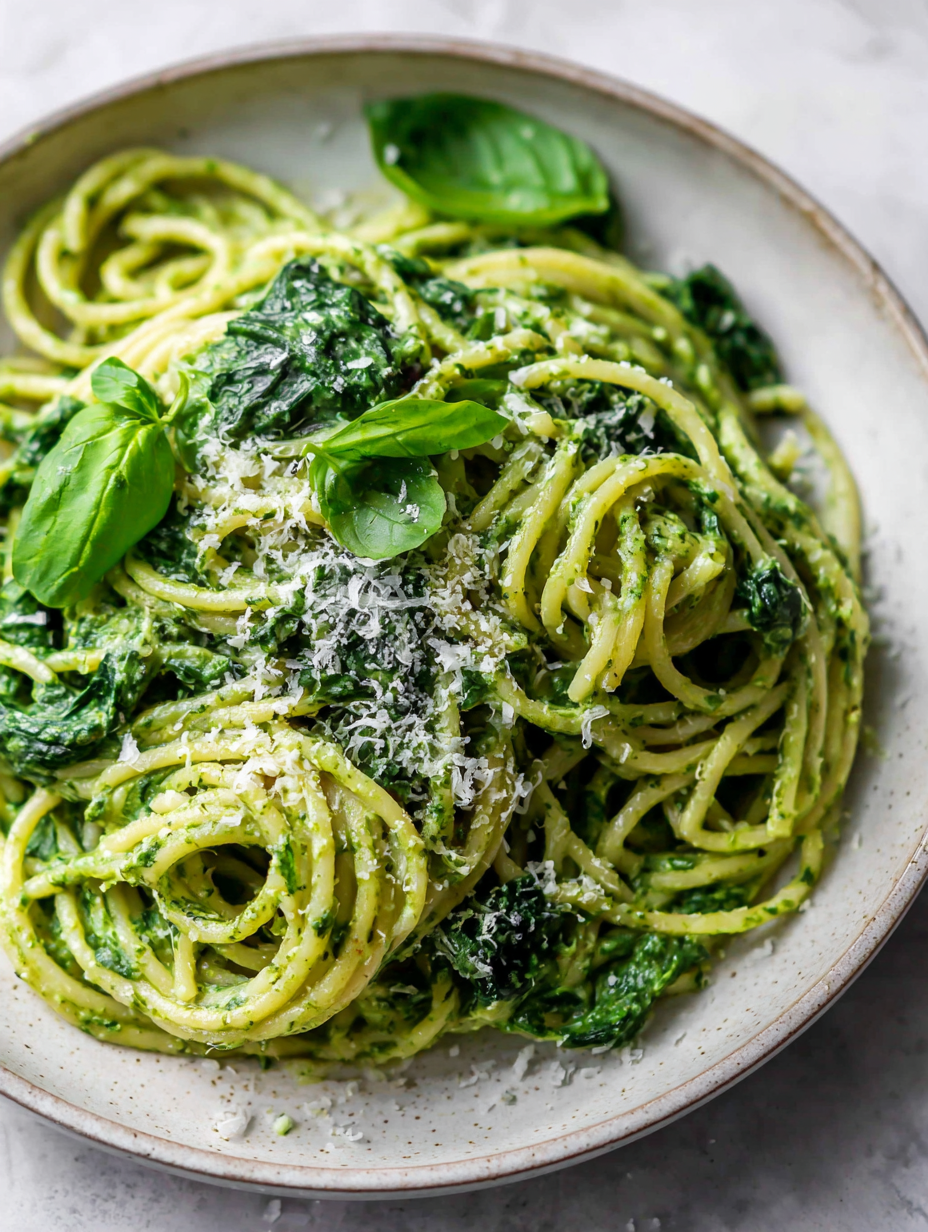
Creamy Spinach Pasta
Ingredients
Equipment
Method
- Bring a large pot of salted water to a rolling boil. Add the pasta and cook until just shy of al dente, about 8 minutes. Drain, reserving a cup of pasta water, and set aside.
- While the pasta cooks, heat one tablespoon of olive oil in a large skillet over medium heat. Add the minced garlic and sauté for about 30 seconds until fragrant and just starting to turn golden, filling the kitchen with a warm aroma.
- Add the fresh spinach to the skillet and cook, stirring frequently, until wilted and tender, about 2-3 minutes. The greens will shrink significantly and turn a vibrant deep green.
- Pour in the heavy cream and bring it to a gentle simmer, stirring constantly. Let it bubble softly for about 2 minutes until slightly thickened, filling the air with a creamy scent.
- Stir in the grated Parmesan cheese and lemon zest, mixing until the cheese melts smoothly into the sauce. Squeeze in a small amount of lemon juice and taste, adjusting with salt and pepper as needed.
- Add the drained pasta to the skillet with the sauce. Toss gently to coat each strand evenly, adding reserved pasta water a splash at a time to loosen the sauce until it’s silky and clings beautifully to the noodles.
- Finish by drizzling a little extra olive oil over the pasta, then taste and adjust seasoning with more salt, pepper, or lemon if desired. Give everything one last gentle toss.
- Serve immediately on warm plates, garnished with additional Parmesan or lemon zest if you like. Enjoy the creamy, vibrant flavors of this cozy pasta bowl.
Pro tips for perfect creamy spinach pasta
- Bolded Mini-Head: Use fresh garlic and crush it first—releases more aroma and flavor.
- Bolded Mini-Head: Wilt spinach quickly over medium heat—avoid overcooking to keep vibrant color and texture.
- Bolded Mini-Head: Gradually add cheese off heat—melts better and prevents clumping in the sauce.
- Bolded Mini-Head: Reserve pasta water before draining—use it to loosen the sauce if needed.
- Bolded Mini-Head: Squeeze lemon last—brightens the sauce without cooking out the fresh, zesty flavor.
- Bolded Mini-Head: Toss pasta in sauce off heat—helps sauce cling better and prevents separation.
- Bolded Mini-Head: Keep an eye on cream simmering—gentle heat keeps it velvety, avoid boiling to prevent breaking.
Common mistakes and how to fix them
- FORGOT to stir pasta water: Add salt generously from the start, or pasta will taste bland.
- DUMPED hot pasta into cold water: Keep it hot until ready to toss with sauce, or it will clump.
- OVER-TORCHED garlic: Sauté garlic until fragrant and just golden; burnt garlic turns bitter fast.
- MISSED to save pasta water: Use reserved water to loosen sauce if it becomes too thick or sticky.
Quick fixes and pantry swaps
- When sauce is too thick, splash in warm pasta water to loosen it up.
- If spinach looks dull, add a squeeze of lemon for brightness and color.
- Splash a little extra oil if sauce cracks or separates during simmering.
- Patch over-salted sauce with a splash of cream or more pasta water.
- Shield burnt garlic by removing it immediately and starting fresh if it turns bitter.
Prep, store, and reheat tips
- You can prep the spinach and grate the cheese a day ahead; keep them refrigerated in airtight containers. The greens will stay vibrant if kept dry and sealed.
- The sauce can be made up to 2 days in advance. Store it in a sealed jar or container in the fridge. Expect it to thicken slightly; stir in a splash of warm water or reserved pasta water to loosen before reheating.
- Cooked pasta is best fresh, but if needed, store in an airtight container in the fridge for up to a day. Reheat gently on the stove, adding a splash of cream or water to revive the creaminess while the sauce shimmers again.
- Reheating: Warm over low heat, stirring often. The sauce may separate a bit—just stir vigorously or add a touch more pasta water or cream. The flavors mellow and deepen overnight, so taste and adjust seasoning if needed.
Top questions about creamy spinach pasta
1. Can I use frozen spinach?
Fresh spinach gives a vibrant, slightly bitter punch that balances the richness. Use baby spinach for tenderness or kale if you want more bite.
2. Can I make this ahead and reheat?
Yes, just thaw and drain it thoroughly to remove excess moisture. It may release more water, so adjust the sauce accordingly.
3. How do I prevent the sauce from breaking?
Reheat gently on the stovetop over low heat, stirring often. Add a splash of cream or reserved pasta water to keep it silky.
4. Why is my sauce grainy or separated?
Cook the cream gently and add cheese off heat. Stir continuously and avoid boiling vigorously to keep the emulsion intact.
5. Can I substitute the cheese?
Use freshly grated Parmesan and add it gradually, tasting as you go. Pre-grated cheese often contains anti-caking agents that affect melting.
6. What pasta shape works best?
Absolutely. Pecorino or Grana Padano can replace Parmesan for different flavor notes, but skip pre-shredded versions for best melting.
7. Can I use gluten-free pasta?
Wide, flat noodles like fettuccine or pappardelle hold the creamy sauce better and make each bite more satisfying.
8. How do I get a silky sauce?
Yes, just adjust cooking time as per package instructions. Keep in mind that some gluten-free varieties may absorb more sauce.
9. How do I fix a sauce that’s too thick?
Stir in reserved pasta water gradually, and toss the pasta off heat. This helps the sauce cling and become smooth and glossy.
10. What’s a good alternative for lemon?
Add a splash of warm pasta water or cream while tossing to loosen the sauce until it coats the pasta beautifully.
This dish is all about the cozy simplicity of greens and creamy sauce coming together quickly. It’s perfect for those nights when you want comfort without a fuss, especially in these chilly months. Sometimes, all I need is a bowl of this and a quiet moment to breathe in the smells and textures.
In the end, it’s a reminder that honest ingredients and a little bit of care can make something feel special. No fancy tricks, just a straightforward, satisfying meal that’s ready fast enough to serve even on busy weeknights. That balance of fresh greens and silky sauce keeps me coming back, season after season.

Hi, I’m Lucas Foster, the cook, writer, and everyday food enthusiast behind Totally in the Zone. This space is where my love for cooking meets my belief that food should fit into real life. Not rushed. Not overcomplicated. Just thoughtful, satisfying, and made with intention.