This Spinach and Feta Pasta has become my secret weapon for busy weeknights. It’s surprising how a handful of simple ingredients can come together so quickly and taste so satisfying. When I’m exhausted, I reach for this dish because it feels like a little treat, even on the chaos-filled evenings.
The trick is in how the feta melts into the hot pasta, creating a creamy, tangy coating that pairs perfectly with the wilted spinach. It’s a dish that’s quick enough to throw together after a long day but feels like you’ve put some effort into it. Honestly, it’s that balance of simplicity and flavor I keep coming back to.
Focusing on how this dish became my secret weapon for quick, nourishing weeknight dinners that still feel special, even when I’m exhausted.
The story behind this recipe
- This recipe was born out of a desperate need for something quick, flavorful, and a little different from the usual pasta routines. I remember rummaging through my fridge late one evening—finding a block of feta and a bag of spinach—and thinking, why not mix these into pasta? The first time I tried it, the smell of melting feta and wilted greens hit me like an instant comfort. It’s become my go-to for those nights when I want something satisfying but don’t want to spend ages in the kitchen.
- Over time, I realized how the feta’s salty creaminess transforms the dish, giving it a rich, tangy punch that’s hard to match. It’s not fancy; it’s honest, straightforward, and rooted in those little moments of improvisation that turn into favorites. Every time I make it, I think about how simple ingredients can make a dish feel special, even when I’m in a rush.
- heading: The story behind this recipe
Ingredient breakdown: key components
- Fresh spinach: I like to use baby spinach because it wilts quickly and keeps a tender texture. If you prefer more bite, go for mature leaves but reduce cooking time to prevent over-wilting.
- Feta cheese: The crumbly, salty feta melts into the pasta, creating a creamy tang. For a milder flavor, try ricotta or goat cheese—just keep the creaminess. If feta’s too salty, rinse it briefly before crumbling.
- Garlic: I smash and finely chop garlic so it disperses evenly and releases that fragrant, slightly spicy aroma. If you’re pressed for time, pick up pre-minced—just watch for added preservatives that might dull the flavor.
- Pasta: I prefer a good-quality penne or rigatoni—something with ridges to catch the feta sauce. Whole wheat adds nuttiness, but don’t overcook; aim for al dente, about 8–10 minutes, to keep it firm and lively.
- Olive oil: Use a good extra virgin for that bright, fruity note. It helps sauté the garlic and spinach without overpowering. If you’re out, a neutral oil can work, but skip anything too heavy or flavored.
- Lemon juice: Just a squeeze brightens everything up and cuts through the richness. Fresh lemon zest is a bonus if you want a more intense citrus punch. Avoid bottled juice with added preservatives for the best flavor.
- Black pepper: I grind fresh for a hint of spice that balances the saltiness. If you don’t have a mill, a pinch of ground pepper will do, but fresh cracked adds a lively aroma that really wakes up the dish.
Spotlight on key ingredients
Spinach and Feta:
- Fresh spinach: I love how the leaves wilt quickly, turning tender and vibrant green, adding a mild earthy flavor. For a slightly firmer bite, use mature spinach and reduce cooking time.
- Feta cheese: Its crumbly texture melts into the hot pasta, creating a salty, creamy tang. Rinsing feta briefly can tone down excess salt, and it behaves beautifully when stirred in warm, just off-heat.
Notes for ingredient swaps
- Dairy-Free: Swap feta for a creamy cashew cheese or tofu crumbles. It won’t have the same tang but adds richness.
- Vegan: Use vegan feta or a squeeze of lemon and nutritional yeast for that cheesy flavor. Keep in mind, texture will differ.
- Gluten-Free: Replace regular pasta with rice or corn-based pasta. Cook until just tender to avoid mushiness.
- Spinach Alternative: Try kale or chard for more texture and slightly stronger flavor. Wilt thoroughly to avoid bitterness.
- Lemon Juice: Use lime or vinegar if lemon isn’t available. Fresh citrus brightens the dish, so opt for the real thing if possible.
- Olive Oil: Avocado oil works well for a milder, buttery note. Use the same quantity for best results.
- Cheese: Ricotta adds creaminess without the saltiness of feta; crumble it in at the end for a smooth finish.
Equipment & Tools
- Large sauté pan: For cooking garlic, spinach, and mixing pasta.
- Pasta pot: To boil the pasta efficiently.
- Colander: To drain pasta without excess water.
- Tongs: To toss and serve pasta easily.
Step-by-step guide to pasta
- Gather your equipment: large sauté pan (for even heat), spaghetti tongs (for tossing pasta), and a colander (for draining).
- Bring a large pot of salted water to boil — aim for 100°C / 212°F, salt should taste like the sea. Cook pasta until just al dente, about 8-10 minutes. Drain, but reserve a cup of pasta water.
- While pasta cooks, heat the sauté pan over medium heat (about 160°C / 320°F). Add 2 tbsp olive oil, swirl to coat.
- Add finely chopped garlic (2 cloves). Cook until fragrant, about 30 seconds; it should smell sharp and slightly nutty. Watch for burning — if garlic turns dark, remove pan from heat and start over.
- Toss in the fresh spinach (about 4 cups). Sauté until just wilted, about 2 minutes. It should turn vibrant green and soften; if it starts to brown, lower heat.
- Reduce heat to low. Crumble in 3/4 cup feta cheese, stirring until it melts into a creamy coating. If it’s too thick, loosen with a splash of reserved pasta water.
- Add drained pasta to the pan, tossing gently to coat in feta and spinach mixture. If dry, add more pasta water until sauce clings and is silky. The pasta should shimmer with a light sauce.
- Finish with a squeeze of lemon juice (about 1 tbsp) and freshly cracked black pepper. Taste and adjust salt if needed—feta is salty, so be cautious.
- Plate immediately. Garnish with extra feta or a drizzle of olive oil if desired.
Serve immediately in warm bowls. Garnish with extra feta or lemon zest if desired. Enjoy the fresh, tangy burst with every bite.
How to Know It’s Done
- Pasta is al dente with a firm bite.
- Feta is creamy and well incorporated, not clumpy.
- Spinach is wilted but vibrant green, not overcooked.
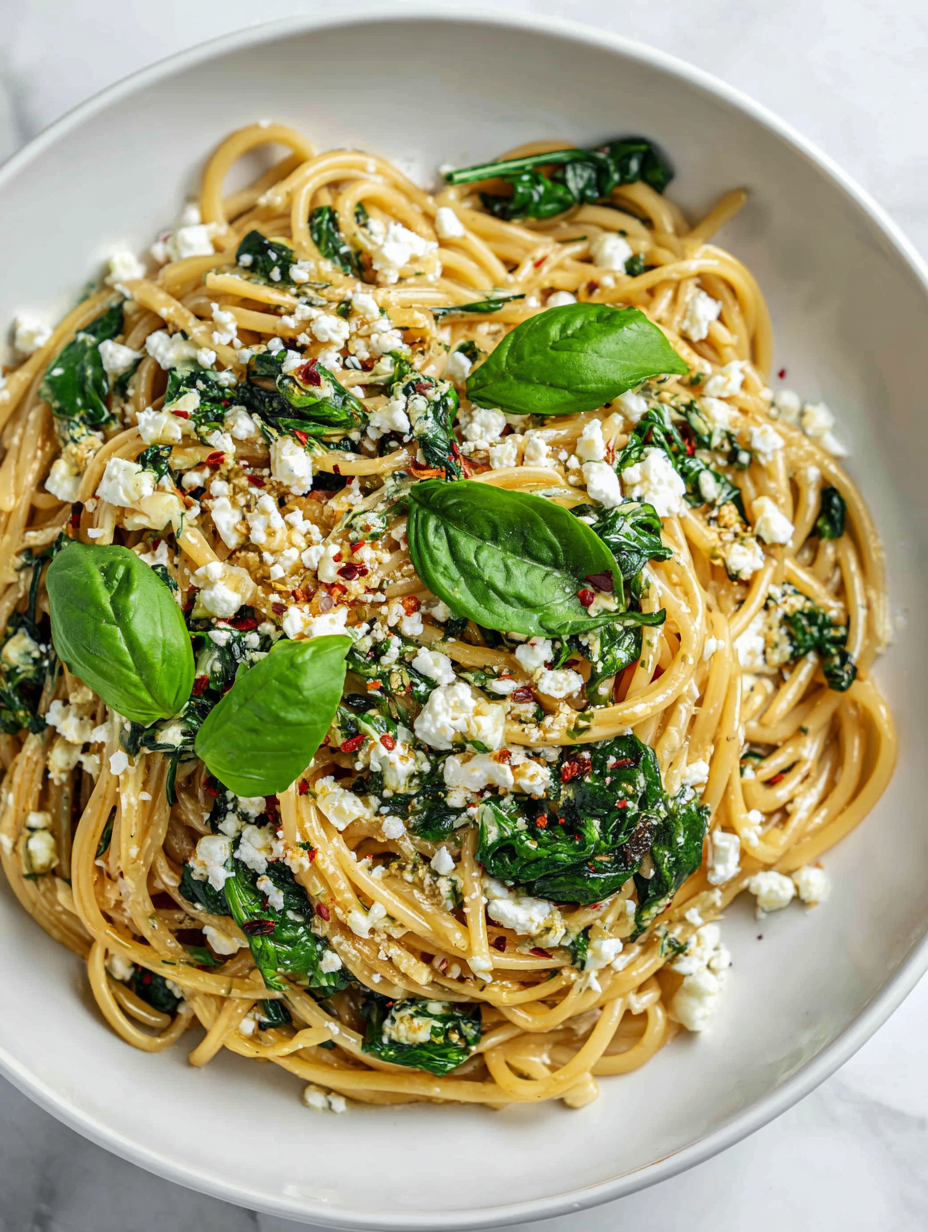
Spinach and Feta Pasta
Ingredients
Equipment
Method
- Bring a large pot of salted water to a rolling boil and cook the pasta until just al dente, about 8-10 minutes. Drain, reserving a cup of pasta water, and set aside.
- While the pasta cooks, heat a large sauté pan over medium heat and add the olive oil. Once shimmering, add the finely chopped garlic and cook until fragrant, about 30 seconds, until it releases a spicy aroma.
- Add the fresh spinach to the pan in batches if needed, stirring gently until it wilts and turns bright green, about 2 minutes. It should be tender but still vibrant.
- Reduce the heat to low and crumble in the feta cheese. Stir gently until the feta begins to melt into a creamy coating, about 1-2 minutes. If it seems thick, add a splash of the reserved pasta water to loosen it up.
- Add the drained pasta to the pan, tossing gently with tongs to coat it evenly in the feta and spinach mixture. If needed, add more of the reserved pasta water to create a silky sauce that clings to every strand.
- Finish by squeezing fresh lemon juice over the pasta and cracking black pepper to taste. Toss again to combine everything thoroughly.
- Serve immediately in warm bowls, garnished with extra feta or a drizzle of olive oil if desired. Enjoy the vibrant, creamy flavors in every bite!
Top Tips for Perfect Spinach & Feta Pasta
- Use high-quality feta for a creamier, tangier sauce that melts smoothly into the pasta.
- Sauté garlic gently over medium heat until fragrant—avoid browning to keep its sweet, spicy aroma.
- Wilt spinach in batches, stirring frequently; it should turn bright green and soften quickly, not overcook.
- Reserve some pasta water before draining; it helps loosen the feta sauce and creates a silky coating.
- Add lemon juice off the heat to preserve its bright, fresh flavor and prevent bitterness.
- Toss pasta and sauce together off the heat for a minute—this helps the feta melt perfectly without breaking apart.
- Finish with a crack of fresh black pepper—its pungency brightens the creamy, salty notes.
Common mistakes and how to fix them
- FORGOT to add pasta water → Use reserved water to loosen sauce if too thick.
- DUMPED feta too early → Add feta at the end for a creamy, melty texture.
- OVER-TORCHED garlic → Cook on medium heat, 30 seconds until fragrant, not burnt.
- MISSED spinach timing → Wilt just until vibrant green, avoid overcooking to prevent bitterness.
Quick fixes and pantry swaps
- When sauce thickens too much, splash in hot pasta water and stir gently.
- If feta clumps, crumble it into warm pasta off heat for better melt.
- Splash olive oil if spinach releases too much moisture, preventing sogginess.
- Patch over burnt garlic by removing it quickly and adding fresh garlic to compensate.
- Shield feta from over-salting by rinsing before crumbling if salt is too intense.
Prep, store, and reheat tips
- Prep the pasta and chop garlic and spinach ahead—store in airtight containers for up to 24 hours. The garlic aroma will deepen overnight.
- Crumbled feta can be prepared in advance and kept in the fridge for up to 2 days; it may release a bit of moisture, so drain if needed before using.
- Cooked pasta can be refrigerated for 1-2 days. Reheat gently in hot water or in a pan with a splash of olive oil, aiming for a tender, warm bite with a slight shimmer of sauce.
- For best flavor, add lemon juice and black pepper just before serving. Reheat the dish until fragrant and the feta is melty, about 2-3 minutes on medium-low.
- The dish’s flavors intensify slightly after a day in the fridge, with feta’s saltiness mellowing and spinach developing a richer, earthy note.
Top questions about Spinach and Feta Pasta
1. How do I tell when the spinach is perfectly wilted?
Fresh spinach wilts quickly, so add it toward the end of cooking. It should be vibrant green and tender, not mushy.
2. Can I substitute feta with another cheese?
Crumbled feta melts into the hot pasta, creating a creamy, tangy coating. For a milder flavor, try ricotta or goat cheese.
3. What’s the best equipment for cooking this dish?
Use a large, deep pan for sautéing to avoid splatters and ensure even cooking of garlic and spinach.
4. Why is pasta water important in this recipe?
Reserve some pasta water before draining. It loosens the feta sauce, making it silky and easier to coat the pasta evenly.
5. How do I know when my pasta is cooked perfectly?
Cook the pasta until just al dente, about 8-10 minutes. It should be tender but still have a slight bite.
6. When should I add lemon juice for the best flavor?
Add lemon juice just off the heat to keep its bright, citrusy flavor sharp and fresh, avoiding bitterness.
7. How do I get the feta to melt smoothly?
Stir the feta into the warm pasta off the heat for the best melt and prevent clumping or breaking.
8. Can I make parts of this dish in advance?
You can prepare the garlic, spinach, and feta ahead of time. Store separately in airtight containers for up to 24 hours.
9. How do I reheat leftovers without losing flavor or texture?
Reheat gently in hot water or a skillet with a splash of olive oil. The dish should shimmer and smell fragrant when ready.
10. What if the sauce gets too thick or clumpy?
If the sauce thickens too much, splash in reserved pasta water and stir until it becomes silky and smooth.
This pasta really reminds me how simple ingredients can come together to create something unexpectedly satisfying. The tangy feta and vibrant spinach make each bite feel fresh and comforting, even on the busiest nights.
Whenever I make this, I appreciate how quick it is to pull together but still feels like a proper meal. It’s one of those dishes that sneaks a bit of joy into even the most chaotic evenings, and I keep coming back to it without fail.

Hi, I’m Lucas Foster, the cook, writer, and everyday food enthusiast behind Totally in the Zone. This space is where my love for cooking meets my belief that food should fit into real life. Not rushed. Not overcomplicated. Just thoughtful, satisfying, and made with intention.