
This leek and mushroom pasta isn’t flashy, but it’s the kind of dish that quietly anchors your evening. It’s about that gentle, earthy aroma of sautéed mushrooms mingling with the sweet, mild onion of leeks, all coated in a silky sauce. It feels like a small act of self-care, a moment to slow down and appreciate simple things.
I love how this recipe transforms humble ingredients into something unexpectedly comforting. There’s no fuss, just a straightforward process that yields a dish rich enough to make even a hectic weeknight feel special. It’s a reminder that sometimes, the quietest meals carry the most warmth.
Focusing on the nostalgic comfort and understated elegance of this dish, I see it as a way to bring a quiet moment of warmth during hectic weeknights, using simple ingredients that transform into something unexpectedly rich and soulful.
The story behind this recipe
- This dish came together one rainy afternoon when I rummaged through my fridge and saw those humble leeks and earthy mushrooms. It struck me how simple ingredients could become something so satisfying without much fuss—just a quick sauté and a toss of pasta.
- My grandmother used to make a leek and mushroom soup, and I’d always be drawn to the way the flavors mingled—so gentle yet layered. Turning that into a pasta felt like a natural evolution, a way to capture that cozy, familiar feeling in a bowl that’s quick enough for weeknights but rich enough to feel indulgent.
- heading: ‘The story behind this recipe’
Ingredient breakdown: key components
- Leeks: I love how their gentle sweetness and mild onion flavor develop into silky layers. Use the white and light green parts for the best texture, and make sure to rinse thoroughly—dirt loves hiding in their folds.
- Mushrooms: The earthy aroma and spongy texture of button or cremini mushrooms bring warmth. Sauté until they’re deeply browned and crispy around the edges—skip overcrowding the pan to avoid steaming, not frying.
- Olive oil: Good quality extra virgin olive oil adds a fruity, peppery note that lifts the dish. Don’t skimp—use enough for a rich sauté, but avoid overheating to keep its bright flavor intact.
- Pasta: I prefer wide, thick shapes like pappardelle or tagliatelle for catching the sauce. Cook just shy of al dente—residual heat will finish it, and overcooking makes it mushy, which is a shame.
- Cream (or alternative): Heavy cream adds that lush, velvety finish I crave, but a splash of crème fraîche or coconut milk can work if you want dairy-free. Aim for a pourable consistency that coats the pasta generously.
- Garlic: I toss in minced garlic late in the sauté—its sharp aroma should bloom without burning, giving a fragrant, smoky undertone. If you smell it turning bitter, turn down the heat.
- Parsley (or herbs): Fresh parsley adds a bright, grassy punch at the end. Chop just before adding to preserve its vibrancy and aroma, especially if you want a fresh, herbal contrast.
Spotlight on key ingredients
Leek:
- Leeks: Their gentle sweetness and mild onion flavor develop into silky layers when cooked slowly. Rinse thoroughly to remove grit hidden in their folds.
- Mushrooms: Their earthy aroma and spongy texture deepen as they brown. Sauté in a single layer for maximum caramelization—avoid overcrowding to prevent steaming.
Mushrooms:
- The earthy aroma and spongy texture of button or cremini mushrooms bring warmth. Sauté until they’re deeply browned and crispy around the edges—skip overcrowding the pan to avoid steaming, not frying.
- Olive oil: Good quality extra virgin olive oil adds a fruity, peppery note that lifts the dish. Don’t skimp—use enough for a rich sauté, but avoid overheating to keep its bright flavor intact.
Notes for ingredient swaps
- Dairy-Free: Swap heavy cream for coconut milk or cashew cream. It adds richness but a slight coconut or nutty flavor.
- Vegan: Use olive oil instead of butter (if used), and replace cream with a plant-based alternative like almond or oat cream.
- Gluten-Free: Substitute regular pasta with your favorite gluten-free variety—brown rice, corn, or chickpea pasta work well and hold texture.
- Lower-Sodium: Choose no-salt-added broth or season with herbs and lemon instead of salt to keep the dish vibrant without extra sodium.
- Extra Earthy: Add a splash of soy sauce or tamari in the sauté for a deeper umami note—just a little for balance, not overpowering.
- Meaty Kick: Incorporate a handful of cooked pancetta or bacon bits if you want some smoky richness—add at the end for best texture.
- Herbal Twist: Swap parsley for thyme, tarragon, or chives, depending on your mood—each brings a different fresh brightness.
Equipment & Tools
- Large skillet: For sautéing vegetables and combining ingredients
- Saucepan: Boiling pasta
- Colander: Draining pasta
- Knife: Chopping ingredients
- Wooden spoon: Stirring and mixing
Step-by-step guide to making the pasta
- Equipment & Tools: Gather a large skillet (preferably non-stick) for sautéing, a sharp knife for prep, a wooden spoon for stirring, and a colander for pasta. Have a saucepan ready for boiling water.
- Boil water in the saucepan with a generous pinch of salt until it reaches a rolling boil, about 100°C (212°F). Add pasta and cook until just shy of al dente, about 1-2 minutes less than package instructions. Drain, then set aside.
- While pasta cooks, slice leeks into thin rings, rinsing thoroughly to remove grit. Chop mushrooms into bite-sized pieces. Mince garlic finely.
- Heat the skillet over medium heat (around 160°C/320°F). Add about 2 tbsp olive oil. When shimmering, add leeks. Sauté for 5-7 minutes, stirring often, until leeks are soft and translucent. They should smell sweet and mild.
- Add mushrooms in a single layer. Cook undisturbed for 3-4 minutes to develop a deep brown color, then stir. Continue sautéing until mushrooms release their juices and edges are crispy, about 5-7 minutes. They should smell earthy and smoky.
- Push leeks and mushrooms to one side of the skillet. Add a splash more olive oil if needed, then stir in minced garlic. Cook for 1 minute until fragrant but not burnt—aroma should be bright and pungent.
- Pour in 1/2 cup heavy cream (or alternative). Stir to combine, then add the cooked pasta. Toss everything together over low heat for 2-3 minutes, letting the sauce thicken slightly and coat the pasta evenly. The sauce should be glossy and clingy, with a velvety texture.
- Taste and adjust seasoning with salt and pepper. If the sauce is too thick, add a splash of pasta water to loosen it. It should shimmer and smell rich, with the flavors well-integrated.
- Remove from heat. Rest for 1-2 minutes, then sprinkle with chopped parsley or herbs. Serve immediately, with a drizzle of olive oil or a squeeze of lemon if desired, for a fresh contrast.
Serve immediately in warm bowls. Garnish with fresh herbs and a drizzle of olive oil. Enjoy the warmth of simple, honest flavors.
How to Know It’s Done
- Leeks are tender, translucent, and smell sweet.
- Mushrooms are deeply browned and crispy around edges.
- Pasta is coated in a glossy, velvety sauce with no raw flour or overcooking.
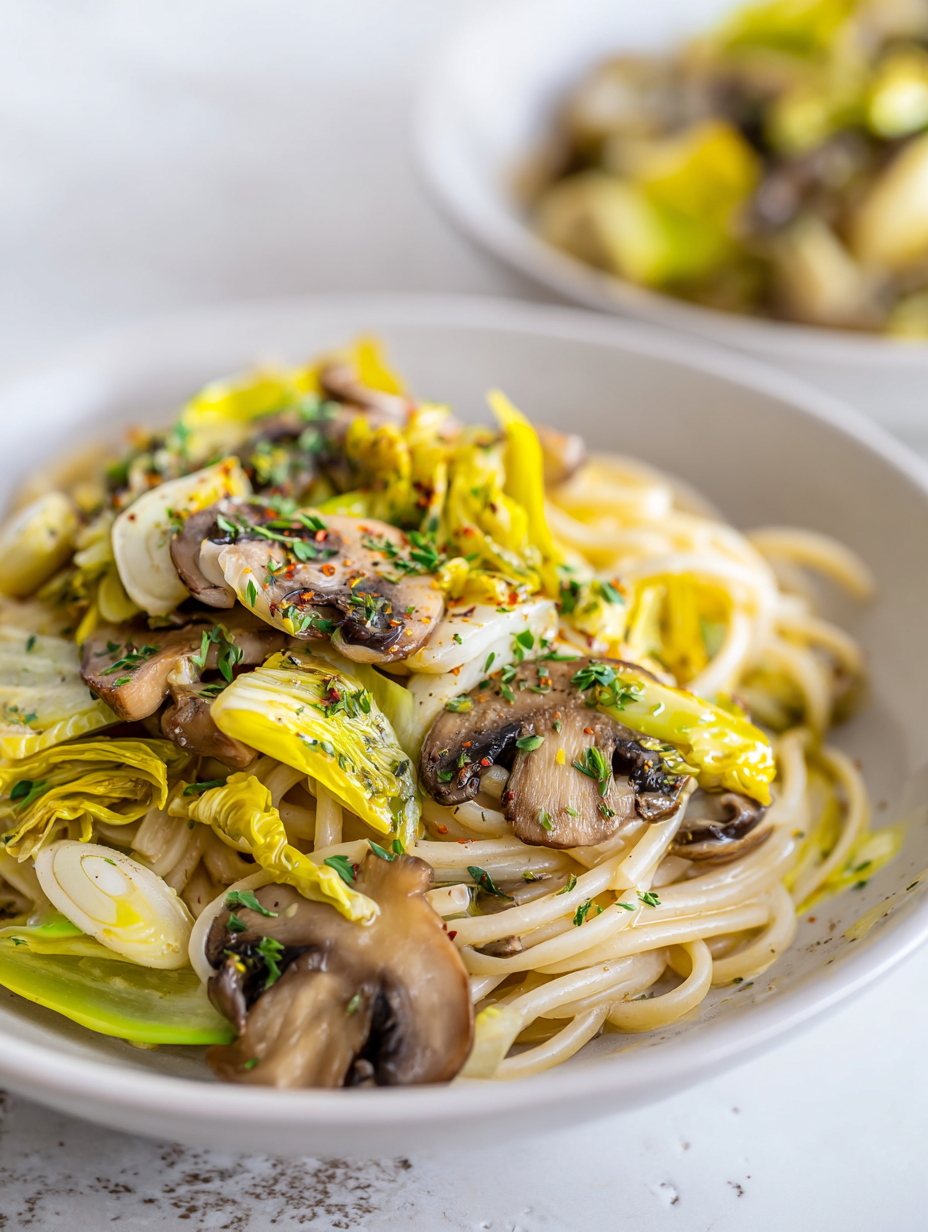
Leek and Mushroom Pasta
Ingredients
Equipment
Method
- Bring a large pot of salted water to a boil, then add the pasta and cook until just shy of al dente, about 1-2 minutes less than package instructions. Drain and set aside.
- Slice the rinsed leeks into thin rings, making sure to rinse out any hidden grit. Chop the mushrooms into bite-sized pieces. Mince the garlic finely.
- Heat the large skillet over medium heat and add the olive oil. Once shimmering, add the sliced leeks and sauté for 5-7 minutes, stirring often, until they become soft and translucent, smelling sweet and mild.
- Add the sliced mushrooms to the skillet in a single layer. Let them cook undisturbed for about 3-4 minutes until they develop a deep brown color and crispy edges. Stir and continue cooking until the mushrooms release their juices and are caramelized, about 5-7 minutes.
- Push the leeks and mushrooms to one side of the skillet. Add a little more olive oil if needed, then add the minced garlic. Cook for about 1 minute until fragrant, the garlic should smell bright and aromatic without burning.
- Pour in the heavy cream and stir well to combine, creating a silky sauce. Add the drained pasta to the skillet and toss everything together over low heat for 2-3 minutes, allowing the sauce to coat the pasta evenly and thicken slightly.
- Taste the dish and season with salt and freshly ground black pepper as needed. If the sauce is too thick, add a splash of reserved pasta water to loosen it, stirring gently until glossy and smooth.
- Remove from heat, sprinkle with chopped parsley, and give it one last toss. Serve immediately, garnished with extra herbs or a drizzle of olive oil if desired.
Pro tips for perfect leek and mushroom pasta
- Bolded mini-head: Use high heat initially to sizzle the leeks and mushrooms quickly, developing flavor and avoiding sogginess.
- Bolded mini-head: Stir frequently when sautéing to prevent burning, especially once garlic is added—aroma should be fragrant, not bitter.
- Bolded mini-head: For deep flavor, let mushrooms sit undisturbed for a few minutes to develop a golden crust before flipping.
- Bolded mini-head: When adding cream, stir constantly to prevent it from curdling or sticking to the pan, creating a silky sauce.
- Bolded mini-head: Taste your sauce before serving—adjust salt and pepper, and add a squeeze of lemon for brightness if needed.
- Bolded mini-head: If sauce thickens too much while resting, loosen with a splash of pasta water or warm broth, stirring gently.
- Bolded mini-head: Finish with fresh herbs just before serving—this preserves their vibrant flavor and aromatic punch.
Common mistakes and how to fix them
- FORGOT to adjust heat: Keep an eye on browning; too high burns, too low undercooks.
- DUMPED ingredients too early: Let mushrooms develop deep color before stirring; patience pays off.
- OVER-TORCHED garlic: Burnt garlic turns bitter—add it later and keep heat moderate.
- SKIPPED tasting: Adjust seasoning throughout; under-seasoned dishes lack depth and balance.
Quick fixes and pantry swaps
- If sauce is too thick, splash in pasta water and stir until silky.
- When mushrooms release too much moisture, increase heat to brown and crisp.
- Splash olive oil if leeks stick or burn; keeps them tender and fragrant.
- Patch over undercooked pasta by tossing with hot water and re-heating briefly.
- Shield burnt garlic by removing it quickly and adding fresh garlic or herbs.
Prep, store, and reheat tips
- Prep leeks and mushrooms ahead by slicing and cleaning thoroughly; store in airtight containers for up to 2 days. The earthy aroma remains fresh and inviting.
- Cook and drain the pasta in advance; keep it in a sealed container in the fridge for up to 24 hours. It retains a firm bite, ready to reheat without turning mushy.
- Reheat gently in a skillet over low heat, adding a splash of water or broth to revive the sauce; it should shimmer and smell rich, not burnt.
- Leftovers keep well for 1-2 days in the fridge. The flavors deepen slightly, and the dish gains a cozy, slightly more robust aroma upon rewarming.
- For best texture, avoid freezing, as cream-based sauces can break. Reheat slowly, stirring continuously, until the dish is heated through and fragrant.
Top questions about leek and mushroom pasta
1. What makes this pasta special compared to other mushroom and leek dishes?
Leeks should be sliced thinly and rinsed well to remove dirt. Mushrooms need to be browned until crispy for the best flavor. Use good quality olive oil for depth. Pasta shapes like pappardelle catch the sauce nicely. Cream adds richness, but coconut milk works for dairy-free. Garlic should be added late to prevent bitterness. Fresh herbs at the end boost aroma. Adjust salt carefully—leeks and mushrooms release moisture. Reheat gently with a splash of water to preserve the sauce. This dish is about simple, earthy comfort in every bite.
2. How can I prevent the mushrooms from becoming soggy?
Use wide, hearty pasta to hold the sauce. Browning the mushrooms is key—don’t rush that step. Rinse leeks thoroughly; grit can turn the dish gritty. Don’t overcook the pasta—residual heat finishes it perfectly. Add cream at the last moment for silky texture. Taste as you go—season gradually. Rest the pasta briefly before serving. Finish with fresh herbs for brightness. Keep the heat moderate to prevent burning garlic. Use quality olive oil for flavor depth. This dish is all about balancing earthy and creamy in harmony.
3. Can I make this ahead and reheat it?
Slice leeks thin and rinse thoroughly to remove grit. Brown mushrooms over medium-high heat in a single layer; avoid overcrowding. Use enough olive oil to get crispy edges. Add garlic after mushrooms brown to avoid bitterness. Cook pasta al dente, then toss with sauce off heat. Use pasta water to loosen if sauce thickens. Finish with herbs and a squeeze of lemon for freshness. Reheat gently, adding a splash of water. Season gradually—leeks and mushrooms can be salty. Patience during browning makes all the difference. This dish thrives on simple, well-executed steps.
4. What’s the best way to reheat leftovers?
Yes, prep the vegetables ahead and store in the fridge for up to 2 days. Cook the pasta in advance, keeping it in an airtight container. Reheat gently in a skillet with a splash of water or broth, stirring until heated through. The flavors deepen slightly after sitting, giving it a more cozy aroma. Avoid freezing cream-based sauces—they tend to break. Reheat just enough to shimmer and smell rich. Fresh herbs can be added after reheating for a burst of aroma. This way, you can enjoy the comforting warmth without fussing at the last minute.
5. Any tips for getting the mushrooms browned properly?
When sautéing, keep the heat moderate to prevent burning garlic and leeks. Use a large enough pan for even browning of mushrooms. Stir frequently once garlic is added to avoid sticking or bitterness. Wait for mushrooms to develop a deep brown color before flipping. Adjust seasoning as you go; it’s easier to under-season and add more. Use pasta water to loosen sauce if it thickens. Taste and adjust salt before serving. Finish with herbs off heat to preserve their aroma. Keep the sauce glossy and velvety by stirring continuously. Patience during cooking results in better flavor and texture.
6. How do I get the perfect mushroom texture?
Use high-quality, flavorful olive oil for sautéing. Don’t overcrowd the pan—brown mushrooms in batches if needed. Let mushrooms sit undisturbed for a few minutes to develop a crust. Keep heat at medium-high to get that crispy edge. Add garlic late in the process to keep its aroma bright. Season with salt gradually—mushrooms release moisture, which can dilute flavors. Use fresh herbs at the end to keep their vibrancy. For a richer taste, splash a bit of soy sauce or tamari during cooking. Avoid overcooking; mushrooms should be tender but not mushy. Patience and proper heat make a difference.
7. What ingredients are essential for the best flavor?
Use fresh, good-quality ingredients—leeks, mushrooms, and olive oil matter. Slice leeks thinly and rinse thoroughly; dirt hides in folds. Brown mushrooms evenly in a hot pan without overcrowding. Add garlic toward the end to prevent burning. Cook pasta just shy of al dente—residual heat finishes it. Use pasta water to adjust sauce consistency. Finish with fresh herbs and a squeeze of lemon for brightness. Reheat gently to prevent breaking the sauce. Taste and season gradually, adjusting for balance. Simple ingredients, treated well, make this dish shine.
8. What are common mistakes and how can I fix them?
Avoid overcooking the pasta—al dente is best. Brown mushrooms until crispy for earthy depth. Rinse leeks well to remove grit. Use enough oil for sautéing; don’t skimp. Add garlic late to prevent bitterness. Use fresh herbs at the end for aroma. Reheat leftovers slowly, adding a splash of water. Taste and adjust seasoning before serving. Don’t rush the browning process—patience develops flavor. Keep heat moderate after adding cream to prevent curdling. This dish is about balancing textures and flavors slowly.
9. How do I fix a sauce that’s too thick or thin?
Use a large pan to avoid steaming vegetables. Brown mushrooms without moving them too often. Add garlic at the right time—too early burns it. Rinse leeks thoroughly to remove grit. Keep the heat moderate to prevent burning. Stir the sauce continuously when adding cream. Adjust seasoning gradually—leeks and mushrooms are salty. Use pasta water to loosen the sauce if needed. Finish with herbs for freshness. Rest the dish briefly before serving to let flavors meld. Patience during sautéing enhances flavor complexity.
10. Any quick tricks for fixing sauce consistency?
Use high heat to develop deep flavors in mushrooms. Rinse leeks carefully to avoid grit. Brown mushrooms undisturbed for maximum crispness. Add garlic late to keep its aroma bright. Use enough olive oil for rich sautéing. Toss pasta in the sauce off heat for a velvety finish. Taste and season gradually. Use pasta water to adjust sauce consistency. Finish with herbs and lemon for brightness. Reheat gently, stirring to prevent separation. Small adjustments during cooking make all the difference.
This leek and mushroom pasta is a quiet reminder that simple ingredients can create something deeply satisfying. It’s perfect for those hectic nights when you need a warm, comforting meal that doesn’t demand too much fuss.
In a way, it’s about celebrating the humble—letting earthy flavors shine and finding a moment of calm in your busy life. Sometimes, the quietest dishes carry the most soul, and this one’s no exception.

Hi, I’m Lucas Foster, the cook, writer, and everyday food enthusiast behind Totally in the Zone. This space is where my love for cooking meets my belief that food should fit into real life. Not rushed. Not overcomplicated. Just thoughtful, satisfying, and made with intention.