
Radishes are often just a crunchy snack or salad garnish, but when you sauté them in butter, they become something entirely different. The heat tenderizes their bite, and the butter adds a rich, nutty undertone that transforms their sharpness into a delicate sweetness. It’s one of those humble dishes that surprises you with its quiet depth.
This recipe is about embracing the unpolished, simple magic of everyday ingredients. I love how a handful of radishes, a splash of butter, and a quick flip in the pan can turn into a side that feels both indulgent and honest. It’s perfect for those nights when you want something cozy but still want to keep it fresh and straightforward.
There’s no need for complicated techniques here—just a good eye for heat and a little patience. It’s about capturing that moment when the radishes soften and start to caramelize around the edges, releasing a smoky-sweet aroma that promises comfort in every bite. Sometimes, the simplest things are the best.
Transforming humble radishes into a buttery, tender side that surprises with its delicate sweetness and depth of flavor.
The story behind this recipe
I first stumbled upon sautéed radishes during a busy spring when my garden was overflowing with fresh produce. I was skeptical at first—radishes always seemed too sharp for anything but salads. But one evening, I tossed a handful in butter, and the aroma that wafted up was soft, nutty, and unexpectedly inviting. That moment made me realize how many overlooked vegetables hide quiet depth when treated with patience and warmth. Since then, this simple dish has become my go-to for turning humble radishes into a surprisingly tender, sweet, and buttery side, especially when I want to add a little rustic charm to the table.
Ingredient breakdown
- Radishes: I love how their natural peppery snap softens into a gentle sweetness when sautéed; for a milder flavor, try smaller, fresher radishes.
- Butter: I use unsalted, real butter to get that nutty aroma, but a splash of good olive oil can add a fruity note if butter isn’t available.
- Salt: A pinch of flaky sea salt at the end really amplifies the natural flavors—don’t skip it, even for a quick dish.
- Pepper: Freshly cracked black pepper adds that subtle heat and complexity—grind it just before tossing in the pan.
- Lemon (optional): A squeeze of lemon brightens the dish and cuts through the richness—use fresh lemon juice for best zing.
- Herbs (optional): A sprinkle of chopped chives or dill can lift the dish with a fresh, herbal note—don’t overdo, just a little.
Spotlight on Key Ingredients
Radishes:
- I love their crisp bite and peppery punch, which softens into subtle sweetness when sautéed; smaller, fresher radishes are milder and more tender.
- Butter: I use real, unsalted butter for its nutty aroma and rich flavor, but a splash of good olive oil can add a fruity note and cut through the richness.
Butter:
- It melts quickly, turning golden and fragrant, creating a luscious coating that enhances the radishes’ natural sweetness.
- Radishes: During cooking, they become tender and slightly translucent, with edges caramelizing to deepen flavor and add a smoky, nutty aroma.
Notes for ingredient swaps
- Dairy-Free: Swap butter for olive oil or coconut oil. Expect a slightly fruitier, less nutty flavor with a different richness.
- Vegan: Use vegan butter or a neutral oil like grapeseed. The dish will still caramelize well, but may lack that dairy creaminess.
- Salt Alternatives: Sea salt or Himalayan pink salt can replace regular salt for a more mineral-rich flavor; adjust to taste.
- Herb Variations: Chopped parsley or basil can replace chives or dill, adding fresh, bright notes with different aromatic profiles.
- Lemon: Lime juice works as a zesty alternative, adding a slightly different citrus punch that brightens the dish.
- Pepper: White pepper offers a milder heat and less visual contrast, while crushed red pepper flakes give a spicy kick.
Equipment & Tools
- Cast iron skillet: Provides even heat and good caramelization for the radishes.
- Tongs or spatula: Helps turn the radishes without breaking them.
- Measuring spoons: Ensures accurate butter and seasoning quantities.
- Knife: Halves larger radishes for quicker, more even cooking.
Step-by-step guide to sautéed radishes
- Gather a small, heavy skillet—preferably cast iron—and set it over medium heat, around 160°C (320°F).
- While the pan heats, rinse and halve the radishes if large, or leave small ones whole for a more tender bite. Pat dry thoroughly.
- Add about 2 tablespoons of unsalted butter to the pan. Let it melt and foam until it starts to turn a light golden color, about 1-2 minutes.
- Place the radishes cut-side down if halved, or in a single layer if whole. Cook undisturbed for 3-4 minutes until edges are golden and slightly caramelized.
- Flip the radishes carefully with tongs or a spatula. Continue cooking for another 3-4 minutes, shaking the pan gently or stirring to promote even caramelization.
- Check for tenderness: radishes should be soft enough to pierce with a fork, and edges should be deeply golden. If they’re still firm, cook for an extra minute.
- Season with a pinch of flaky sea salt and freshly cracked black pepper. If desired, squeeze a little lemon juice over now for brightness.
- Remove from heat and let rest for a minute. Transfer to a serving dish, spooning over any buttery pan juices.
Let the radishes rest for a minute, then plate and spoon over any remaining buttery juices. Serve warm, optionally garnished with fresh herbs.
How to Know It’s Done
- Edges are deeply golden and slightly caramelized.
- Radishes are tender when pierced with a fork.
- Butter has turned a light nutty brown, releasing a fragrant aroma.
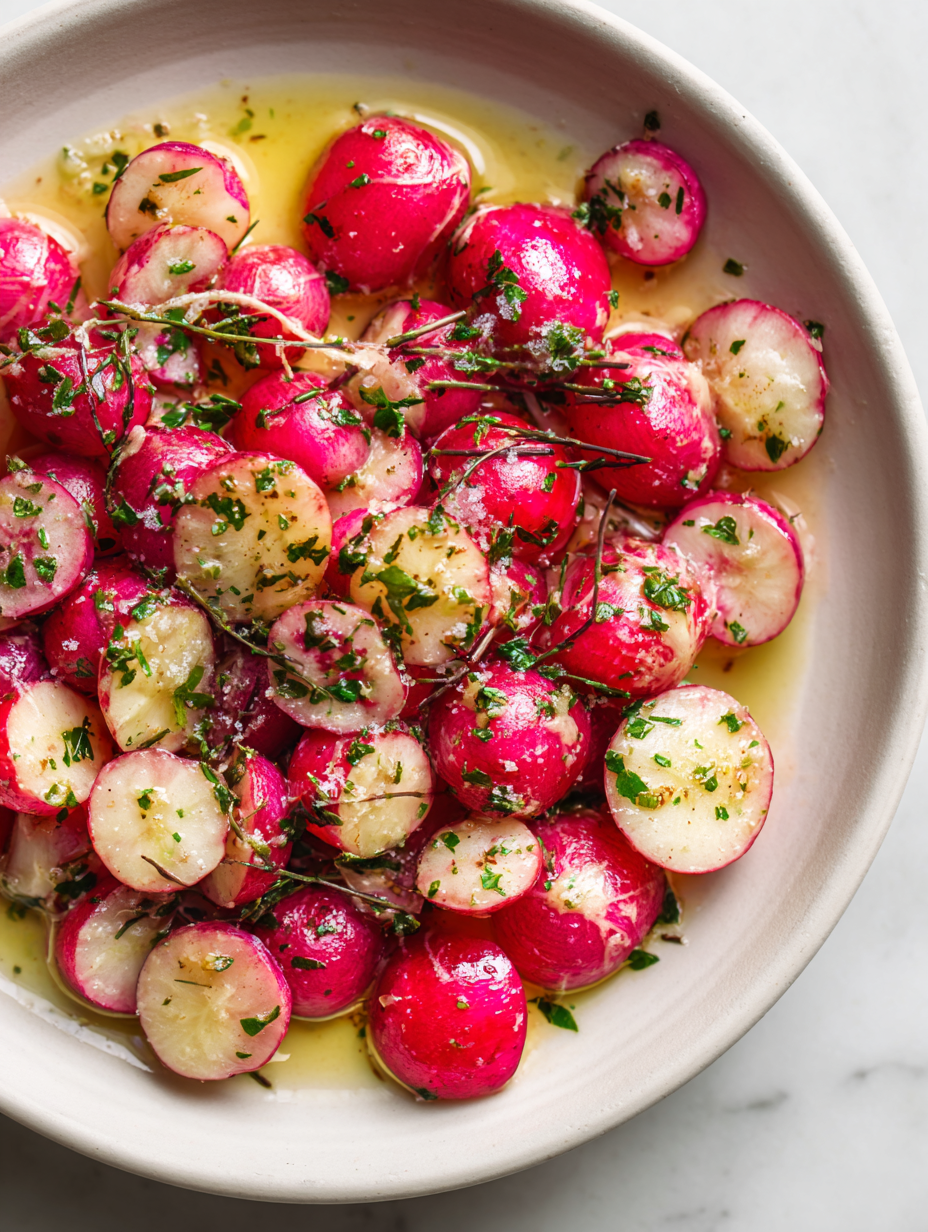
Sautéed Radishes in Butter
Ingredients
Equipment
Method
- Rinse the radishes thoroughly and pat dry. If large, halve them to ensure even cooking.
- Place a cast iron skillet over medium heat and add the butter. Let it melt, creating a gentle sizzle and aroma of toasted nuts.
- Once the butter foams and turns a light golden color, carefully add the radishes cut-side down if halved. Feel the sizzle as they hit the hot butter.
- Cook undisturbed for about 3-4 minutes until their edges are golden brown and caramelized, releasing a nutty aroma.
- Use tongs or a spatula to flip the radishes, then continue cooking for another 3-4 minutes, shaking the pan gently to promote even browning and softening.
- Check for tenderness by piercing a radish with a fork; they should be soft with slightly translucent edges. If needed, cook for an additional minute.
- Remove the skillet from heat, then sprinkle with flaky sea salt and freshly cracked black pepper. Squeeze lemon juice over if using, for a bright contrast.
- Transfer the sautéed radishes to a serving dish, spooning over any buttery juices from the pan. Garnish with chopped herbs for a fresh touch.
Notes
Pro tips for sautéed radishes
- Use high heat to get quick, even caramelization—don’t be afraid to crank it up for that crispy edge.
- Toss radishes in the butter with a gentle shake to coat evenly and prevent sticking or burning.
- Let the butter foam and just start to turn golden before adding radishes—this releases a nutty aroma.
- Sauté without stirring too much initially—allow edges to develop a rich, caramel color before flipping.
- For extra flavor, add a small splash of water or broth if the pan gets too hot and starts smoking.
- Finish with a pinch of flaky salt and a squeeze of lemon to elevate the natural sweetness and brightness.
Common mistakes and how to fix them
- FORGOT to check radish size? Slice smaller for quicker, even cooking.
- DUMPED all butter at once? Add gradually to control browning and prevent burning.
- OVER-TORCHED butter? Lower heat immediately and add a splash of cold butter to cool pan.
- MISSED the seasoning? Adjust with salt and pepper at the end for balanced flavor.
Quick Fixes & Pantry Hacks
- If radishes are too sharp, splash a little vinegar to mellow their bite.
- When butter smokes, turn down heat immediately and add a small cold piece to cool.
- Splash water if radishes stick; quickly deglaze to prevent burning and add moisture.
- DUMPED in too much salt? Rinse radishes briefly under cold water before cooking.
- Patch overcooked radishes with a squeeze of lemon to brighten and refresh.
Prep, store, and reheat tips
- Radishes can be sliced and prepped a day ahead; keep them in an airtight container in the fridge to maintain crunch and freshness.
- Store cooked radishes in a sealed container for up to 2 days; reheating gently in a warm skillet preserves their tender texture and buttery flavor.
- If refrigerated longer than a day, radishes may lose some of their bright snap, but will still taste rich and savory after reheating.
- Reheat in a warm pan over low heat, stirring gently, until just heated through and aromatic—watch for butter to shimmer and soften.
Top questions about sautéed radishes
1. What do sautéed radishes taste like?
Sautéed radishes are tender with a slightly caramelized, smoky flavor and a subtle sweetness that balances their peppery bite.
2. Which radishes are best for sautéing?
Use small, fresh radishes for the best texture and flavor. Larger or older radishes may be more woody or bitter.
3. Can I use oil instead of butter?
Butter adds a rich, nutty aroma and helps the radishes soften evenly; olive oil will give a lighter, fruitier flavor.
4. How should I prepare radishes before cooking?
Slice larger radishes in half or quarters to ensure they cook through evenly and develop caramelization.
5. How long should I sauté radishes?
Cooking time is usually around 6-8 minutes, until radishes are tender and edges are golden and slightly crisp.
6. How do I season sautéed radishes?
A pinch of flaky sea salt and a squeeze of lemon brighten the dish and enhance the natural flavors.
7. What herbs or spices go well with sautéed radishes?
Add herbs like chives or dill at the end for a fresh, herbal lift; or a sprinkle of black pepper for spice.
8. How should I store and reheat leftovers?
Store leftovers in an airtight container in the fridge for up to 2 days; reheat gently to preserve texture.
9. What if my radishes taste too sharp or bitter?
If radishes turn too sharp or bitter, a splash of vinegar or lemon juice can mellow their bite.
10. How do I avoid overcooking radishes?
Overcooking can make radishes mushy; cook just until tender and edges are caramelized to keep texture.
This simple dish might seem humble, but it’s a little reminder that good things often come from modest ingredients. The gentle aroma of butter and the tender bite of radishes make it a quietly satisfying side, perfect for any season’s table. It’s one of those recipes that feels both nostalgic and refreshingly new, especially when you want something easy and honest.
Whenever I make this, I’m reminded to appreciate the small, everyday moments in cooking. It’s not about fancy techniques, but about letting ingredients speak and turning them into something unexpectedly tender and rich. Sometimes, it’s these unpretentious dishes that make the biggest impression.

Hi, I’m Lucas Foster, the cook, writer, and everyday food enthusiast behind Totally in the Zone. This space is where my love for cooking meets my belief that food should fit into real life. Not rushed. Not overcomplicated. Just thoughtful, satisfying, and made with intention.