
Radishes often get a bad rap for their sharp, peppery bite, but roasting transforms them into something altogether different. When you toss radishes and carrots in a bit of oil and heat them until they’re golden, their natural sugars caramelize, mellowing out that bite and revealing a sweet, earthy depth. It’s a simple trick that turns these humble roots into a side dish that’s unexpectedly rich and satisfying, perfect for any season.
I’ve always loved how roasting can elevate everyday vegetables into something special, especially with radishes. They remind me of my grandma’s garden, where everything was fiery and fresh, but when roasted, they become soft and subtly sweet, almost smoky in flavor. It’s like giving a tiny, fiery vegetable a gentle, warm hug, and I can’t get enough of that transformation.
Focusing on the surprising sweetness and earthy depth that roasting brings out in radishes and carrots, transforming their sharp bite into a mellow, caramelized flavor that feels both familiar and new.
The story behind this recipe
- One evening, I was knee-deep in trying to clear out my fridge before a trip, and I found a bunch of radishes that were starting to look a little tired. Instead of tossing them, I threw them on a baking sheet with some carrots I had left over. The smell of roasting roots—sweet, smoky, with a hint of earth—hit me hard and took me right back to my childhood garden. That moment made me realize how much flavor you can unlock just by roasting, even from humble, everyday vegetables.
- Since then, I keep a stash of radishes and carrots in the fridge, ready to toss into the oven when I want something simple but full of flavor. It’s become my go-to side when I need something quick and satisfying, especially in the midst of busy weeks. This dish’s magic is in how it turns sharp, crunchy radishes into tender, caramelized bites—kind of like a secret weapon for transforming the ordinary into something special.
- heading
- The story behind this recipe
Ingredient breakdown: key components
- Radishes: I love their fiery crunch, but roasting mellows that bite into a smoky sweetness. Try slicing them thinner for quicker caramelization.
- Carrots: Their natural sugar shines when roasted—make sure to cut them evenly so they cook uniformly. Toss in a bit of honey if you want extra glaze.
- Olive oil: I use a generous drizzle to help the veggies caramelize and develop a rich flavor. Too little, and they stick or burn; too much, and they get greasy.
- Salt: A pinch of flaky sea salt at the end really enhances their earthy tones. Trust me, don’t skip this step—it’s the flavor booster.
- Pepper: Freshly cracked black pepper adds a subtle heat and depth. Sprinkle it generously before roasting for a smoky undertone.
- Herbs (optional): A sprinkle of thyme or rosemary near the end adds a fragrant, herbal lift. Use dried if fresh isn’t available, but fresh is better.
- Vinegar (optional): A splash of balsamic or apple cider vinegar after roasting brightens the sweetness and adds complexity. Don’t skip this if you love a tangy finish.
Spotlight on key ingredients
Radishes:
- Their fiery crunch mellows into smoky sweetness when roasted, revealing a tender, caramelized core.
- During roasting, they become softer, with a subtle, earthy aroma that deepens with time in the oven.
Carrots:
- Their natural sugar caramelizes beautifully, creating a sweet, smoky flavor and a tender bite.
- The surface develops a slight crispness, contrasting with their soft, moist interior for delightful texture.
Notes for ingredient swaps
- Dairy-Free: Swap butter for olive oil or coconut oil. You won’t miss the creaminess, but expect a slightly different richness.
- Sweeteners: Use maple syrup instead of honey for a smoky sweetness, or skip altogether for a more earthy flavor.
- Herbs: Fresh thyme or rosemary can be replaced with dried versions—just use half as much to avoid overpowering.
- Vinegar: Balsamic vinegar can be swapped with apple cider vinegar or lemon juice for a brighter, tangy finish.
- Oil: Avocado oil can replace olive oil for a milder, buttery note that’s also heat-tolerant.
- Radishes: If unavailable, parsnips or turnips make good substitutes, turning sweet and tender when roasted.
- Carrots: Sweet potatoes or parsnips can be used instead, adding their own earthy sweetness and moistness.
Equipment & Tools
- Baking sheet: To hold and evenly roast the vegetables.
- Mixing bowl: To toss vegetables with oil and seasonings.
- Spatula or tongs: To turn or flip vegetables during roasting.
- Oven: To provide consistent heat for roasting.
Roasted Radishes and Carrots Steps
- Preheat your oven to 220°C (430°F). Use a rimmed baking sheet to prevent juices from spilling over.
- Prepare your vegetables: slice radishes and carrots into uniform 1/2-inch pieces. This ensures even roasting.
- In a large bowl, toss the vegetables with 2 tbsp olive oil, making sure each piece is coated well. Add a pinch of salt and cracked black pepper.
- Spread the vegetables out in a single layer on the baking sheet. Don’t crowd them; give each piece room to caramelize.
- Roast for 20-25 minutes. Halfway through, shake the pan or use a spatula to turn the veggies. They should be golden around the edges and slightly caramelized.
- Check for doneness: the radishes should be tender and slightly shriveled, carrots soft and sweet-smelling, with some crispy edges.
- If the veggies look dull or soggy, roast a few more minutes. If they start to burn, cover loosely with foil and lower the oven temp slightly.
- Remove from the oven and let rest for 5 minutes. This helps the flavors settle and prevents burning your mouth on hot edges.
- Finish with a drizzle of balsamic vinegar or a squeeze of lemon if desired. Plate and serve warm, with herbs if you like.
Let the vegetables sit for 5 minutes after roasting to deepen flavors. Finish with a splash of vinegar or lemon for brightness. Serve warm in a bowl or on a plate, garnished with herbs if desired.
How to Know It’s Done
- Vegetables are nicely caramelized, not burnt or soggy.
- Radishes are tender but not mushy, with a slight jiggle.
- Carrots are soft, with a smoky aroma and a slight crackle when pressed.
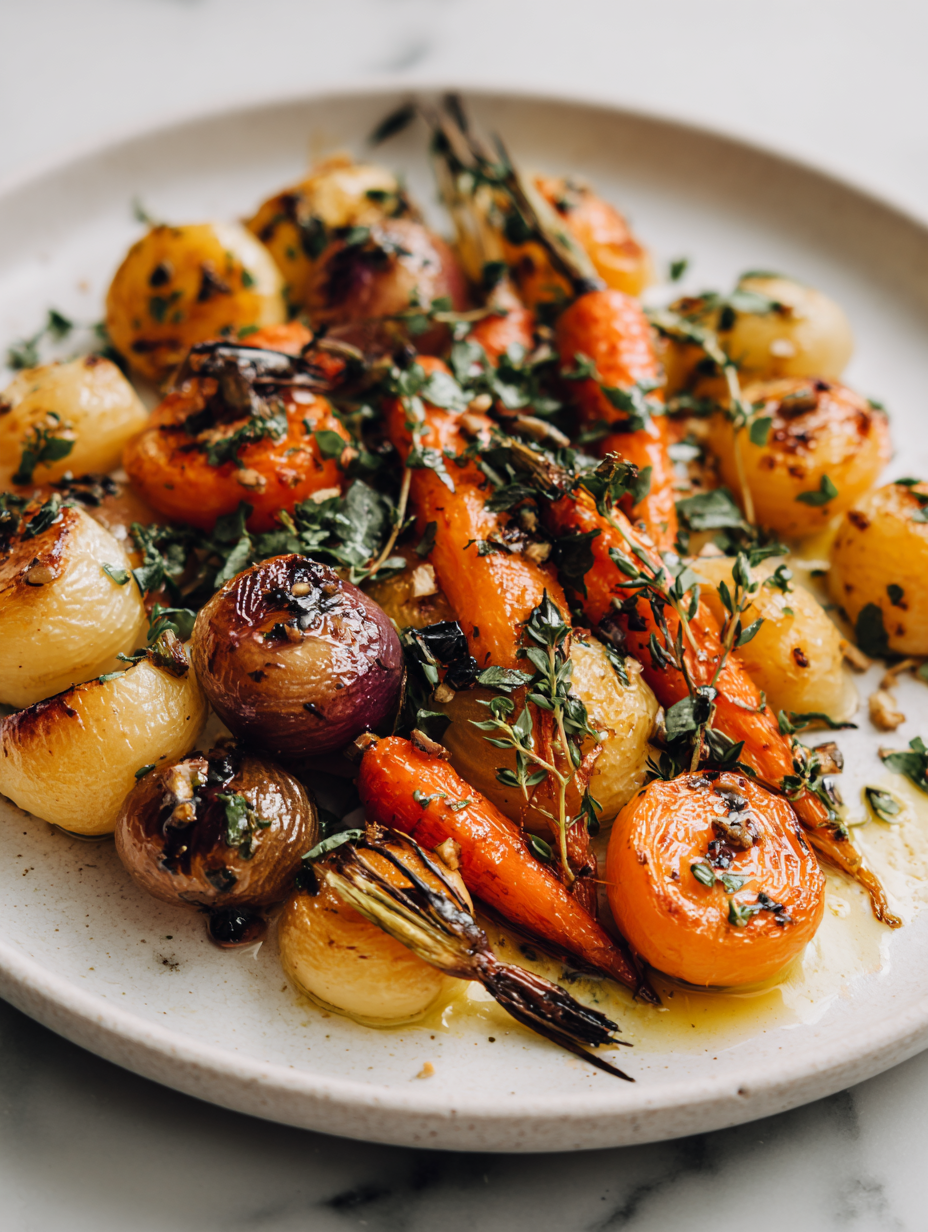
Roasted Radishes and Carrots
Ingredients
Equipment
Method
- Preheat your oven to 220°C (430°F) and line a baking sheet with parchment paper or a silicone mat.
- Prepare the vegetables by trimming and slicing the radishes and carrots into uniform 1/2-inch pieces; this helps them roast evenly and develop a beautiful caramelization.
- Place the sliced radishes and carrots into a large mixing bowl. Drizzle with the olive oil and toss thoroughly to coat each piece evenly; this promotes even browning and flavor.
- Spread the coated vegetables out in a single layer on the prepared baking sheet, making sure not to overcrowd them so they caramelize nicely.
- Roast in the oven for 20-25 minutes, shaking the pan or turning the vegetables halfway through. They should be golden around the edges and tender when pierced with a fork.
- Once roasted, remove the vegetables from the oven and transfer to a serving bowl. Drizzle with balsamic vinegar if you like a tangy, sweet finish, and toss gently to combine.
- Sprinkle with a pinch of flaky sea salt and cracked black pepper to enhance their earthy and smoky flavors.
- Serve warm or at room temperature, garnished with fresh herbs if desired, and enjoy the tender, caramelized sweetness of these humble roots.
Notes
Pro tips for perfect roasting
- Use high heat—around 220°C (430°F)—to get those edges beautifully caramelized and crispy.
- Slice radishes and carrots uniformly—about 1/2 inch—so they cook evenly and develop consistent color.
- Toss the veggies thoroughly with oil and seasonings—making sure each piece gets a good coating for even roasting.
- Shake or flip halfway through roasting—this helps develop an even, golden crust on all sides.
- Keep an eye on the edges—if they start to burn, cover loosely with foil to prevent bitterness.
- Rest vegetables for 5 minutes after roasting—this helps flavors settle and prevents burning your tongue on hot spots.
- Finish with a splash of vinegar or squeeze of lemon—brightens the dish and balances the earthy sweetness.
Common mistakes and how to fix them
- FORGOT to check oven temperature → Use an oven thermometer for accuracy.
- DUMPED the vegetables before roasting → Spread them out evenly for proper caramelization.
- OVER-TORCHED the radishes → Roast until tender and golden, not burnt.
- MISSED seasoning at the end → Finish with salt or vinegar to enhance flavor.
Quick fixes and pantry swaps
- When veggies burn around edges → Splash with a little water and lower oven temp.
- If radishes stay sharp after roasting → Douse with a dash of lemon juice to brighten.
- Dumped the veggies in too crowded a pan → Patch by roasting in batches for even caramelization.
- Over-torched the edges → Shield with foil and extend roasting time at lower heat.
- If you smell burnt bits but veggies are not cooked → Rescue with a sprinkle of fresh herbs for freshness.
Prep, store, and reheat tips
- Prep the vegetables: wash, slice radishes and carrots into uniform pieces up to a day ahead. Keep in an airtight container in the fridge—crisp and fresh when roasted.
- Store roasted radishes and carrots in an airtight container for up to 3 days. The flavors deepen and become more mellow overnight, so they might taste even better reheated.
- Reheat gently in a 180°C (350°F) oven for 10-15 minutes until warmed through. Look for a slight shimmer and aroma of caramelized edges to know they’re ready.
- If reheating in the microwave, do short bursts at medium power—check after 30 seconds. Expect softer, tender vegetables with a hint of smoky sweetness.
Top questions about roasted radishes and carrots
1. How do I pick good radishes for roasting?
Look for radishes that are firm, with bright color and no soft spots. Freshness makes a big difference in flavor and texture.
2. Should I slice radishes and carrots before roasting?
Thin slices roast faster and more evenly, so use a sharp knife or mandoline for uniform pieces.
3. What temperature should I roast at?
Preheat your oven to 220°C (430°F) for crispy, caramelized edges. Don’t skip this step.
4. How do I get even seasoning on the vegetables?
Toss the vegetables thoroughly with oil and seasonings before roasting to prevent sticking and uneven flavor.
5. How do I know when they’re done?
Roast until they’re tender and golden around the edges, about 20–25 minutes. Check for caramelization and softness.
6. Can I use another oil?
Use a good quality olive oil for rich flavor and better caramelization. Extra virgin is ideal.
7. Should I add vinegar or lemon?
Finish with a splash of vinegar or squeeze of lemon to brighten the natural sweetness and add contrast.
8. Can I make this ahead?
Store leftovers in an airtight container in the fridge for up to 3 days. Reheat gently to avoid sogginess.
9. What if they start to burn?
If vegetables burn or stick, lower the oven temperature slightly and cover with foil for even roasting.
10. How can I enhance the flavor after roasting?
Incorporate fresh herbs or a sprinkle of flaky sea salt after roasting for extra flavor and aroma.
Roasting radishes and carrots might seem like a simple act, but it unlocks a surprising depth of flavor that’s both familiar and fresh. The sweet, earthy aroma fills the kitchen and makes you wonder why you don’t do this more often. It’s a reminder that even humble vegetables can surprise you with their potential.
In the end, it’s about those little moments—smell of caramelized edges, the tender bite, the slight smoky finish—that make this dish linger in your mind. It’s straightforward, honest, and just enough of a nudge to rethink what vegetables can do. Sometimes, good food really is about letting the ingredients speak for themselves.

Hi, I’m Lucas Foster, the cook, writer, and everyday food enthusiast behind Totally in the Zone. This space is where my love for cooking meets my belief that food should fit into real life. Not rushed. Not overcomplicated. Just thoughtful, satisfying, and made with intention.