Getting these ribs on the smoker means dealing with a sticky, peppery rub that coats every inch. You’ll spend a good 10 minutes massaging the spice mix into the meat, making sure it’s evenly coated before hitting the heat.
Once they’re in the smoker, you’ll hear the crackle of the bark forming, smell the smoky air filling the kitchen, and periodically check the temp. No fancy gadgets needed—just a good eye on the thermometer and patience as they slowly turn tender.
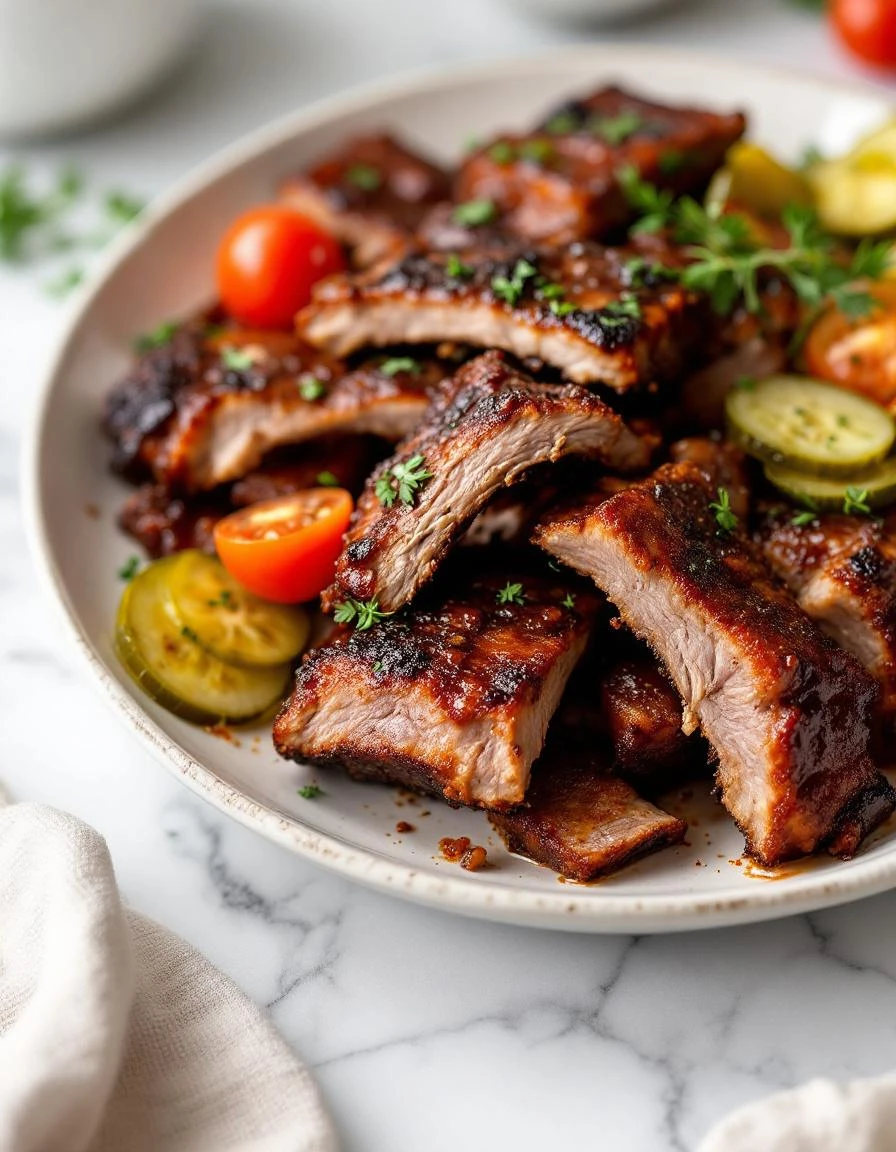
The crack of the bark as you slice through the smoky, tender ribs, revealing the juicy, pull-apart meat inside.
Essential ingredients and swaps
- Pork ribs: I pick meaty, well-marbled racks with a good layer of fat for flavor. If you’re in a pinch, a nice boneless cut works, but you miss that crackly bark and smoky juice escape.
- Dry rub spices: I use a mix of paprika, black pepper, salt, and a touch of cayenne—smoky, sharp, with a hint of heat. Feel free to swap in chili powder or omit cayenne for milder ribs.
- Wood chips: Hickory or apple wood give that classic smoky aroma. If you don’t have a smoker, soaked wood chips in water, then foil-wrapped and pierced, will do the trick.
- Vinegar spray: I keep a spray bottle of apple cider vinegar to spritz during the cook—adds brightness and helps keep the bark crusty. Skip or replace with apple juice if vinegar’s not your thing.
- Barbecue sauce: A tangy, slightly sweet sauce finishes these off. Use your favorite store-bought or make a quick one with ketchup, vinegar, and a touch of honey—no shame in shortcuts here.
- Apple cider vinegar: Brightens the smoky richness, cuts through the fat. Substitute with lemon juice if you want a citrus punch instead, but don’t skip it entirely.
- Salt: Basic but essential, I use coarse sea salt for seasoning the ribs. If you’re low on time, a quick dry brine a few hours ahead makes a noticeable difference.
Smoked Pork Ribs
Ingredients
Equipment
Method
- Begin by combining paprika, black pepper, salt, and cayenne pepper to create your dry rub. Mix well until evenly blended.
- Use your hands to massage the spice mixture thoroughly into both sides of the pork racks, coating every inch with the flavorful rub. Let sit for about 10 minutes to allow the flavors to penetrate.
- Preheat your smoker to a steady 225°F (107°C). Add soaked wood chips wrapped in foil with holes poked in the top to the smoker box or directly on the coals.
- Place the ribs meat side up onto the smoker grates, then insert a thermometer probe into the thickest part of the meat to monitor temperature.
- Smoke the ribs slowly for about 4 hours, spritzing with apple cider vinegar every hour to keep the meat moist and the bark crusty. Maintain a consistent temperature throughout.
- Check the internal temperature; once it reaches around 195-203°F (90-95°C), the ribs are tender and ready. If desired, wrap in foil for a short rest to lock in moisture.
- Gently remove the ribs from the smoker and let them rest for 10 minutes, allowing the juices to redistribute and the bark to set.
- Slice the ribs between the bones to reveal the juicy, pull-apart meat inside, and brush with your favorite barbecue sauce for the perfect finishing touch.
- Serve the ribs warm, enjoying the crackly bark and smoky aroma, alongside sides of your choice.
Common mistakes and how to fix them
- FORGOT to check the smoker temperature → Use a reliable thermometer to maintain consistent heat.
- DUMPED too much wood at once → Add wood gradually for a balanced smoky flavor.
- OVER-TORCHED the ribs → Keep the heat low and steady to prevent burning or drying out.
- MISSED the resting period → Let ribs rest at least 10 minutes before slicing for juiciness.
Make-Ahead and Storage Tips
- Rub the ribs with spice mix the night before—let the flavors soak in overnight for deeper smoky taste.
- Wrap the ribs tightly in foil or plastic and store in the fridge; they’ll keep well for up to 24 hours before smoking.
- You can freeze smoked ribs for up to 3 months. Wrap them well to prevent freezer burn, then thaw slowly in the fridge.
- Reheat gently—wrap in foil and warm in a low oven, around 250°F. Check for hot, juicy meat with a little smoke aroma.
- Flavor might mellow after refrigeration; a quick brush of BBQ sauce or a spritz of vinegar before reheating boosts freshness.
FAQs
1. How do I know when ribs are done?
Smoked pork ribs tend to have a rich, smoky aroma that fills the air and a tender, pull-apart texture with a slight chew. The bark should be firm with a crackly surface, giving way to juicy meat inside.
2. What’s the best way to check doneness?
Look for a deep, dark crust and meat that pulls back from the bones slightly. When you press gently, it should feel tender but not fall apart immediately—something that gives a little but still holds together.
3. Can I cook ribs without a thermometer?
If you don’t have a meat thermometer, check for a juicy, smoky aroma and the crackle of the bark. The meat should feel tender when you lift it with tongs, with some resistance but no raw wobble.
4. How do I reheat leftover ribs?
Reheating smoked ribs gently keeps them moist and smoky. Wrap in foil, warm at 250°F, and check every 10 minutes. The meat should be hot, juicy, and still fragrant of smoke.
5. How long can I store smoked ribs?
Ribs are best enjoyed within 3-4 days in the fridge, or up to 3 months frozen. Reheat slowly to preserve moisture and smoky flavor—avoid high heat that can dry out the meat.

Hi, I’m Lucas Foster, the cook, writer, and everyday food enthusiast behind Totally in the Zone. This space is where my love for cooking meets my belief that food should fit into real life. Not rushed. Not overcomplicated. Just thoughtful, satisfying, and made with intention.