The process starts with slicing fruit—think oranges, lemons, maybe a few berries—watch them release their juices as you cut, sticky fingers included. You toss everything into a big pitcher, then pour in the cool, clear white wine, feeling the chill as it hits your skin. There’s a certain mess of peels and seeds, but that’s part of the charm.
Next, you add a splash of brandy or liqueur if you’ve got it, and a bit of sweetener—honey or simple syrup—stirring until it dissolves and the fruit sinks into the wine. It’s a slow-mix, watching the bubbles rise and pop, a tiny fizzy reminder of the bright, fresh bite this drink will have.
The way the wine bubbles gently when you stir in the fruit, each bubble a tiny reminder of the fizzy, fresh bite to come.
What goes into this dish
- White wine: I go for something crisp and dry, like a Sauvignon Blanc or Pinot Grigio, to keep it refreshing. You can swap in a slightly sweeter wine if you prefer a fruitier backbone, but steer clear of anything too oaky or heavy—those flavors will dominate.
- Fruits: I like oranges, lemons, and berries for their bright flavors and vivid colors, but you could toss in pineapple chunks or peaches for a tropical twist. Just make sure they’re ripe and juicy—nothing worse than a flavorless berry sinking in the mix.
- Sweetener: Honey, simple syrup, or agave syrup all work. I usually go with honey for that floral note, but if you want a less sticky drink, skip it or use less. Avoid overly processed syrups—stick to natural sweetness for better balance.
- Liqueur: A splash of triple sec or elderflower liqueur adds depth, but skip it if you want a lighter, more straightforward sangria. If you don’t have any, a bit of fruit-infused vodka can do the trick, adding a subtle aroma without overpowering.
- Herbs & spices: Fresh mint or basil brightens the glass, but a cinnamon stick can add warmth—use sparingly, or it’ll turn your sangria into a spiced mess. I recommend fresh herbs for that clean, fragrant lift.
- Additional flavor: A splash of sparkling water or soda right before serving gives a lively fizz, but skip it for a still version if you prefer. It’s the final touch to keep everything lively and cool on a warm day.
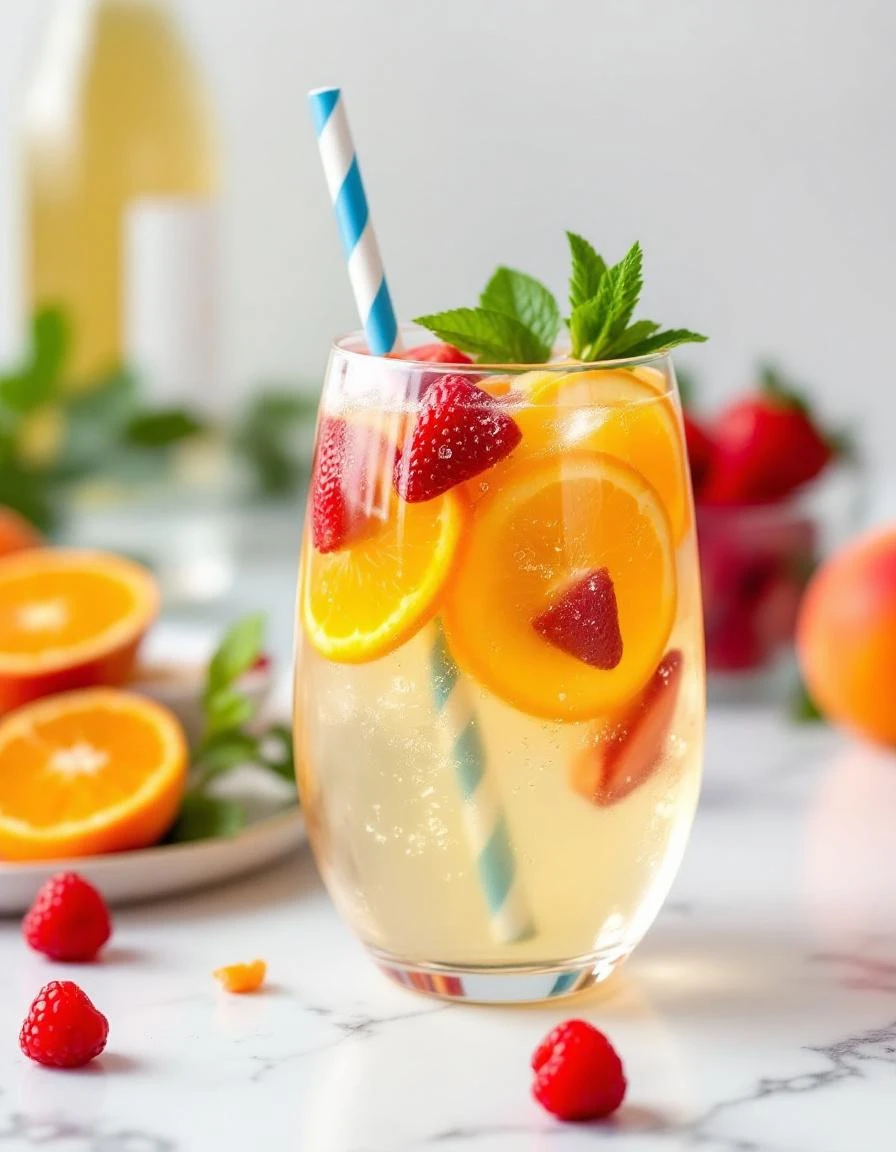
Fruity White Wine Sangria
Ingredients
Equipment
Method
- Start by slicing the orange and lemon into thin rounds, releasing their bright aromas as you cut.
- Place the sliced fruits and berries into a large pitcher or bowl, creating a colorful and fragrant base.
- Pour the chilled white wine over the fruit, watching the vibrant colors sink and mingle as the wine begins to take on their juices.
- Add a splash of brandy or liqueur for extra depth, if using, and stir gently to combine all the flavors.
- Stir in honey or simple syrup until it dissolves completely, balancing the fruity tartness with a touch of sweetness.
- Cover the pitcher and refrigerate for at least one hour, allowing the flavors to meld and the fruit to soften slightly.
- Just before serving, add a splash of sparkling water or soda to introduce a lively fizz, and gently stir to combine.
- Garnish with fresh herbs like mint or basil for a fragrant, colorful touch.
- Pour into glasses filled with ice, ensuring each glass gets a good mix of fruit and bubbles, then enjoy immediately.
Common mistakes and how to fix them
- FORGOT to taste before serving? Add a splash of citrus or sweetener to balance.
- DUMPED too much alcohol? Dilute with extra soda or fruit juice to mellow flavors.
- OVER-TORCHED the fruit? Remove it quickly and add fresh slices for brightness.
- MISSED chilling the wine? Keep it in the fridge for at least an hour before mixing.
Make-Ahead and Storage Tips
- You can prep the fruit and assemble the sangria a day ahead. Just keep it covered in the fridge.
- The flavors meld better after sitting for at least 4 hours, ideally overnight, to develop that bright, integrated taste.
- Store in the fridge for up to 24 hours; after that, the fruit may start to lose its freshness and release too much juice.
- If made too far in advance, the fruit can become mushy and the wine might turn dull—best to add fresh fruit just before serving.
- Refrigerate and gently stir before serving; avoid overheating. If it’s warm, the fruit and wine can lose their crispness and aroma.
FAQs
1. What wine should I use?
Look for a crisp, dry white wine like Sauvignon Blanc; it’s bright and makes the fruit pop in your mouth, with a clean, almost lemony aroma. Skip oaky wines—they’ll dull the freshness.
2. How do I choose the right fruit?
Use fresh, ripe fruits; oranges and berries give a juicy burst, while overripe fruits can turn mushy and flavorless after soaking. Rinse and slice them just before mixing.
3. Can I skip the liqueur?
A splash of triple sec or elderflower liqueur adds a fragrant boost, but skip if you want a simpler, lighter sip. It should smell citrusy or floral as you pour.
4. How long should I chill it?
Chill the wine and fruit for at least an hour before serving. The cold makes it refreshing and helps the flavors meld; the bubbles and fruit juice combine with a satisfying fizz.
5. Should I add soda in advance?
Add sparkling water or soda right before serving for a lively, bubbly feel. If it sits too long, the fizz fades and the fruit gets soft, losing its snap and brightness.

Hi, I’m Lucas Foster, the cook, writer, and everyday food enthusiast behind Totally in the Zone. This space is where my love for cooking meets my belief that food should fit into real life. Not rushed. Not overcomplicated. Just thoughtful, satisfying, and made with intention.