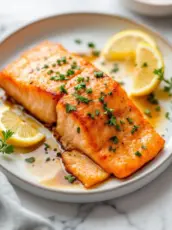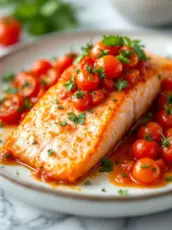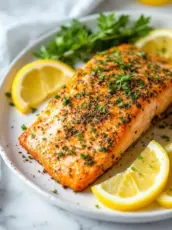
Firing up the air fryer means dealing with a bit of splatter and the smell of hot oil that lingers. You’ll hear the sizzle of the salmon skin crisping up, and see the edges turn a deep, golden brown.
Handling the fish raw, the slippery texture and faint fishy scent are part of the prep. It’s messy but straightforward—no fancy tools, just a quick pat-dry and a seasoned coat before the fryer does its thing.
Once cooked, the salmon comes out with a crackly crust that gives way to flaky flesh. The dill adds a fresh, fragrant punch that balances the richness, and you’ll get that satisfying sound of a gentle fork scrape.
The crisp snap of the salmon skin as you bite into it, contrasting with the tender, flaky flesh inside.
What goes into this dish
- Salmon fillets: I go for skin-on, wild if possible, for that crispy contrast. If you prefer boneless or skinless, the cook time shortens, but you miss the crunch and the visual appeal.
- Fresh dill: The bright, grassy scent wakes up the dish. If fresh isn’t available, dried dill can work—just use half the amount to avoid overpowering.
- Lemon: A squeeze brightens everything, with a zingy aroma that cuts through the richness. Lime can be a tangy substitute if lemon’s out of reach.
- Olive oil: Just a drizzle helps the seasoning stick and promotes crispness. If you’re out, a light spray of cooking spray works fine—just avoid using too much oil.
- Garlic powder: Adds that subtle, roasted depth. Fresh minced garlic can work but may burn quicker; add it after cooking for that fresh punch.
- Salt and pepper: The basics that bring out the flavor. Kosher salt gives a cleaner finish, but table salt is fine if that’s what you have.
- Optional: capers or a sprinkle of flaky sea salt after cooking can add a salty burst, but skip if you want pure simplicity.
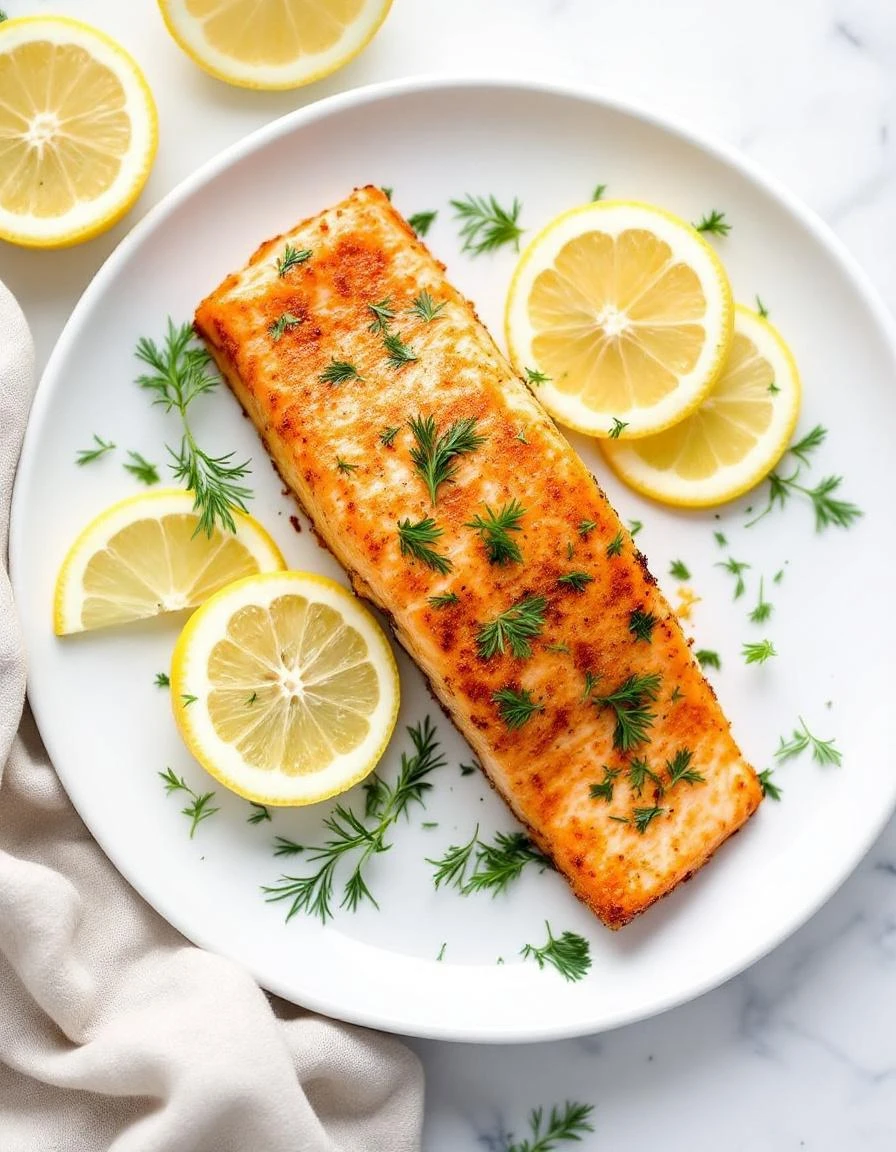
Crispy Air Fryer Salmon with Dill and Lemon
Ingredients
Equipment
Method
- Pat the salmon fillets dry thoroughly with kitchen paper to remove excess moisture, which helps achieve a crispy skin.
- Brush the fillets lightly with olive oil using a small brush or spray to promote crispness and help the seasonings stick.
- Sprinkle garlic powder, salt, and pepper evenly over both sides of the fillets, then gently press chopped dill into the flesh for fragrant freshness.
- Preheat your air fryer to 400°F (200°C) for about 3 minutes, ensuring it’s hot enough for crisping.
- Place the seasoned salmon fillets skin-side down into the air fryer basket, making sure they don’t touch each other for even cooking.
- Cook the fillets for 8-10 minutes, or until the skin is golden and crispy, and the flesh flakes easily when pressed with a fork.
- Once cooked, carefully remove the salmon from the air fryer and transfer to a serving plate.
- Squeeze fresh lemon juice evenly over the hot fillets, allowing the citrus to brighten and enhance the flavors.
- Garnish with additional dill if desired, then serve immediately to enjoy the crispy skin and tender, flaky interior.
Common mistakes and how to fix them
- FORGOT to preheat the air fryer, resulting in uneven crisping. Always preheat for at least 3 minutes.
- DUMPED too much oil on the fish, making it greasy. Use just a light brush or spray for best texture.
- OVER-TORCHED the salmon, leading to dry edges. Keep a close eye after 8 minutes and check early.
- MISSED patting the salmon dry, which prevented skin from crisping. Always pat thoroughly for a good crunch.
Make-Ahead and Storage Tips
- You can prep the salmon fillets a few hours ahead—pat dry, season, and keep covered in the fridge. It helps the skin crisp up better during cooking.
- Fish can be stored in the fridge for up to 24 hours before cooking, but don’t marinate for too long or the texture might get mushy.
- Fresh dill is best added just before serving, but you can chop and store it in a small container in the fridge for up to 2 days.
- Refrigerated salmon will lose some of its crispness if stored for too long—best eaten within a day or two after cooking.
- To reheat, warm the salmon gently in the air fryer at 300°F for 3-4 minutes. Listen for that gentle crackle and check that the flesh is still flaky and moist.
FAQs
1. How do I know when the salmon is done?
The salmon skin should feel crispy and crackle gently when pressed, with a tender, flaky inside. It’s sensory satisfying when cooked right.
2. What should the cooked salmon smell like?
Look for a golden-brown crust and opaque flesh. The fish should flake easily with a fork, releasing a fresh, briny aroma.
3. Can I tell if it’s overcooked just by looking?
Use a meat thermometer if unsure—aim for 125-130°F. But mostly, rely on visual cues and that crackly skin.
4. What if I overcook it?
Yes, overcooked salmon turns dry and loses its tender, moist texture. Keep an eye after 8 minutes, and check early to avoid dryness.
5. How do I reheat leftover salmon?
Reheat in the air fryer at 300°F for 3-4 minutes until it’s just warm and still flaky. You’ll hear a gentle crackle as it reheats.

Hi, I’m Lucas Foster, the cook, writer, and everyday food enthusiast behind Totally in the Zone. This space is where my love for cooking meets my belief that food should fit into real life. Not rushed. Not overcomplicated. Just thoughtful, satisfying, and made with intention.