
On busy weeknights, I reach for this carrot and potato curry almost without thinking. It’s honest food, no fuss, just humble ingredients simmered into something warm and satisfying. I love how simple it is to throw together after a long day, yet it feels like a complete, nourishing meal.
There’s a quiet pleasure in transforming everyday vegetables into a dish that’s both comforting and unpretentious. No fancy spices needed—just good, honest flavors that remind me that good food doesn’t have to be complicated. It’s a reminder that sometimes, the simplest meals carry the most weight.
Focusing on how this simple carrot and potato curry can serve as a comforting, unpretentious meal on busy weeknights, highlighting the beauty of humble ingredients transformed through a straightforward, honest cooking process.
The story behind this recipe
This recipe was born out of a rainy weekend when I had just a handful of root vegetables left in the fridge. I wanted something warm, filling, but not complicated. The kind of dish that makes you feel cozy without fuss, perfect for those nights when everything else feels a little chaotic. It’s become a go-to because it’s honest, straightforward, and somehow always hits the spot after a long day.
Ingredient breakdown: key components
- Carrots: I like them firm and slightly sweet, their bright orange color adds a vivid pop. Use organic for a deeper flavor; try roasting before adding for a smoky edge.
- Potatoes: Starchy and hearty, I prefer russets for a fluffy texture. Slice evenly to cook through simultaneously, or mash a bit for creaminess if you like it softer.
- Onions: They should be golden and fragrant, giving a sweet, caramelized aroma. Use yellow onions; if you want less bite, cook them slowly until soft and translucent.
- Ginger: Fresh and punchy, it brightens the curry with a lemony zing. Grate just before adding so it releases its full aroma; skip if you want milder heat.
- Spices: I rely on cumin and turmeric—earthy and warm. Toast them briefly in oil to unlock their full flavor; adjust to taste for more warmth or subtlety.
- Coconut milk: Creamy and slightly sweet, it mellows the spices beautifully. Use full-fat for richness; if you want a lighter version, dilute with a splash of water.
- Oil: I prefer a neutral oil like canola or vegetable for sautéing. It should shimmer when hot—if it smokes, reduce heat immediately to avoid bitterness.
Spotlight on key ingredients
Carrots:
- I prefer them firm with a bright orange hue, their natural sweetness intensifies when cooked. Use organic for a deeper flavor; roasting enhances their smoky notes.
- Potatoes: Starchy and hearty, I choose russets for a fluffy texture that absorbs spices well. Slice evenly for uniform cooking; mash a bit for added creaminess if desired.
Onions and Ginger:
- Onions: When golden and fragrant, they add a sweet, caramelized aroma to the curry. Use yellow onions; cook slowly until translucent for maximum flavor.
- Ginger: Fresh and punchy, it brightens the dish with a lemony zing. Grate just before adding to release full aroma; skip if you prefer milder heat.
Notes for ingredient swaps
- Dairy-Free: Swap coconut milk for almond or cashew milk. It’s lighter, less creamy, but still smooth and subtly nutty.
- Vegetable Variations: Use sweet potatoes instead of regular potatoes for a sweeter, softer bite. It adds a cozy, almost caramel-like flavor.
- Spice Level: Add a pinch of cayenne or chili flakes if you like heat. Adjust to suit your spice tolerance, but go slowly to avoid overwhelming the dish.
- Fresh Herbs: Finish with cilantro or parsley for a fresh, bright contrast. If unavailable, a squeeze of lemon works well to lift the flavors.
- Oil Choices: Use ghee or butter for a richer, more fragrant base. It offers a nutty aroma that complements the earthy spices.
Equipment & Tools
- Large heavy-bottomed pot or Dutch oven: For even heat distribution and simmering the curry.
- Sharp knife: To chop vegetables precisely and safely.
- Cutting board: Surface for prepping the vegetables.
- Wooden spoon or spatula: To stir and prevent sticking during cooking.
Step-by-step guide to carrot and potato curry
- Gather your equipment: a large heavy-bottomed pot or Dutch oven, a sharp knife, a cutting board, and a wooden spoon or spatula for stirring.
- Peel and chop 3 carrots into 1-inch chunks. Do the same with 2 large potatoes, aiming for even pieces to cook uniformly.
- Heat 2 tablespoons of oil over medium heat (about 160°C/320°F) in the pot. Add 1 large chopped onion and cook until translucent and fragrant, about 5 minutes.
- Stir in 1 teaspoon cumin and 1/2 teaspoon turmeric. Toast the spices for 30 seconds until aromatic, then add the grated ginger (about 1 tablespoon).
- Add the chopped carrots and potatoes to the pot. Stir well to coat with spices and cook for another 3-4 minutes, letting the vegetables start to soften.
- Pour in 1 can (400ml) of coconut milk and 1/2 cup of water or broth. Bring to a gentle simmer, then reduce heat to low (about 90°C/194°F). Cover loosely.
- Cook for 20-25 minutes, stirring occasionally. Check the vegetables for tenderness—carrots and potatoes should be soft but not falling apart.
- Uncover and simmer for another 5 minutes to thicken the sauce slightly. Taste and adjust salt or spice if needed.
- Remove from heat. Let the curry rest for 5 minutes to allow flavors to meld. Serve hot, with rice or bread.
Once cooked, turn off the heat and let the curry sit for 5 minutes. Serve in bowls, garnished with fresh herbs if desired. Enjoy the warmth and depth of flavors that have melded together.
How to Know It’s Done
- Vegetables are tender when pierced with a fork, with a slight jiggle in the center.
- The sauce has thickened slightly and coats the vegetables evenly.
- A fragrant aroma of spices and coconut milk fills the kitchen, with a hint of ginger zing.
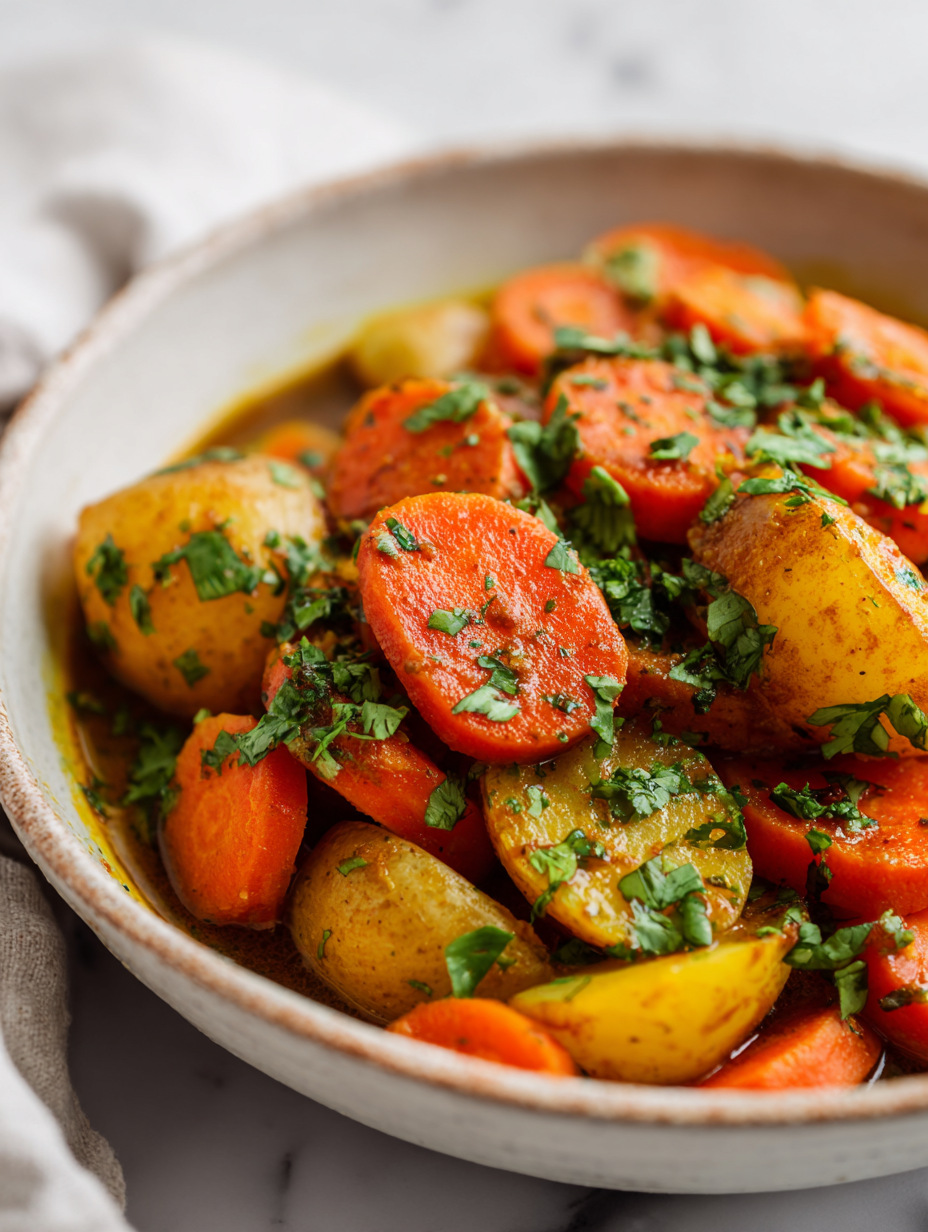
Simple Carrot and Potato Curry
Ingredients
Equipment
Method
- Gather your equipment: a large heavy-bottomed pot, a sharp knife, a cutting board, and a wooden spoon.
- Peel and chop the carrots into 1-inch chunks, and do the same with the potatoes, aiming for even pieces to ensure uniform cooking.
- Heat the oil over medium heat until shimmering, then add the chopped onion. Cook, stirring occasionally, until golden and fragrant, about 5 minutes.
- Stir in the cumin and turmeric, cooking briefly for about 30 seconds until aromatic, then add the grated ginger and cook for another minute.
- Add the chopped carrots and potatoes to the pot, stirring to coat them with the spices. Cook for 3-4 minutes until they start to soften and release their aroma.
- Pour in the coconut milk along with a half cup of water or broth, then bring the mixture to a gentle simmer.
- Reduce the heat to low and cover loosely, letting the curry simmer for 20-25 minutes, stirring occasionally, until the vegetables are tender and the sauce has thickened slightly.
- Uncover and cook for another 5 minutes to allow the sauce to reduce further, stirring gently. Taste and season with salt as needed.
- Remove from heat and let sit for 5 minutes to allow flavors to deepen. Serve hot, garnished with herbs if desired, alongside rice or bread.
Essential Tips for Perfect Curry
- Use a sharp knife to evenly slice vegetables, ensuring uniform cooking and texture.
- Sauté onions over medium heat until golden and fragrant, about 5 minutes, for a sweet base flavor.
- Toast spices briefly in oil until aromatic to unlock full flavor before adding liquids.
- Add grated ginger at the right moment—just before liquids—to maximize its punchy aroma.
- Simmer vegetables gently—around 90°C/194°F—cover loosely, until tender but not mushy.
- Let the curry rest for 5 minutes after cooking to allow flavors to meld and deepen.
- Adjust seasoning gradually; taste and add salt or spice in small increments for balanced flavor.
Common mistakes and how to fix them
- FORGOT to adjust heat early? Turn down immediately to prevent burning spices.
- DUMPED ingredients in wrong order? Follow step-by-step for even cooking and flavor build.
- OVER-TORCHED spices? Reduce heat and add a splash of water to mellow bitterness.
- MISSED the rest time? Let the curry sit for 5 minutes for full flavor melding.
Quick fixes and pantry swaps
- When sauce is too thin, splash in a little coconut milk and simmer until it shimmers.
- If vegetables are undercooked, increase heat slightly and cook for another 3 minutes.
- Splash some lemon juice when curry is too bland, brightening the overall flavor.
- Patch over-seasoned curry with a dollop of yogurt or a splash of water to mellow heat.
- Shield burning spices by lowering heat immediately and adding a splash of water or broth.
Prep, store, and reheat tips
- Peel and chop carrots and potatoes the day before; store in airtight containers in the fridge for up to 24 hours. Vegetables stay crisp and fresh, ready to cook.
- The curry can be made a day ahead; cool completely and store in a sealed container in the fridge for up to 2 days. Flavors deepen overnight, making it even more comforting.
- Reheat gently over low heat, stirring occasionally, until steaming and fragrant. The sauce should shimmer and thicken slightly as it warms.
- For longer storage, freeze the cooled curry in portions for up to 3 months. Thaw in the fridge overnight and reheat thoroughly, watching for bubbling edges.
Frequently Asked Questions
1. How do I prepare vegetables for even cooking?
Use a sharp knife to cut carrots and potatoes into even chunks. This ensures they cook uniformly and stay tender without falling apart.
2. When do I add the coconut milk?
Add the coconut milk after sautéing the spices and vegetables. Simmer gently for about 20-25 minutes until the veggies are tender and the sauce has thickened.
3. How can I make the curry spicier?
Adjust the spice level by adding chili flakes or cayenne gradually. Taste as you go to prevent it from becoming too fiery.
4. What if the curry is too thick or too thin?
If the curry is too thick, stir in a splash of water or broth. If too thin, simmer uncovered for a few more minutes until it thickens.
5. Should I use fresh or ground ginger?
Use fresh ginger for a bright, punchy flavor. Grate it just before adding to release the maximum aroma and zing.
6. How long does the curry last in the fridge?
Store leftovers in an airtight container in the fridge for up to 2 days. Reheat gently over low heat until steaming and fragrant.
7. Can I substitute sweet potatoes?
You can swap sweet potatoes for regular potatoes for a sweeter, softer variation. Roasting them beforehand adds a smoky depth.
8. How do I enhance the flavor before serving?
Finish the curry with a squeeze of lemon or fresh herbs like cilantro to brighten the flavors just before serving.
9. What if my vegetables aren’t soft enough?
If the vegetables are undercooked, increase the heat slightly and cook for a few more minutes, checking tenderness often.
10. Can I use different oils or fats?
For a richer taste, use ghee or butter instead of oil. It adds a nutty aroma and deepens the overall flavor.
This simple curry is a reminder that comfort can be found in humble ingredients. It’s a dish that welcomes you home, filling the kitchen with warm, spicy aromas. Sometimes, the best meals are the ones that don’t ask for anything fancy, just honest, good food.
In a world obsessed with perfection, I find solace in how this dish embraces every imperfect, beautiful aspect of everyday cooking. It’s honest, unpretentious, and keeps me grounded—no matter how chaotic the day might be.

Hi, I’m Lucas Foster, the cook, writer, and everyday food enthusiast behind Totally in the Zone. This space is where my love for cooking meets my belief that food should fit into real life. Not rushed. Not overcomplicated. Just thoughtful, satisfying, and made with intention.