
There’s something about the way asparagus transforms when it’s gently cooked into a risotto that makes me smile. The natural sweetness softens, releasing a grassy aroma that mingles with the rich, nutty Parmesan melting into every bite. It’s simple, honest food, but it feels like a warm hug on a busy weeknight, no fancy tricks needed.
What makes this dish stand out is how the asparagus’s subtle, vegetal brightness balances perfectly with that sharp, salty kick from Parmesan. It’s a dance of flavors—gentle and bold all at once—that somehow feels both comforting and surprising. I love how the ingredients come together in that creamy, slightly chewy bite, making you slow down and savor each spoonful.
Focusing on how the natural sweetness of asparagus pairs unexpectedly well with the sharp, salty kick of Parmesan, creating a balance that’s both comforting and surprisingly nuanced.
The story behind this recipe
- This recipe came together one rainy afternoon when I needed something cozy but fresh. I had a bunch of asparagus and a block of Parmesan that I didn’t want to waste. Stirring it all into a creamy, cheesy risotto felt like a simple act of comfort that also sparked a little joy.
- I remember the first time I made this dish—how the aroma of toasted rice and melting cheese filled the kitchen, making the rain outside seem softer. Since then, it’s become my go-to for nights when I want something hearty but not heavy, and it always feels like a small celebration of spring’s fleeting green bounty.
- heading: ‘The story behind this recipe’
Ingredient breakdown
- Asparagus: I love how the tips turn tender yet still have a slight bite, releasing a grassy aroma that’s fresh and vibrant. If you prefer softer spears, cook them a minute longer.
- Arborio rice: It’s the backbone—creamy, starchy, and forgiving. For extra creaminess, toast the grains in butter until just golden before adding broth.
- Parmesan: The salty, umami punch that makes the dish sing. Freshly grated is best; skip the pre-grated stuff if you want maximum flavor and meltability.
- Vegetable broth: It’s the quiet hero—infuses the rice with gentle flavor. Use a good quality, low-sodium broth to avoid overpowering the delicate asparagus.
- Butter and olive oil: They create that luscious base. I like to start with olive oil for a bit of grassy richness, then finish with butter for depth and shine.
- Lemon zest (optional): Adds a bright, zesty contrast. A little zest stirred in just before serving lifts the dish from comforting to invigorating.
- Salt and pepper: Essential for balance. Taste as you go; the Parmesan will add saltiness, so be cautious early on.
Spotlight on key ingredients
Asparagus:
- I love how the tips turn tender yet still have a slight bite, releasing a grassy aroma that’s fresh and vibrant. If you prefer softer spears, cook them a minute longer.
- Arborio rice: It’s the backbone—creamy, starchy, and forgiving. For extra creaminess, toast the grains in butter until just golden before adding broth.
Parmesan:
- The salty, umami punch that makes the dish sing. Freshly grated is best; skip the pre-grated stuff if you want maximum flavor and meltability.
- Vegetable broth: It’s the quiet hero—infuses the rice with gentle flavor. Use a good quality, low-sodium broth to avoid overpowering the delicate asparagus.
Notes for ingredient swaps
- Dairy-Free: Use a plant-based cheese or nutritional yeast instead of Parmesan. It won’t melt quite the same, but it adds cheesy umami.
- Vegan: Swap butter for a neutral oil like light olive oil or avocado oil. The flavor will be lighter but still satisfying.
- Gluten-Free: Ensure broth is gluten-free, and use Arborio rice, which is naturally gluten-free, for that creamy texture.
- Lower Sodium: Opt for a low-sodium broth and skip extra salt, letting the Parmesan and broth’s natural saltiness shine through.
- Extra Vegetables: Mix in peas or spinach for added color and nutrients, especially if you want a more vibrant dish.
- Herb Variations: Toss in fresh herbs like basil or thyme at the end for a different aromatic profile.
- Lemon Zest: Add more lemon zest or a squeeze of lemon juice for a brighter, citrusy contrast if you love a zing.
Equipment & Tools
- Large skillet or wide saucepan: To cook the risotto evenly and allow stirring.
- Wooden spoon: For gentle stirring and preventing rice from sticking.
- Ladle: To add hot broth in controlled, small amounts.
- Grater: To finely grate Parmesan for smooth melting.
Step-by-step guide to creamy asparagus risotto
- Gather your equipment: a large deep skillet or wide saucepan, a wooden spoon, a ladle, and a grater for Parmesan. Have everything within reach before starting, so you’re not scrambling mid-process.
- Bring 1.2 liters (about 4.8 cups) of vegetable broth to a gentle simmer in a separate pot. Keep it warm—this will be added gradually to the rice later.
- Trim the asparagus: snap off the woody ends, then cut the tender parts into 1-inch pieces and set aside the tips for garnish. This makes sure they cook evenly and quickly.
- Heat 2 tbsp olive oil over medium heat (about 160°C/320°F). Add the chopped asparagus and cook for 3-4 minutes until it softens slightly and releases a fresh, grassy aroma. Remove and set aside.
- In the same pan, add 1 tbsp butter and toast 1 cup Arborio rice over medium heat for 2 minutes, stirring constantly. The rice should turn slightly translucent and smell toasty, about 2 minutes.
- Start adding warm broth, just enough to cover the rice—about 1/2 cup. Stir gently until most of the liquid is absorbed, about 2-3 minutes. Repeat this process, adding broth in 1/2 cup increments, stirring often, allowing each addition to be absorbed before adding more.
- After about 15 minutes, the rice should be creamy and tender but still have a slight bite. Stir in the cooked asparagus and 1/2 cup grated Parmesan, allowing it to melt and coat the rice evenly. Cook for another 2 minutes.
- Taste and adjust seasoning with salt and freshly cracked black pepper. If the risotto feels too thick, stir in a splash of warm broth until it reaches your desired creamy consistency.
- Remove from heat and stir in a final knob of butter for shine and richness. Let sit for 1-2 minutes to settle and develop flavors.
- Plate the risotto in warm bowls, garnish with reserved asparagus tips and a sprinkle of Parmesan. Serve immediately while hot and creamy.
Let the risotto rest for 1-2 minutes off heat, then serve immediately. Garnish with asparagus tips and extra Parmesan for presentation. Enjoy the creamy, fragrant bite.
How to Know It’s Done
- The rice should be tender yet slightly al dente, with a creamy, slightly runny consistency.
- The asparagus tips should be bright green and tender but not mushy.
- The Parmesan should be fully melted, creating a glossy, cheesy sauce.
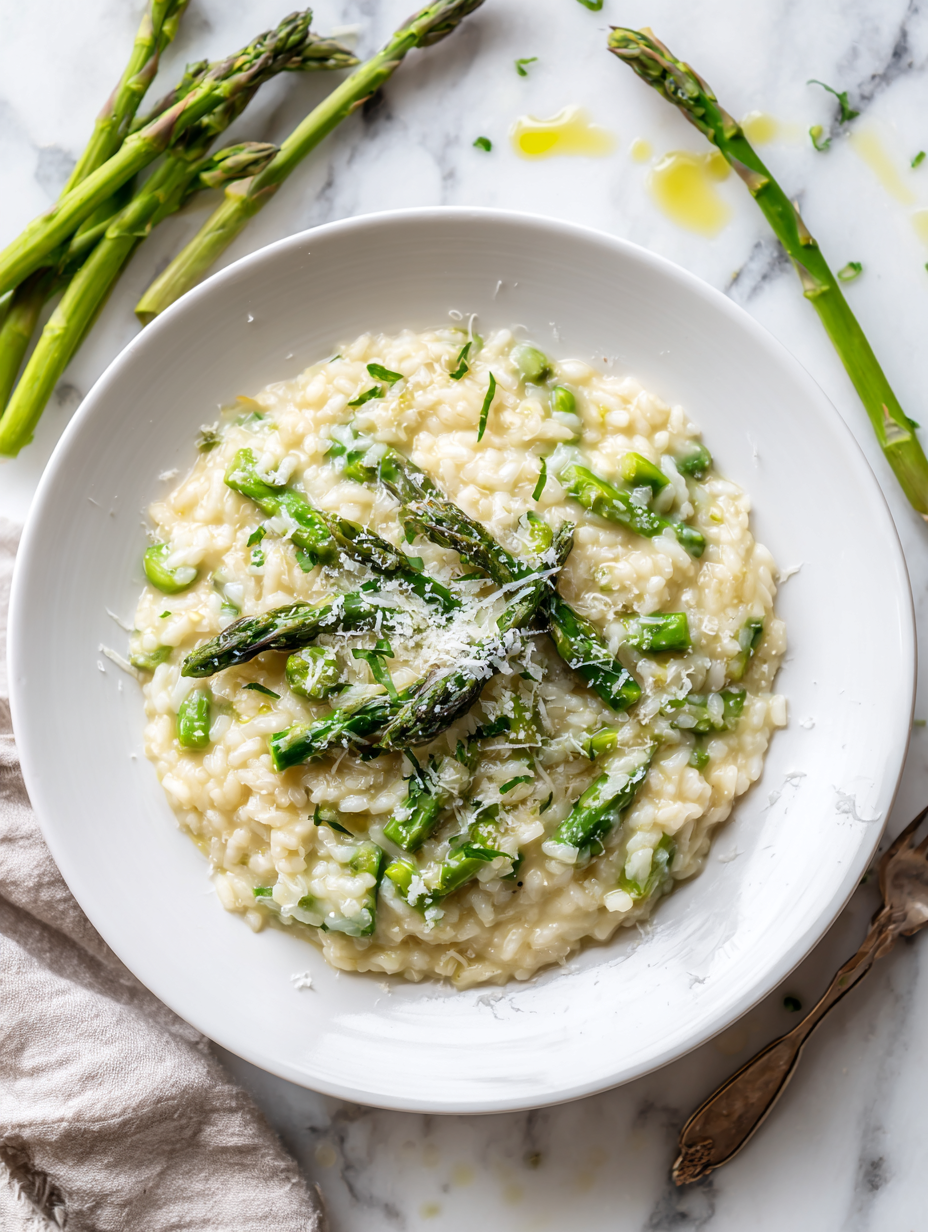
Creamy Asparagus Risotto
Ingredients
Equipment
Method
- Set a large skillet over medium heat and pour in the olive oil. Once it’s shimmering and fragrant, add the chopped asparagus and cook for 3-4 minutes until it softens slightly and releases a fresh aroma. Remove and set aside.
- In the same pan, add a tablespoon of butter and toast the Arborio rice over medium heat for about 2 minutes, stirring constantly until the grains turn slightly translucent and smell nutty.
- Begin adding warm vegetable broth in small 1/2 cup portions, stirring gently and allowing each addition to be absorbed before adding the next. Continue this process, stirring often, for about 15 minutes until the rice is creamy and tender but still has a slight bite.
- When the rice is nearly done, stir in the cooked asparagus pieces, grated Parmesan, and lemon zest if using. Cook for another 2 minutes until everything is well combined and the cheese has melted into a glossy sauce.
- Season with salt and freshly cracked black pepper, tasting and adjusting as needed. Remove from heat and stir in the remaining tablespoon of butter for extra shine and richness.
- Serve the risotto immediately, garnished with the reserved asparagus tips and extra Parmesan if desired. The dish should be creamy, glossy, and vibrant with a balance of vegetal sweetness and cheesy richness.
Notes
Pro tips for perfect risotto
- Bold the rice: Toast the Arborio rice in butter until it turns slightly golden and smells nutty, which enhances creaminess.
- Add broth gradually: Pour in warm broth in small increments, stirring constantly to release starch and achieve that silky texture.
- Stir often: Keep the rice moving gently to prevent sticking and ensure even cooking, especially as the risotto thickens.
- Check the color: The rice should be tender but still slightly al dente, with a creamy, flowing consistency when ready.
- Finish with butter and cheese: Off heat, stir in butter and Parmesan until glossy and rich, then serve immediately for best texture.
- Cook asparagus properly: Sauté just until tender and vibrant green, maintaining a slight bite to contrast with the creamy rice.
- Taste and adjust: Always taste for salt and pepper at the end—Parmesan adds salt, so go easy early on, then season to balance.
Common mistakes and how to fix them
- FORGOT to stir continuously → Stir often to prevent rice from sticking and burning.
- DUMPED all broth at once → Add broth gradually for creamy, evenly cooked risotto.
- OVER-TORCHED the rice → Cook on medium heat until rice is tender but still firm.
- USED cold broth → Keep broth warm to maintain a gentle simmer, aiding even cooking.
Quick fixes and pantry swaps
- When risotto looks too thick → Splash in warm broth and stir gently until loosened.
- If Parmesan isn’t melting smoothly → Grate it finely and add off heat for better integration.
- When asparagus tips are overcooked → Remove earlier and add at the end for vibrant color and texture.
- Splash a little lemon juice when risotto is bland → Brighten flavors instantly with a quick squeeze.
- Patch a sticking pan → Pour a splash of hot water or broth and gently scrape with a wooden spoon.
Prep, store, and reheat tips
- Prep the asparagus: Trim and chop ahead, keeping it in the fridge for up to 24 hours. It stays bright and fresh, ready to cook.
- Make the broth: Keep your vegetable broth warm on the stove or in a thermos. This helps the risotto cook evenly and absorb flavor smoothly.
- Grate Parmesan: Do this just before cooking to preserve its aroma and flavor. Store in an airtight container for quick access.
- Cook and cool leftovers: Store cooled risotto in an airtight container in the fridge up to 2 days. Reheat gently, stirring often, until steaming and creamy.
- Reheating tips: Add a splash of warm broth or water to loosen the risotto. Warm slowly over low heat, watching for the creamy texture to return.
Top questions about this risotto
1. Can I use frozen asparagus?
Use fresh asparagus for the best flavor and texture. Frozen can work in a pinch, but will be softer and less vibrant.
2. Why does my Parmesan not melt smoothly?
Grate the Parmesan finely for smooth melting. Adding it off heat helps prevent clumps and keeps the cheese glossy.
3. How do I know when asparagus is cooked perfectly?
Cooking the asparagus just until tender and bright green preserves its flavor and slight crunch, contrasting nicely with creamy rice.
4. Why is my risotto too thick or gluey?
Gradually adding warm broth and stirring constantly helps release starch, making the risotto creamy without becoming gluey.
5. Can I substitute Arborio rice?
Using Arborio rice is key for that signature creamy texture. Other short-grain rices won’t give the same richness.
6. How often should I stir the risotto?
Stir often to prevent sticking and ensure even cooking. Keep the heat moderate—about 160°C/320°F—so the rice cooks gently.
7. When should I add the butter and cheese?
Finish with a knob of butter and extra Parmesan off heat. This adds shine, richness, and a silky finish.
8. How do I reheat risotto without it drying out?
Reheat leftovers slowly over low heat, adding a splash of broth to restore creaminess and prevent drying out.
9. What broth works best for this dish?
Use high-quality vegetable broth for flavor. It’s the silent backbone that enhances the overall taste without overpowering the asparagus.
10. Can I add lemon to this risotto?
Adding lemon zest or a squeeze of lemon juice brightens the dish and balances the richness of Parmesan.
This risotto isn’t just about creamy comfort; it’s a celebration of spring’s fresh green bounty. The aroma of toasted rice mingling with bright asparagus makes every bite feel like a small, intentional pause in a busy day.
It’s a dish I turn to when I want something simple but full of flavor, something that reminds me of slow weekends and quiet kitchens. Sharing it with someone makes the moment even better—because good food always tastes better when it’s shared.

Hi, I’m Lucas Foster, the cook, writer, and everyday food enthusiast behind Totally in the Zone. This space is where my love for cooking meets my belief that food should fit into real life. Not rushed. Not overcomplicated. Just thoughtful, satisfying, and made with intention.