Lemon pea pasta is one of those dishes that feels like a little celebration in your bowl. It’s simple, yes, but the secret is in how the lemon juice and zest wake up the tender peas and al dente pasta, making every bite feel fresh and lively. I love how this dish can be thrown together quickly, yet still feels bright and special enough for a weekend lunch or a light dinner after a long day.
What draws me in is that burst of citrus that cuts through the creaminess of the peas, transforming a humble pasta into something unexpectedly vibrant. It’s like springtime in a bowl, even if it’s not quite the season outside. Plus, it’s one of those recipes that makes you feel clever—you’re turning simple ingredients into a dish that tastes bright, fresh, and satisfying.
Focusing on how the bright, zesty lemon juice transforms simple peas and pasta into a lively, refreshing dish that feels like a burst of spring in every bite.
The inspiration behind this dish
- This recipe came together one spring when I was trying to use up a bag of frozen peas and a lemon that was practically begging to be used. I wanted something bright, fresh, and quick, but I also needed to feel like I was eating something special. The combination of lemon and peas struck me as unexpectedly cheerful and surprisingly satisfying, even on the busiest days.
- It’s a dish that reminds me of lazy weekend afternoons, when I’d open the windows, let in the sunlight, and toss together whatever was in the fridge. I love how a simple splash of lemon can lift the whole thing—no fuss needed, just honest ingredients playing well together. Turns out, it’s become my go-to for those moments when I want something lively and easy, but with a little bit of bright magic.
- heading:
Ingredient breakdown: key components
- Fresh lemon juice: It’s the bright zing that makes this dish sing. Use freshly squeezed for the best punch, and don’t be shy—more lemon can add a lively edge.
- Peas: I love using frozen petite peas—they keep their sweet, grassy flavor perfectly. If you have fresh, blanch them gently so they stay tender and bright green.
- Pasta: I prefer al dente here—firm but not hard—because the lemon sauce keeps everything lively. Choose a good quality spaghetti or linguine, and don’t overcook.
- Olive oil: A good fruity extra virgin olive oil adds richness and depth. Drizzle generously, especially after tossing, to enhance the aroma and texture.
- Garlic: Mince it finely so it releases its aromatic oils evenly. When it hits the hot oil, it should crackle softly, filling the kitchen with its pungent, inviting scent.
- Zest: Lemon zest is the secret to an extra burst of citrus—use a microplane to get fine, fragrant shavings. Add it early for maximum flavor or sprinkle on top for a fresh finish.
- Salt & pepper: Season boldly but taste as you go. Salt enhances the sweetness of the peas, and freshly cracked pepper adds a slight peppery bite that balances the tartness.
Spotlight on key ingredients
Lemon:
- Its zest is like a burst of sunshine—bright, fragrant, and essential for that lively citrus punch. Use a microplane for fine, fragrant shavings that melt into the sauce.
- Peas: Frozen petite peas keep their sweet, grassy flavor and vibrant color. When cooked, they remain tender but slightly firm, adding a fresh, juicy bite to every forkful.
Peas:
- Lemon: Its zest is like a burst of sunshine—bright, fragrant, and essential for that lively citrus punch. Use a microplane for fine, fragrant shavings that melt into the sauce.
- Frozen petite peas keep their sweet, grassy flavor and vibrant color. When cooked, they remain tender but slightly firm, adding a fresh, juicy bite to every forkful.
Notes for ingredient swaps
- Dairy-Free: Use a splash of coconut milk or dairy-free yogurt instead of cheese for creaminess, but it will add a subtle sweetness.
- Vegan: Replace butter with olive oil or a vegan margarine; skip cheese or use a plant-based alternative for a similar tang.
- Gluten-Free: Swap traditional pasta for a gluten-free variety like rice or chickpea pasta; ensure the cooking time matches the package instructions.
- Frozen Peas: If fresh peas are in season, blanch them quickly in boiling water for 1-2 minutes, then shock in ice water to preserve color and flavor.
- Lemon: Use bottled lemon juice in a pinch, but it lacks the bright, fresh aroma of freshly squeezed; add an extra teaspoon to compensate.
- Oil: Light olive oil can be replaced with avocado oil for a neutral, mild flavor or sesame oil for a nutty twist—use sparingly.
- Garlic: If garlic isn’t available, a small pinch of garlic powder can work, but it won’t have the same pungent burst during cooking.
Equipment & Tools
- Large pot: To cook the pasta evenly in boiling water.
- Large skillet: For making the sauce and tossing pasta.
- Microplane: To zest the lemon finely for maximum citrus aroma.
- Tongs: To toss and coat the pasta thoroughly.
- Measuring spoons: To accurately add lemon juice and oil.
- Sharp knife: For mincing garlic and zesting lemon.
Step-by-step guide to lemon pea pasta
- Equipment & Tools: Boil-proof large pot for pasta, large skillet for sauce, microplane for zest, tongs for tossing, measuring spoons, and a sharp knife.
- Bring 4 liters (4.2 quarts) of salted water to a rolling boil, about 100°C (212°F). Add pasta and cook until just al dente, 8-10 minutes. Drain, reserving 1 cup pasta water.
- While pasta cooks, heat 2 tablespoons olive oil over medium heat in the skillet. Add 2 minced garlic cloves, cook until fragrant, about 30 seconds. Don’t let it burn—if it turns brown, start over.
- Add 1 cup frozen peas to the skillet. Cook for 2-3 minutes until warmed and slightly tender, stirring often. Peas should be bright green and fragrant.
- Zest one lemon directly into the skillet, then squeeze in 2-3 tablespoons lemon juice. Stir to combine, letting the citrus brighten the peas and garlic, about 30 seconds.
- Toss drained pasta into the skillet. Add 1/4 cup reserved pasta water to loosen the sauce. Stir vigorously, letting the sauce coat every strand of pasta. If too dry, add more reserved water, a tablespoon at a time.
- Taste and adjust seasoning with salt and freshly cracked black pepper. The lemon should be bright, and peas tender but not mushy. The pasta should shimmer with sauce and citrus.
- Remove from heat. Rest for 1 minute, then finish with a drizzle of good olive oil. Plate immediately, garnished with extra lemon zest or herbs if desired.
Rest the pasta for 1 minute off heat. Finish with a drizzle of olive oil and a squeeze of fresh lemon for brightness. Serve immediately, garnished with extra zest or herbs for color and aroma.
How to Know It’s Done
- Pasta should be al dente, with a slight firmness when bitten.
- Peas bright green, tender but not mushy, and fragrant with garlic and lemon.
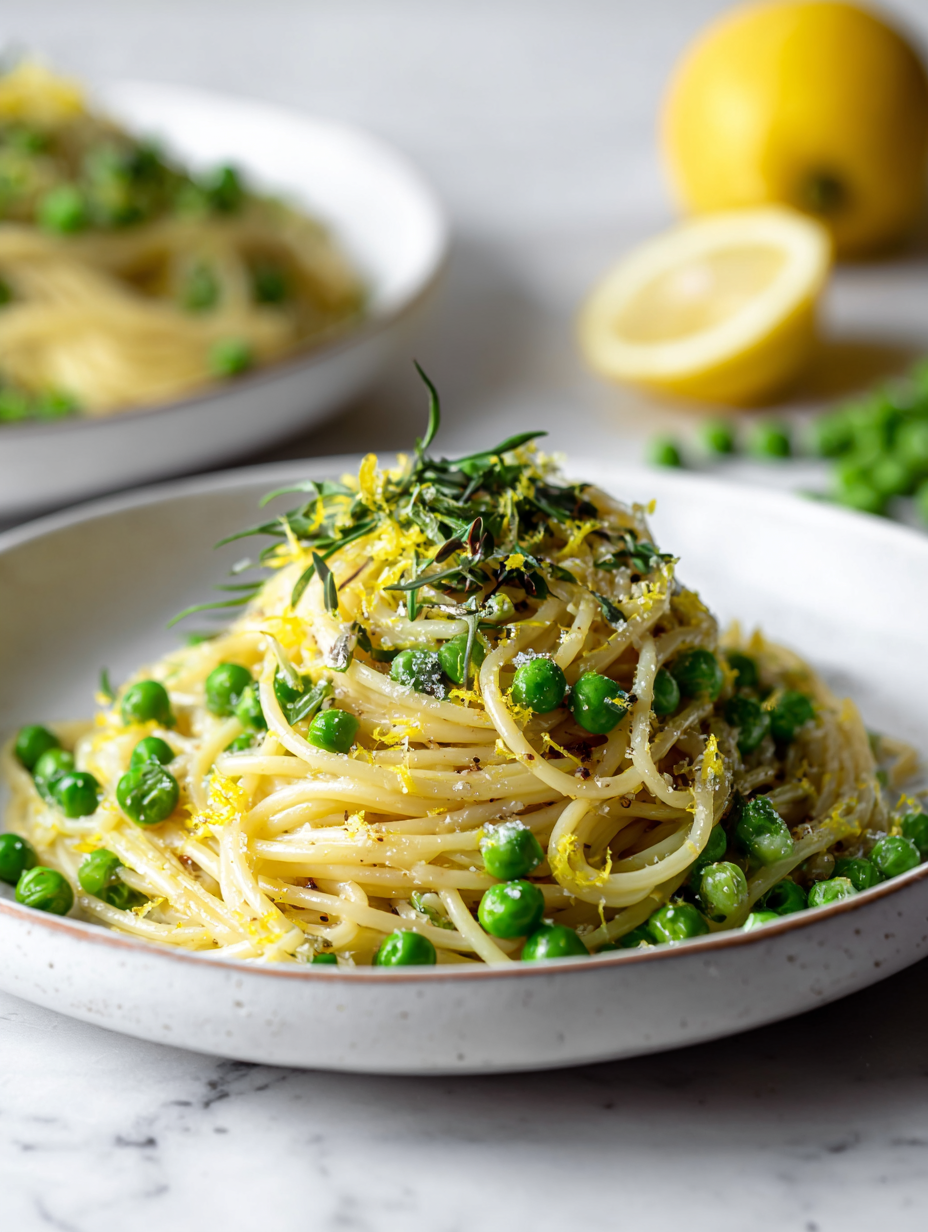
- Lemon flavor is lively but balanced, not overpowering, with a shiny, slick sauce coating the pasta.
Lemon Pea Pasta
Ingredients
Equipment
Method
- Bring a large pot of salted water to a rolling boil. Add your pasta and cook until just al dente, about 8-10 minutes. Drain and set aside, reserving about a cup of the starchy pasta water.
- While the pasta cooks, heat 2 tablespoons of olive oil in a large skillet over medium heat. Add the minced garlic and cook until fragrant, about 30 seconds, until it turns golden and releases a warm aroma.
- Add the thawed peas to the skillet and cook for 2-3 minutes, stirring occasionally, until they are heated through and bright green. The peas should be tender but still retain their juicy bite.
- Zest the lemon directly into the skillet using a microplane, then squeeze in 2-3 tablespoons of lemon juice. Stir well, letting the citrus brighten the peas and garlic, filling the kitchen with fresh, zesty fragrance.
- Transfer the drained pasta to the skillet. Pour in the reserved pasta water and toss vigorously with tongs to coat the noodles evenly with the lemon-pea sauce. The sauce should cling to each strand, creating a glossy finish.
- Season the pasta generously with salt and freshly cracked black pepper. Taste and adjust the seasoning as needed, ensuring a bright, balanced flavor with the lemon and peas shining through.
- Remove the skillet from heat. Finish by drizzling a little more olive oil over the pasta for added richness and shine. Toss one last time to distribute evenly.
- Serve immediately, garnished with extra lemon zest or fresh herbs if desired. The pasta should be hot, glossy, and bursting with citrus and fresh green flavor, perfect for a quick, vibrant meal.
Tips for perfect lemon pea pasta
- Use fresh lemon zest: Grate the zest just before adding to release the aromatic oils and brighten the dish instantly.
- Cook peas separately: Blanch frozen peas in salted boiling water for 1-2 minutes until vibrant green and tender, then shock in ice water to stop cooking and preserve color.
- Reserve pasta water: Always save a cup of starchy water before draining; it helps loosen the sauce and makes it cling better to the pasta.
- Finish with olive oil: Drizzle a good-quality olive oil over the pasta right before serving for extra richness and shine.
- Adjust lemon gradually: Add lemon juice in small increments, tasting as you go, to strike the perfect citrus balance without overpowering.
- Toss pasta vigorously: Use tongs to thoroughly coat every strand in the lemon-pea sauce, ensuring even flavor distribution.
- Serve immediately: This dish is best enjoyed hot; the flavors and textures shine brightest when fresh.
Common mistakes and how to fix them
- FORGOT to taste and adjust lemon for brightness—add more if needed, then stir well.
- DUMPED pasta water too early—wait until sauce is ready, then incorporate gradually.
- OVER-TORCHED garlic—remove from heat immediately, start over with fresh garlic if needed.
- TOO much oil—use sparingly at first, then add more during tossing for a silky finish.
Quick fixes and pantry swaps
- If sauce shimmers too much, splash in a bit more pasta water to loosen it.
- When lemon flavor dulls, patch with an extra squeeze of fresh juice and zest.
- Splash oil on the pan if garlic starts to burn—quick rescue before bitterness develops.
- Dumped the peas in too early? Rinse and add them later, just to warm through.
- When pasta sticks, swap to a wider pan and add a splash of hot water to separate.
Prep, store, and reheat tips
- Prep the lemon zest and juice ahead of time; store in an airtight container in the fridge for up to 2 days. The bright aroma will stay lively.
- Blanch the peas separately in salted boiling water for 1-2 minutes, then shock in ice water. Keep in an airtight container for up to 24 hours; they’ll stay vibrantly green and juicy.
- Cook the pasta al dente in advance, drain, and toss with a teaspoon of olive oil to prevent sticking. Store in a sealed container; best used within 24 hours for optimal texture.
- Reheat the cooked pasta gently in hot water or microwave with a splash of water to revive moisture. The lemon flavor may mellow slightly, so consider a fresh squeeze before serving.
- Assemble components ahead, then toss everything together just before serving. The flavors meld better as they sit, but the dish is still best enjoyed fresh for maximum brightness.
Top questions about lemon pea pasta
1. Can I use bottled lemon juice?
Use freshly squeezed lemon juice for the brightest flavor and a more vibrant tang.
2. Can I substitute frozen peas with fresh peas?
Frozen peas work best—they keep their sweetness and color. Fresh peas are fine if in season, just blanch briefly.
3. How do I know when the pasta is done?
Cook the pasta al dente, about 8-10 minutes, then reserve some pasta water before draining.
4. How much lemon juice should I add?
Add lemon juice gradually, tasting as you go, to prevent overpowering the dish with citrus.
5. Should I zest or juice the lemon first?
Use a microplane to zest the lemon first, then squeeze out the juice for maximum citrus aroma.
6. My sauce is too thick, what do I do?
If the sauce gets too thick, stir in some reserved pasta water until it loosens up.
7. Can I skip the olive oil at the end?
For a richer flavor, finish the dish with a drizzle of good olive oil right before serving.
8. How long does leftovers last?
This dish is best enjoyed fresh, but you can store leftovers in the fridge for up to a day, reheating gently.
9. How do I prevent garlic from burning?
Be careful not to burn the garlic; cook it over medium heat and add it once the oil is hot.
10. My peas are still hard, what now?
If the peas aren’t tender enough, cook them a minute longer or add a splash of hot water to soften.
This lemon pea pasta is a little reminder of how bright and simple good food can be. It’s quick enough for a weeknight, but the fresh citrus and tender peas make it feel like a special moment. Sometimes, the simplest dishes leave the strongest impression, especially when they’re made with honest ingredients.
Whenever I make this, I think about spring days and the smell of lemon zest in the air. It’s not just about the flavor—it’s about capturing that instant of freshness and ease. And honestly, it’s one of those recipes that keeps you coming back, craving that lively, citrusy hit.

Hi, I’m Lucas Foster, the cook, writer, and everyday food enthusiast behind Totally in the Zone. This space is where my love for cooking meets my belief that food should fit into real life. Not rushed. Not overcomplicated. Just thoughtful, satisfying, and made with intention.