Growing up, my grandmother’s pea and potato curry was the Sunday lunch that made the house smell like home. It’s a simple dish, but somehow it always felt like a warm blanket—something you could rely on when the week had been chaotic or when you just needed that familiar, comforting flavor. The way the earthiness of potatoes blends with the sweet pop of peas in a mildly spiced tomato sauce is magic, even if I’ve tried to recreate it dozens of times.
This recipe isn’t about fussing over perfect spice blends or fancy ingredients. It’s about the honest, straightforward joy of throwing a pot together and knowing it’ll come out just right—something to nourish the body and soothe the soul. It’s one of those dishes that tastes better the next day, when all the flavors have had time to settle and mingle, making it perfect for leftovers or a make-ahead meal.
This recipe is inspired by my grandmother’s habit of turning humble ingredients into comfort food during busy weekends. It’s not about perfection, but about making something warm, filling, and straightforward—something you can throw together without fuss, yet tastes like a hug from the kitchen.
The story behind this recipe
- This dish came about during a chilly autumn weekend when I rummaged through the freezer and pantry, looking for something warm but simple. My grandmother’s voice echoed in my mind—her knack for turning everyday ingredients into something nourishing and hearty. I wanted a recipe that felt familiar yet fresh, with that satisfying mix of soft potatoes and sweet peas in a gently spiced sauce.
- The inspiration comes from those lazy Sunday afternoons when the kitchen smells of boiled potatoes, simmering spices, and a hint of garlic. It’s a recipe born out of necessity and love—something to make when you’re short on time but craving real comfort. Every time I make it, I think of her, stirring her own version, with a splash of lemon or a pinch more chili, depending on her mood.
Key ingredients and tips
- Green peas: I love the pop of freshness they add. If yours are frozen, make sure to thaw and drain well—no icy bites. Fresh peas are sweeter, but frozen works in a pinch and keeps things simple.
- Potatoes: I prefer starchy varieties like Russets or Yukon Gold for their creamy texture. Cut into even chunks so they cook uniformly, about 10-12 minutes in the simmering curry until tender but not mushy.
- Tomatoes: I use canned diced tomatoes for convenience—they break down into a rich, tangy base. If using fresh, blitz a ripe tomato into a puree for a smoother sauce with a bright, fresh flavor.
- Spices: I keep it simple—turmeric, cumin, and coriander. Toast them lightly in oil until fragrant, about 30 seconds. It wakes up the spices and deepens the flavor, filling the kitchen with a warm aroma.
- Garlic & Ginger: I like lots of both—crushed garlic and grated ginger. Their aroma should be sharp and inviting. If you’re pressed for time, use pre-minced, but fresh really boosts the flavor.
- Oil: I reach for neutral oil like vegetable or sunflower. It’s the backdrop that lets the spices and aromatics shine. Keep the heat medium to avoid burning the spices, around 180°C / 350°F.
- Lemon Juice: A splash right at the end brightens everything up. If you don’t have lemon, a dash of vinegar can give a similar zing—just don’t overdo it.
Spotlight on key ingredients
Peas:
- Green peas: I love the pop of freshness they add. If yours are frozen, make sure to thaw and drain well—no icy bites. Fresh peas are sweeter, but frozen works in a pinch and keeps things simple.
- Potatoes: I prefer starchy varieties like Russets or Yukon Gold for their creamy texture. Cut into even chunks so they cook uniformly, about 10-12 minutes in the simmering curry until tender but not mushy.
Potatoes:
- I use starchy types for that melt-in-your-mouth softness. Make sure to chop evenly so they cook at the same rate—no one wants gritty bites.
- Tomatoes: I rely on canned diced ones—they break down into a tangy, rich sauce. Fresh? Blitz a ripe tomato into a puree for that bright, fresh flavor that feels alive in the sauce.
Notes for ingredient swaps
- Dairy-Free: Use coconut milk instead of cream for a rich, slightly sweet flavor that pairs well with the spices.
- Vegetarian: Swap chicken broth with vegetable stock to keep it meat-free without losing depth.
- Peas: Fresh peas deliver a sweeter, more vibrant pop, but frozen peas are more convenient and just as tasty.
- Potatoes: Sweet potatoes can be used for a sweeter, denser bite, but they may alter the traditional earthiness.
- Spices: If you don’t have cumin or coriander, a pinch of curry powder can give a similar warm, aromatic note.
- Oil: Swap for ghee if you want a richer, nuttier flavor—just watch the heat to prevent burning.
- Lemon Juice: Lime juice works beautifully as a zesty, slightly more tart alternative, brightening the dish.
Equipment & Tools
- Deep skillet or large saucepan: To cook the curry evenly and hold all ingredients.
- Wooden spoon: For stirring and preventing sticking.
- Sharp knife: To chop vegetables efficiently.
- Cutting board: To prep vegetables safely.
Step-by-step guide to pea and potato curry
- Gather your equipment: a deep skillet or large saucepan, a wooden spoon, a sharp knife, and a cutting board. Set everything within arm’s reach.
- Start by heating 2 tablespoons of oil in the skillet over medium heat, around 180°C / 350°F. When it shimmers, add 1 teaspoon cumin seeds. Crackle should sound within 30 seconds.
- Toss in 1 small chopped onion. Cook until translucent, about 5 minutes. Stir occasionally. Smell should turn sweet and earthy.
- Add 2 minced garlic cloves and 1 teaspoon grated ginger. Cook for 1 minute until fragrant, stirring constantly to prevent burning.
- Stir in 1 teaspoon turmeric, 1 teaspoon ground coriander, and a pinch of chili powder if you like heat. Toast spices for 30 seconds until aromatic.
- Pour in 1 can (400g) diced tomatoes. Simmer for 10 minutes until the sauce thickens slightly and turns a deep red. Scrape the bottom to deglaze if needed.
- Meanwhile, peel and chop 3 medium-sized potatoes into 2 cm chunks. Add them to the sauce. Cover and simmer for 15 minutes, stirring occasionally, until potatoes are tender and sauce is fragrant.
- Add 1 cup frozen peas (thawed and drained) to the pot. Stir well, cook for another 3-5 minutes until peas are heated through. The sauce should be bright and slightly thickened.
- Check the seasoning. Add salt and a squeeze of lemon juice. Stir to combine and adjust spice level if needed.
- Remove from heat. Let rest for 5 minutes. Serve hot with rice or crusty bread, garnished with fresh coriander if desired.
Let the curry rest off heat for 5 minutes, allowing flavors to meld. Serve directly from the pan, garnished with herbs if desired. Best enjoyed fresh, but leftovers keep for up to 2 days refrigerated.
How to Know It’s Done
- Potatoes are easily pierced with a fork, tender but not mushy.
- The sauce is rich, fragrant, and coats the potatoes and peas evenly.
- Peas are vibrant green and heated through without losing their shape.
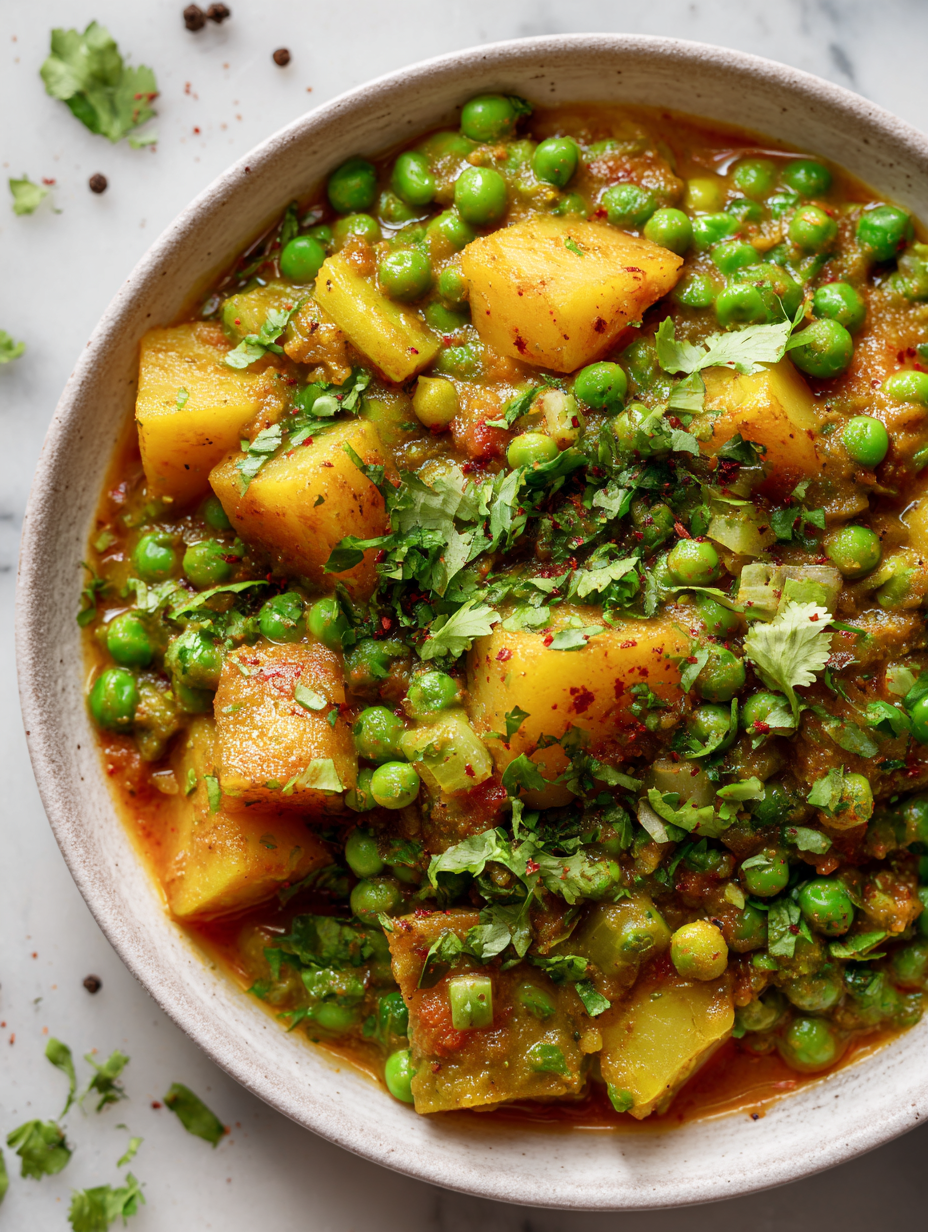
Grandmother's Pea and Potato Curry
Ingredients
Equipment
Method
- Heat the oil in a deep skillet over medium heat until it shimmers, then add the cumin seeds and let them crackle for about 30 seconds.
- Add the chopped onion and cook, stirring occasionally, until translucent and fragrant—about 5 minutes. The onions should turn a soft, golden color.
- Stir in the minced garlic and grated ginger, cooking for another minute until fragrant and slightly blistered at the edges.
- Sprinkle in the turmeric and ground coriander, then toast the spices for 30 seconds until they release a warm, earthy aroma.
- Pour in the canned diced tomatoes and stir well, scraping any bits from the bottom. Let the mixture simmer gently for about 10 minutes until the sauce thickens and deepens in color.
- While the sauce simmers, peel and chop the potatoes into even 2 cm chunks. Add them to the sauce, stirring to coat, then cover and let simmer on low heat for about 15 minutes until the potatoes are tender and the sauce is fragrant.
- Stir in the thawed and drained peas, cooking for another 3-5 minutes until they are heated through and vibrant green.
- Season with salt to taste, then squeeze in fresh lemon juice and stir to brighten the flavors. Let the curry rest off heat for a few minutes to allow the flavors to meld beautifully.
- Serve hot with rice or crusty bread, garnished with fresh herbs if desired, and enjoy the warm, comforting flavors of this classic, homey curry.
Essential tips for perfect pea and potato curry
- Bloom the spices: Toast cumin and coriander until fragrant, about 30 seconds, to unlock deep flavor.
- Layer flavors: Sauté onions first until translucent, then add garlic and ginger for a savory base.
- Cook potatoes properly: Simmer for 10-12 minutes until tender but not falling apart, testing with a fork.
- Add peas at the end: Thaw and drain frozen peas before stirring in, to keep their bright color and fresh bite.
- Control heat: Keep the sauce simmering gently—too high and spices may burn, too low and flavors won’t develop.
- Adjust seasonings: Taste before serving, adding lemon juice or salt to brighten and balance the curry.
- Rest before serving: Let the curry sit off heat for 5 minutes to meld flavors and improve texture.
Common mistakes and how to fix them
- FORGOT to check salt levels early → Taste and adjust seasoning before serving.
- DUMPED in all spices at once → Toast spices separately for deeper flavor.
- OVER-TORCHED the garlic → Cook garlic just until fragrant, about 30 seconds.
- MISSED simmering potatoes enough → Check tenderness with a fork after 15 minutes.
Quick fixes and pantry swaps
- When in doubt, splash a little water to soften a stuck-on spice residue.
- If the curry smells burnt, quickly add a splash of water and stir vigorously.
- DUMPED in too much chili? Add a pinch of sugar to balance the heat.
- Overcooked the potatoes? Cover and simmer for a few minutes to rehydrate.
- Shield the curry from direct heat if it starts to crackle and burn at the bottom.
Prep, store, and reheat tips
- Peas: Thaw frozen peas overnight in the fridge for a quick addition later, ensuring they retain their bright color and crispness. They keep well for up to 2 days refrigerated.
- Potatoes: Peel and chop potatoes a day ahead, store submerged in water in the fridge to prevent browning. This keeps them fresh for up to 24 hours and speeds up cooking time.
- Sauce: Prepare the spice base and tomato mixture a day in advance. Store in an airtight container in the fridge for up to 2 days. Reheat gently, stirring occasionally, until fragrant again.
- Reheating: Gently warm the curry on the stove over low heat, stirring regularly. The flavors deepen overnight. Expect the sauce to thicken slightly—add a splash of water or broth if needed, and taste for seasoning.
Common questions about pea and potato curry
1. Can I use fresh peas instead of frozen?
Frozen peas add a bright, fresh burst of sweetness. Thaw and drain well to avoid icy bites.
2. Should I cook fresh peas before adding?
Yes, but fresh peas are sweeter and require a few extra minutes in the simmer for tender crispness.
3. Can I skip peeling the potatoes?
Peeling potatoes is optional; unpeeled works fine if they’re clean. Peel for a softer texture and cleaner look.
4. Can I substitute fresh tomatoes?
Using canned diced tomatoes gives you a rich, tangy base quickly. Fresh tomatoes need to be pureed for best flavor.
5. How do I fix a too-thick or too-thin sauce?
If the sauce gets too thick, add a splash of water or broth. If too watery, simmer uncovered to reduce.
6. Can I skip the lemon juice?
Lemon juice brightens the dish. If you don’t have lemon, a splash of vinegar works as a tangy substitute.
7. When should I add the peas?
Stir in frozen peas at the end to keep their vibrant color and crisp texture. Thaw and drain first.
8. Can I prepare this dish ahead of time?
Yes, you can make this ahead. Prepare the spice base and potatoes in advance, then reheat gently before serving.
9. How long can I keep leftovers?
Store leftovers in an airtight container in the fridge for up to 2 days. Reheat slowly to preserve flavor.
10. What if the curry tastes off?
If the curry smells burnt, add a splash of water and stir to deglaze. For over-spiced, add a little sugar or coconut milk.
This simple pea and potato curry feels like a quiet victory—something you throw together when you want honest, hearty flavors without fuss. It’s a dish built on familiarity and the gentle magic of everyday ingredients coming together in a warm, comforting way.
Making it reminds me that sometimes the best meals are the least complicated, yet the most satisfying. It’s a reminder to slow down, enjoy the process, and trust that good food doesn’t need to be fancy to be memorable.

Hi, I’m Lucas Foster, the cook, writer, and everyday food enthusiast behind Totally in the Zone. This space is where my love for cooking meets my belief that food should fit into real life. Not rushed. Not overcomplicated. Just thoughtful, satisfying, and made with intention.