There’s something about the way peas and spinach turn bright green when cooked that feels almost like a little seasonal secret. It’s as if the dish itself is celebrating spring—fresh, lively, and full of promise. I love how the vibrant colors instantly lift my mood, making a simple pasta feel special without any fuss or fancy ingredients.
This recipe is about embracing those bold greens and letting them shine. It’s straightforward, but each bite is a burst of garden freshness—sweet peas, tender spinach, and a whisper of garlic and lemon to tie it all together. It’s perfect for those nights when I want something quick, nourishing, and visually uplifting, especially when the market is bursting with new produce.
Focusing on how the vibrant green colors of peas and spinach can lift both the dish’s appearance and its flavor profile, making it perfect for spring dinners when everything feels fresh and full of life.
The story behind this recipe
- I first stumbled upon this combo during a lazy Saturday at the farmer’s market, where a bunch of bright green peas and tender spinach caught my eye. It was one of those moments where I realized simplicity can be so satisfying. Since then, I’ve been chasing that fresh, garden-like feeling in every bowl.
- This dish reminds me of childhood springs spent helping my grandmother in her veggie garden—those long mornings of picking, the smell of earth and green shoots, the joy of seeing everything burst into life. Now, I try to recreate that burst of freshness with just a few humble ingredients, making it a go-to for quick, wholesome meals.
- heading: The story behind this recipe
Ingredient breakdown
- Fresh peas: I love the pop of sweetness in each bite—try to get those bright, firm pods; frozen works fine if fresh isn’t in season, but avoid mushy peas.
- Spinach: I prefer baby spinach for its tender leaves and mild flavor—be gentle when cooking so it retains that vibrant color and soft texture; skip if you want more bite.
- Garlic: I use plenty because its aroma fills the kitchen, turning sweet and slightly nutty as it cooks—don’t rush the sauté, or it’ll burn and turn bitter.
- Lemon: The zest and juice brighten everything—use a fresh lemon for that zing, and add the zest at the end to keep the aroma lively.
- Pasta: Opt for a short shape like fusilli or penne—these catch bits of peas and spinach nicely; cook until just al dente and save some pasta water for the sauce.
- Olive oil: Good quality, grassy olive oil makes a difference—drizzle generously at the end for richness and a fruity burst.
- Parmesan: I always finish with plenty of freshly grated Parmesan—melts into the warm pasta and adds a salty, nutty note that ties it all together.
Spotlight on Key Ingredients
Peas and Spinach:
- Peas: I love how their sweetness bursts through each bite—aim for bright green, firm pods; frozen peas are a quick stand-in, just rinse well.
- Spinach: Baby spinach’s tender leaves wilt quickly and keep their vibrant color—don’t overcook to avoid slimy texture; fresh or frozen works, just adjust cook time.
Notes for ingredient swaps
- Fresh peas: I love the pop of sweetness in each bite—try to get those bright, firm pods; frozen works fine if fresh isn’t in season, but avoid mushy peas.
- Spinach: I prefer baby spinach for its tender leaves and mild flavor—be gentle when cooking so it retains that vibrant color and soft texture; skip if you want more bite.
- Garlic: I use plenty because its aroma fills the kitchen, turning sweet and slightly nutty as it cooks—don’t rush the sauté, or it’ll burn and turn bitter.
- Lemon: The zest and juice brighten everything—use a fresh lemon for that zing, and add the zest at the end to keep the aroma lively.
- Pasta: Opt for a short shape like fusilli or penne—these catch bits of peas and spinach nicely; cook until just al dente and save some pasta water for the sauce.
- Olive oil: Good quality, grassy olive oil makes a difference—drizzle generously at the end for richness and a fruity burst.
- Parmesan: I always finish with plenty of freshly grated Parmesan—melts into the warm pasta and adds a salty, nutty note that ties it all together.
Equipment & Tools
- Large pot: Boil pasta evenly
- Wide skillet: Sauté greens and toss pasta
- Slotted spoon: Drain pasta and handle hot ingredients
- Grater: Freshly grate Parmesan
- Lemon zester: Add zest for brightness
Step-by-step guide to pea and spinach pasta
- Gather your equipment: a large pot for boiling pasta, a wide skillet for sautéing, and a slotted spoon for easy handling.
- Bring 4 liters (4.2 quarts) of salted water to a rolling boil—aim for about 100°C (212°F).
- Add 300g (10.5 oz) of your preferred short pasta—fusilli or penne work well. Cook until just al dente, about 9 minutes. Save a cup of pasta water before draining.
- While pasta cooks, heat 2 tablespoons of olive oil in the skillet over medium heat (~160°C / 320°F).
- Add 2 minced garlic cloves; sauté until fragrant—about 30 seconds. Don’t let it brown or it’ll turn bitter.
- Stir in 150g (5 oz) of frozen peas—cook for 2-3 minutes until they turn bright green and slightly tender. Add a splash of pasta water if needed to loosen.
- Add 4 cups of fresh spinach; cook for 1-2 minutes until wilted and vibrant green. If it shrinks too much, add a little more pasta water.
- Toss in the drained pasta directly into the skillet. Mix well, coating everything with the garlic and greens.
- Squeeze in the juice of half a lemon and add zest for brightness. Stir to combine. Taste and adjust salt if needed.
- Finish with 1/4 cup grated Parmesan. Toss until cheese melts and coats the pasta evenly.
- Remove from heat. Rest for a minute to allow flavors to meld—then serve immediately, sprinkled with extra Parmesan and a twist of lemon zest.
Let the pasta sit for a minute after mixing to settle the flavors. Plate immediately, adding extra Parmesan and a fresh squeeze of lemon for an added zing.
How to Know It’s Done
- Pasta is tender but not mushy, with a slight bite.
- Greens are wilted but still vibrant and bright in color.
- Pasta water is slightly starchy and helps bind the sauce.
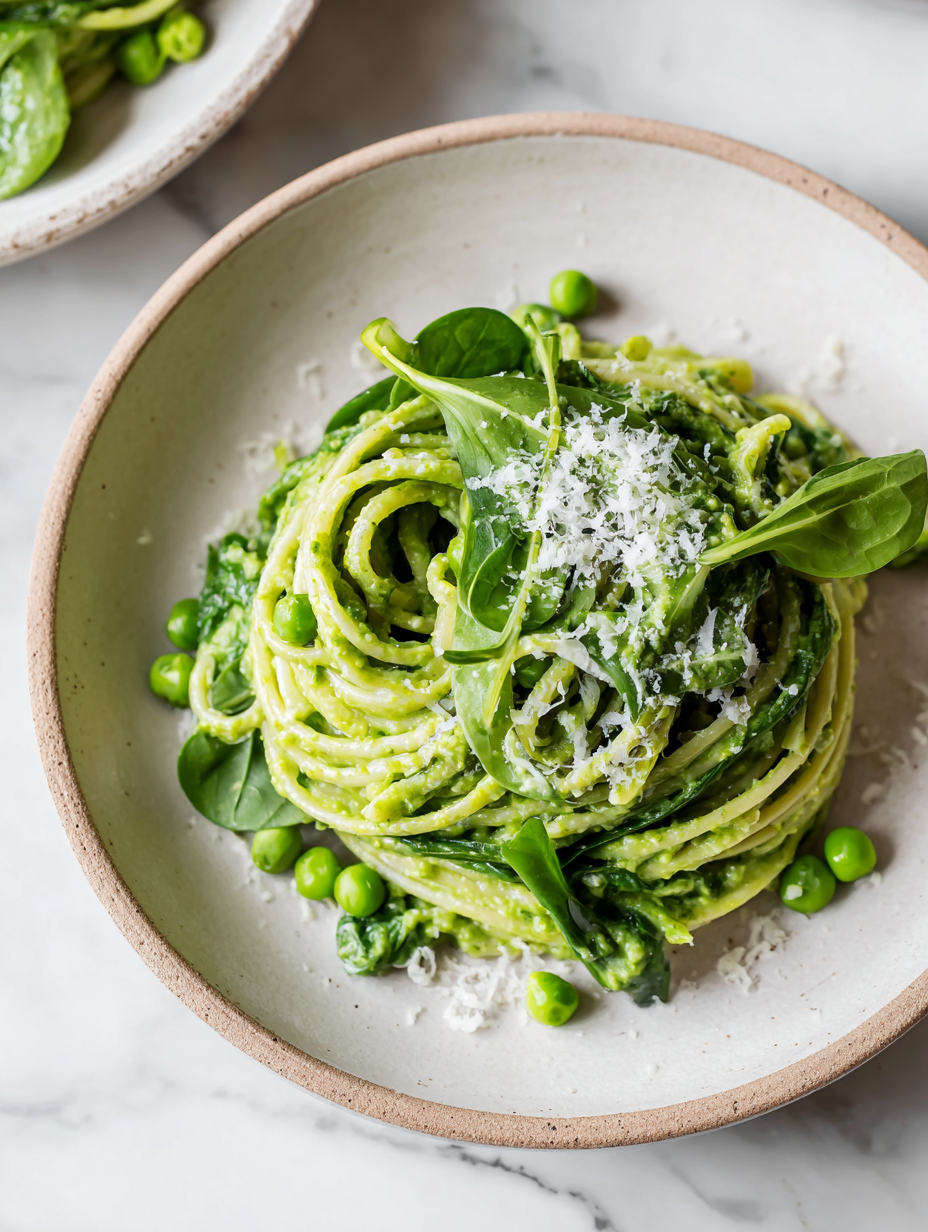
Bright Green Pea and Spinach Pasta
Ingredients
Equipment
Method
- Bring a large pot of salted water to a rolling boil, then add the pasta and cook until just al dente, about 9 minutes. Before draining, scoop out a cup of starchy pasta water and set aside.
- While the pasta cooks, heat olive oil in a wide skillet over medium heat until shimmering and fragrant.
- Add the minced garlic to the skillet and sauté gently, stirring constantly, until fragrant and just starting to turn golden—about 30 seconds. The garlic should smell sweet and nutty.300 g short pasta (fusilli or penne)
- Stir in the frozen peas and cook for 2-3 minutes, stirring occasionally, until they turn bright green and are heated through. Add a splash of the reserved pasta water if the peas seem dry.300 g short pasta (fusilli or penne)
- Add the fresh spinach to the skillet and cook for 1-2 minutes until wilted but still vibrantly green. Use tongs or a spoon to help it wilt evenly.300 g short pasta (fusilli or penne)
- Drain the pasta, then add it directly to the skillet with the greens and peas. Toss everything together gently to coat the pasta with the garlic and greens mixture.300 g short pasta (fusilli or penne)
- Squeeze the juice of half the lemon over the pasta and sprinkle the lemon zest. Toss again to distribute the bright citrus flavor evenly.300 g short pasta (fusilli or penne)
- Sprinkle the freshly grated Parmesan over the pasta and toss lightly until the cheese melts into the mixture, creating a slightly creamy coating.300 g short pasta (fusilli or penne)
- Taste and adjust seasoning with a pinch of salt or more lemon juice if desired. Serve immediately, garnished with extra Parmesan and lemon zest if you like.
Pro tips for vibrant greens
- Use fresh peas for a pop of sweetness—bright and firm, avoid mushy ones.
- Sauté garlic gently over medium heat until fragrant—avoid browning to prevent bitterness.
- Add spinach in stages—wait for it to wilt before adding more, keeping its vibrant green.
- Save some pasta water—starchy and helps the sauce cling better, especially if it feels too thick.
- Finish with a squeeze of lemon and zest—brightens the whole dish with a fresh, zesty aroma.
- Toss everything in the skillet off heat—preserves the bright green color and fresh flavor.
- Serve immediately—peas and spinach are best when vibrant and just wilted, not soggy.
Common mistakes and how to fix them
- FORGOT to adjust heat after adding peas → do so immediately to prevent overcooking.
- DUMPED pasta water all at once → save some to help loosen the sauce if needed.
- OVER-TORCHED garlic → lower heat and stir constantly to avoid bitterness.
- MISSED the lemon zest at the end → add just before serving for maximum brightness.
Quick fixes and pantry swaps
- When peas turn dull, splash them with lemon juice to brighten their color and flavor.
- If pasta clumps, toss it with a few drops of olive oil before reheating.
- Splash extra pasta water if sauce feels too thick and gloopy.
- Patch overcooked greens by adding a tiny splash of lemon—sharpens flavor and livens the color.
- Shield burnt garlic by lowering heat immediately and stirring to prevent bitterness.
Prep, store, and reheat tips
- Prep the pasta and greens ahead: cook the pasta until just al dente, then drain and toss with a little olive oil to prevent sticking. Store in an airtight container in the fridge for up to 2 days. The greens can be washed and chopped in advance, kept dry in a separate container for up to 1 day.
- Freeze leftover cooked pasta in a sealed bag for up to 3 months. Reheat by dropping into boiling water for 30 seconds or microwaving with a splash of water until hot and steaming.
- The flavors deepen over time, especially if stored overnight—expect the greens to wilt a bit more and the sauce to thicken slightly. Reheat gently on the stove, adding a splash of pasta water or olive oil to loosen the sauce and restore shine.
- Reheating: warm in a skillet over medium-low heat (~130°C / 265°F). Cover and stir occasionally, until heated through and fragrant. Watch for overcooking greens—aim for just wilted, not mushy, and smell for that fresh garlic aroma.
Top questions about pea and spinach pasta
1. Can I use frozen peas instead of fresh?
Use fresh or frozen peas; fresh gives a brighter flavor, but frozen is quick and reliable. Both should be bright green and firm, not mushy.
2. How do I know when the pasta is done?
Cook the pasta until just al dente, about 8-10 minutes. It should be tender but still have a slight bite, not mushy.
3. When should I add the spinach?
Add spinach toward the end of cooking, about 1-2 minutes, until wilted and vibrant green. Overcooking makes it slimy.
4. What oils or cheese work best?
Use a good quality olive oil and freshly grated Parmesan for best flavor. Lemon zest should be added at the end for brightness.
5. Should I save pasta water?
Save some pasta water before draining; it’s starchy and helps loosen the sauce if it gets too thick.
6. How important is lemon in this recipe?
Fresh lemon juice and zest brighten the dish, adding a fresh, citrusy note that enhances the greens’ sweetness.
7. How do I prevent garlic from burning?
Avoid overcooking garlic; sauté gently over medium heat until fragrant, about 30 seconds, to avoid bitterness.
8. Why should I toss everything off the heat?
Mix the greens and pasta off the heat to keep their bright color and fresh flavor intact.
9. How do I reheat this dish without losing flavor?
Reheat leftovers gently in a skillet with a splash of water or oil, heating over low heat until steaming and fragrant.
10. How do I season this dish properly?
Adjust seasoning with salt and lemon; taste frequently to balance the sweetness of peas and the freshness of greens.
This pasta feels like a breath of fresh spring air, especially when the garden is full of green shoots and new growth. It’s simple, honest, and full of brightness—something I turn to when I need a quick, nourishing meal that still feels special. Honestly, it’s become a go-to for those busy weeknights when I want flavor and color without fuss.
Sometimes, it’s the smallest ingredients—peas, spinach, lemon—that remind me how vibrant and alive a dish can be. There’s a quiet satisfaction in pulling together something so fresh and tasty, knowing it’s built on good, honest produce. It’s not just about the meal; it’s about that little moment of making something real, right from the heart of the season.

Hi, I’m Lucas Foster, the cook, writer, and everyday food enthusiast behind Totally in the Zone. This space is where my love for cooking meets my belief that food should fit into real life. Not rushed. Not overcomplicated. Just thoughtful, satisfying, and made with intention.