When I make pasta primavera, I keep the vegetables chunky, so they don’t get lost in the water or mash under the spoon. It’s all about that initial crunch, then softening enough to bite through without turning to mush.
Chopping everything takes a bit of time, but I like the mess of it—the scattered peppers, zucchini, and tomatoes—each one waiting for their turn in the hot pan, sizzling and releasing their scents as I go.
The satisfying squeak of fresh bell peppers under the knife, contrasting with the softer crush of zucchini and the tender bite of cherry tomatoes.
What goes into this dish
- Bell peppers: I prefer the mix of red and yellow for color and sweetness, but green peppers add a sharper bite if you like that. For a softer texture, roast them ahead, but I love that slight crunch fresh peppers give, especially with a splash of lemon juice.
- Zucchini: Sliced thick to keep some bite, but if you want it softer, toss it in earlier. Frozen zucchini works in a pinch—just drain excess moisture so it doesn’t water down your sauce. Its mild flavor makes it a good blank slate.
- Cherry tomatoes: I love the burst of juicy acidity from ripe cherry tomatoes, but if you only have canned, drain well and add early for a deep, sweet-tomato broth. They turn tender and oozy with heat, so don’t overcook.
- Garlic: Fresh minced garlic is best for that pungent, aromatic punch. If you only have garlic powder, cut the quantity in half; it’s a lot more concentrated. Roast garlic for a sweeter, nuttier flavor if you prefer less bite.
- Olive oil: Use good-quality extra virgin for richness and fruitiness. If you want a lighter dish, cut back, but the oil really carries the flavors. Toasted garlic or herbs in the oil add depth—don’t skimp on that aroma.
- Parmesan: Fresh grated gives the best sharpness and melt, but pre-grated works in a pinch. Skip if dairy isn’t your thing—nutritional yeast adds a cheesy umami without the dairy.
- Fresh herbs: Basil is classic, but parsley or thyme adds different brightness. Use herbs at the end for maximum flavor punch—dried herbs can get lost or turn bitter if cooked too long.
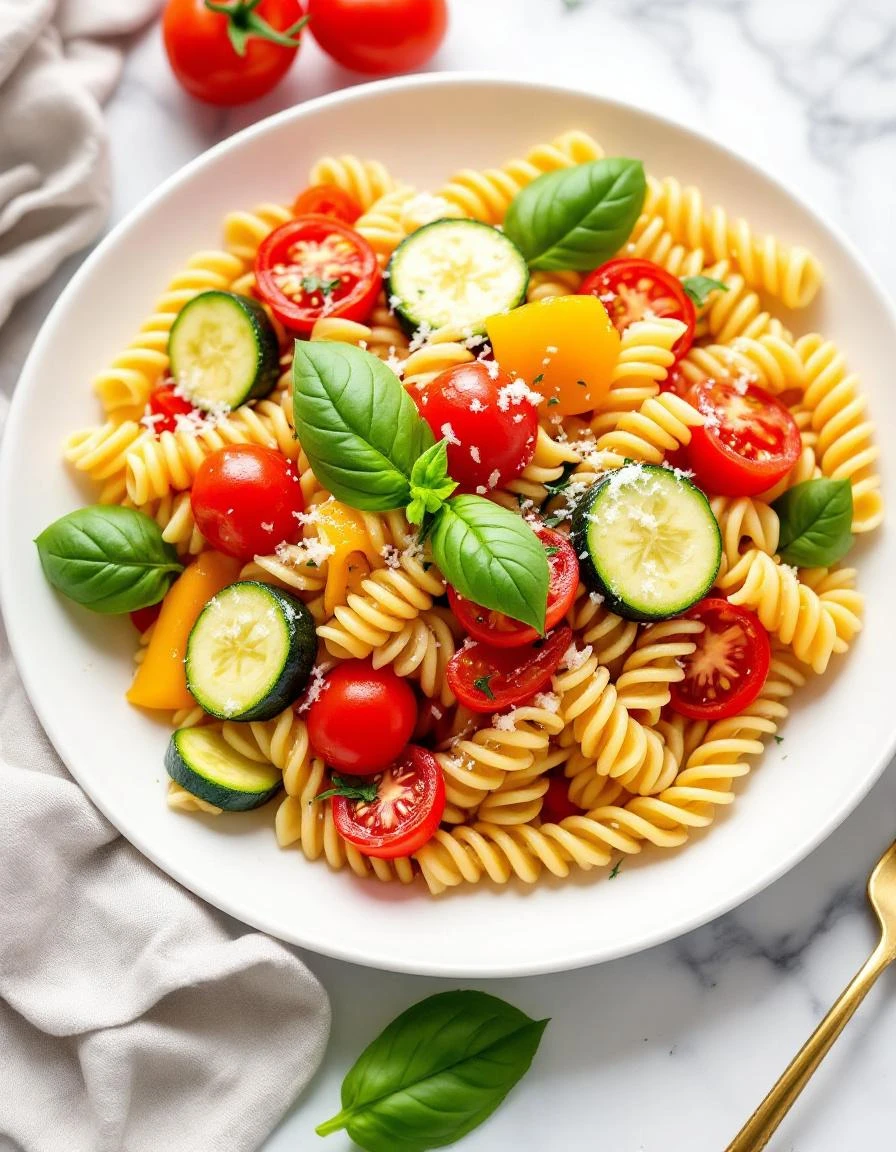
Pasta Primavera
Ingredients
Equipment
Method
- Bring a large pot of salted water to a boil, then add the pasta and cook until just shy of al dente, about 1 minute less than package instructions. Drain and set aside.
- While the pasta cooks, heat the olive oil in a large skillet over medium heat. Add the chopped bell peppers and sauté for 3-4 minutes until they start to soften but still retain their crunch, hearing a gentle sizzle and seeing their edges lightly caramelize.
- Add the thickly sliced zucchini to the skillet and cook for another 3-4 minutes, stirring occasionally, until they develop a slight golden color and feel tender but still have some bite.
- Stir in the minced garlic and cook for about 30 seconds until fragrant, just until you hear a faint sizzle and the aroma fills the kitchen.
- Add the halved cherry tomatoes to the skillet and cook for 2-3 minutes, allowing them to soften slightly and release their juices, creating a light, fresh sauce.
- Season the vegetable mixture with salt and freshly ground black pepper to taste, then squeeze a splash of lemon juice over everything for brightness, stirring to combine.
- Add the cooked pasta to the skillet, tossing gently to coat the noodles with the vegetable and oil mixture. Cook for another minute until everything is heated through and flavors meld.
- Remove from heat and sprinkle generously with freshly grated Parmesan cheese and chopped basil, tossing lightly to distribute evenly.
- Serve the pasta Primavera hot, garnished with additional basil or Parmesan if desired, and enjoy the vibrant crunch and tender bites in every forkful.
Common mistakes and how to fix them
- FORGOT to taste the sauce before adding pasta? Always adjust with salt and lemon for balance.
- DUMPED in all vegetables at once? Sauté tougher veg first, softer ones later to prevent overcooking.
- OVER-TORCHED the garlic? Remove from heat early to avoid bitterness and burnt aroma.
- MISSED draining excess water from frozen zucchini? It waters down the sauce, so squeeze out moisture first.
Make-Ahead and Storage Tips
- Chop vegetables a day ahead; keep in airtight containers in the fridge for up to 24 hours. They’ll stay fresh but may lose a touch of crunch.
- Cook pasta until just shy of al dente, then rinse with cold water and store in a sealed container for up to 24 hours. Reheat briefly in boiling water to restore texture.
- Prepare the vegetable components in advance, but add them to the pan just before serving to keep the crunch and vibrant colors.
- Freezing cooked pasta isn’t ideal; best to cook fresh for the best texture. Vegetables can be frozen for a month, but expect some softening upon reheating.
- Flavor of the dish intensifies as it sits—think more lemon and garlic note—so taste and adjust after reheating. Reheat gently on the stove, adding a splash of water or broth to loosen up the sauce.
- For reheating, warm in a skillet over medium-low, stirring often. Check for that fragrant aroma and slightly crisp veggies—don’t let it turn soggy.
FAQs
1. Can I make this gluten-free?
Yes, use gluten-free pasta like rice or corn varieties. They hold the sauce well and give a similar bite.
2. Can I add different veggies?
Absolutely. Just choose firmer vegetables like carrots or snap peas for more crunch, or soften softer ones beforehand.
3. How do I reheat leftovers?
Reheat in a skillet with a splash of water or broth, stirring until the veggies are heated through and fragrant.
4. How should I store and reheat?
Cook pasta until just shy of al dente, then rinse with cold water and store. Reheat with a quick toss in hot water or microwave.
5. Can I adjust the flavor after cooking?
Yes, adding a squeeze of lemon or a drizzle of olive oil brightens the flavors and refreshes the dish.

Hi, I’m Lucas Foster, the cook, writer, and everyday food enthusiast behind Totally in the Zone. This space is where my love for cooking meets my belief that food should fit into real life. Not rushed. Not overcomplicated. Just thoughtful, satisfying, and made with intention.