This stir fry is my little ode to those quick, honest meals I grew up eating. The kind that don’t ask for fancy ingredients or long hours in the kitchen—just fresh carrots, peas, and a handful of pantry staples. It’s what you turn to when you need something warm, bright, and reliable after a long day.
I love how the simple sweetness of carrots and the pop of peas come alive with a splash of soy and a quick toss in the pan. It’s unpolished, a little chaotic, but honest in flavor. That unassuming dish somehow manages to lift the spirits and fill the belly without fuss or pretension.
This recipe is inspired by childhood memories of my grandmother’s humble kitchen, where simplicity and seasonal produce turned into vibrant, comforting meals. I love how carrots and peas, often overlooked, can shine together with just a splash of soy and a quick stir—no fuss, just honest, real food that feels like a warm hug in the middle of a busy day.
The story behind this recipe
- This dish came about during a hectic week when I needed something quick and honest. I remembered my grandmother’s way of turning humble carrots and peas into something flavorful without much fuss. It’s a reminder that simple ingredients, treated right, can be surprisingly satisfying.
- One day, I was rushing through the kitchen, frustrated with how bland most stir fries turn out. I threw in those bright orange carrots and sweet peas, added a splash of soy, and in minutes, the kitchen filled with a warm, familiar smell. That moment made me realize how little it takes to elevate everyday produce into a comforting meal.
- • I love how the natural sweetness of carrots caramelizes slightly when stir-fried, adding depth to the dish.
Ingredient breakdown: key components
- Carrots: I pick firm, bright orange carrots that snap when I bite. Their natural sweetness intensifies as they cook—skip the pre-grated stuff for more crunch and flavor.
- Peas: I prefer fresh or frozen peas that are sweet and plump. When stir-fried, they stay vibrant green and pop with a juicy burst—use fresh for the best snap.
- Soy Sauce: I reach for a good, dark soy for depth without overwhelming the dish. A splash adds a salty umami that balances the sweetness—adjust to taste.
- Garlic & Ginger: I love a generous mince of garlic and a thumb-sized piece of ginger. Their fragrant, spicy aroma wakes up the whole pan—don’t skimp, but avoid burning the garlic.
- Oil: I use neutral oil with a high smoke point, like vegetable or canola. It crisps the veggies nicely and keeps everything from sticking—keep it hot but not smoking.
- Sesame Oil: I add a few drops at the end for a fragrant, nutty aroma—just a whisper of flavor, not overpowering. It’s the finishing touch that makes it feel special.
- Optional Chili Flakes: I toss in a pinch if I want a bit of heat. They shimmer and crackle in the pan, giving the dish a lively kick—start small and adjust.
Spotlight on key ingredients
Carrots:
- I pick firm, bright orange carrots that snap when I bite. Their natural sweetness intensifies as they cook—skip the pre-grated stuff for more crunch and flavor.
- Peas: I prefer fresh or frozen peas that are sweet and plump. When stir-fried, they stay vibrant green and pop with a juicy burst—use fresh for the best snap.
Peas:
- Soy Sauce: I reach for a good, dark soy for depth without overwhelming the dish. A splash adds a salty umami that balances the sweetness—adjust to taste.
- Garlic & Ginger: I love a generous mince of garlic and a thumb-sized piece of ginger. Their fragrant, spicy aroma wakes up the whole pan—don’t skimp, but avoid burning the garlic.
Notes for ingredient swaps
- Dairy-Free: Skip dairy altogether or use coconut aminos for a subtle sweetness—won’t alter the flavor much.
- Vegan: Use tamari instead of soy sauce for a gluten-free, richer umami punch—keeps the dish soy-rich.
- Low-Sodium: Opt for reduced-sodium soy or tamari—keeps saltiness but lightens the salt load.
- Fresh Herbs: Swap fresh cilantro or basil for a bright, herbal note—adds freshness and vibrancy.
- Sweeteners: A drizzle of honey or maple syrup can balance the soy’s saltiness—just a touch for depth.
- Peas: Use snap peas for a crisper bite or frozen peas for convenience—both keep the pop in every bite.
- Carrots: Substitute with parsnips or sweet potatoes for a different sweetness and texture—adjust cook time accordingly.
Equipment & Tools
- Large wok or wide skillet: Provides ample space for quick, even stir-frying.
- Spatula: For tossing and turning the veggies without breaking them.
- Sharp knife: To julienne carrots and mince garlic and ginger cleanly.
- Cutting board: A stable surface for prepping ingredients.
Step-by-step guide to stir-frying
- Gather your equipment: a large wok or wide skillet, a spatula, a sharp knife, and a cutting board. Preheat the pan over medium-high heat, around 200°C (390°F).
- Prepare the veggies: peel and julienne the carrots into thin sticks, about 5 cm (2 inches) long. Measure out 1 cup of peas, fresh or frozen. Mince 3 cloves of garlic and a thumb-sized piece of ginger.
- Add 1-2 tablespoons of neutral oil to the hot pan. Swirl to coat. When shimmering, add the garlic and ginger. Cook for 20-30 seconds until fragrant, stirring constantly.
- Toss in the carrots. Stir-fry for 3-4 minutes, until they begin to turn golden at the edges and smell sweet and roasted. Keep them moving to avoid burning.
- Add the peas. Continue stir-frying for another 2-3 minutes. They should turn bright green, slightly blistered, and juicy. If using frozen, ensure they are heated through and plump.
- Splash in 1-2 tablespoons of soy sauce. Stir well to coat all veggies evenly. Cook for an additional minute until everything is flavorful and slightly caramelized.
- Check the texture: carrots should be tender-crisp, peas juicy, and everything coated in a glossy sauce. Adjust seasoning with salt or more soy if needed.
- Remove from heat. Drizzle with a few drops of sesame oil for aroma. Give it a final stir, then transfer to a serving plate. Serve hot with rice or noodles.
- Let the stir fry rest for 1 minute before serving. This helps the flavors settle and prevents burning your mouth on hot veggies.
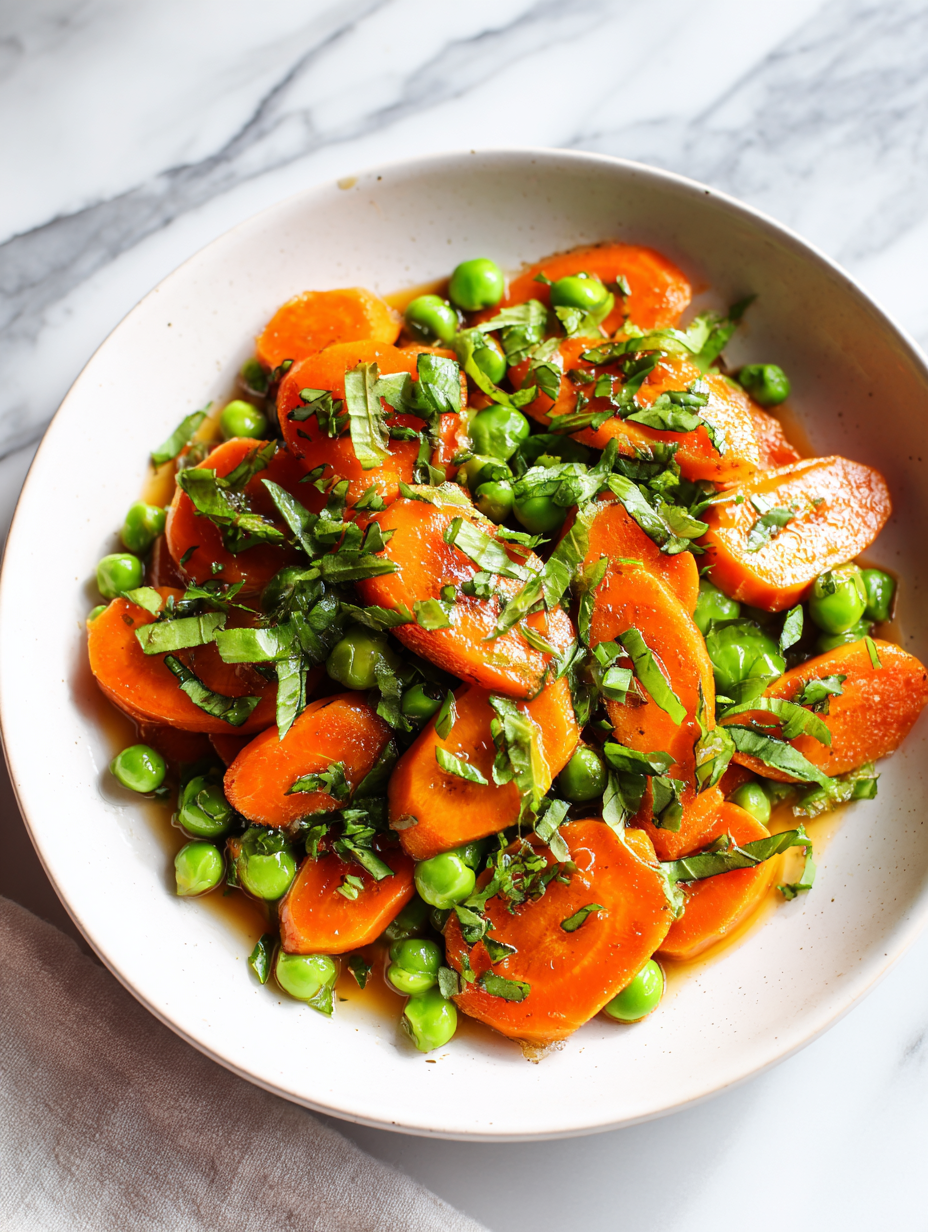
Serve immediately while hot. Drizzle with sesame oil for aroma. Rest for 1 minute before eating to let flavors meld. Plate attractively with a sprinkle of chopped scallions if desired.
How to Know It’s Done
- Carrots are tender yet retain some crunch, with a slight caramelization on edges.
- Peas are bright green, juicy, and blistered but not mushy.
- The sauce is glossy, fragrant, and clings evenly to the veggies.
Carrot and Peas Stir Fry
Ingredients
Equipment
Method
- Place your large wok or skillet over medium-high heat and add the neutral oil, swirling to coat the surface. When the oil starts to shimmer and sizzle slightly, add the minced garlic and ginger, stirring constantly for about 20-30 seconds until fragrant and slightly golden.
- Add the julienned carrots to the pan, stirring quickly to coat them in the fragrant oil. Stir-fry for 3-4 minutes until the carrots start to turn golden at the edges and smell sweet and roasted, keeping them moving so they don't burn.
- Toss in the peas, stirring to combine. Continue stir-frying for another 2-3 minutes until the peas are bright green and blistered, and the carrots are tender-crisp. If using frozen peas, ensure they are heated through and plump.
- Pour in 1-2 tablespoons of soy sauce, stirring well to coat all the vegetables evenly. Cook for an additional minute until the sauce is glossy and slightly caramelized, intensifying the flavors.
- Remove the pan from heat and drizzle a few drops of sesame oil over the stir fry, giving it a final stir. The aroma of toasted sesame enhances the dish's fragrance and adds a shiny, appetizing finish.
- Transfer the stir fry to a serving plate immediately while hot. Serve as is or alongside steamed rice or noodles for a complete meal. Enjoy the crisp, colorful, and flavorful bite!
Tips & Tricks for Perfect Stir Fry
- and quick: Keep the heat high to develop a slight char and deepen flavors—don’t overcrowd the pan.
- and crisp: Toss the carrots continuously to get even caramelization and avoid burning one side.
- and juicy: Add peas last and stir just enough to keep their vibrant color and burst of sweetness.
- and fragrant: Use garlic and ginger at the start; they crackle and smell spicy when fragrant—don’t let them burn.
- and glossy: Finish with a splash of sesame oil for aroma and sheen—add off heat for best flavor.
- and adaptable: Feel free to adjust soy or add a dash of chili flakes—layering flavors makes it lively.
- and fresh: Serve immediately to enjoy the crunch and brightness—stale veggies lose their pop.
Common stir-fry mistakes and how to fix
- TOO MUCH VEGGIES: Overcrowd the pan, veggies steam instead of stir-fry. Do in batches if needed.
- UNDERCOOKED CARROTS: Keep stir-frying until carrots are tender but still crisp. Test with a fork.
- SOGGY PEAS: Add peas last, cook briefly to keep their bright color and juicy bite.
- OVER-TORCHED SAUCE: Keep heat moderate; soy can burn quickly, imparting a bitter flavor if overdone.
Quick Fixes for Stir Fry Woes
- If the stir fry smells burnt, splash a little water and turn down the heat immediately.
- When veggies release too much water, increase heat to evaporate quickly, avoiding sogginess.
- Splash soy too early? Add a pinch of sugar to balance out excess saltiness.
- Patch dull color with a squeeze of fresh lemon or a sprinkle of herbs for brightness.
- Shield from overcooking by removing from heat as soon as veggies are tender but crisp.
Prep, store, and reheat tips
- Prep the carrots and peas: peel and julienne the carrots, measure out peas, and mince garlic and ginger—do this a day ahead for quick cooking.
- Store the prepped veggies in airtight containers in the fridge; they’ll stay fresh for up to 24 hours, keeping their crispness and sweetness intact.
- Cook the stir fry and store leftovers in a sealed container for up to 2 days. Reheat in a hot pan, adding a splash of oil to revive the crunch and aroma.
- When reheating, look for a shiny, flavorful coating and veggies that still have a slight bite—avoid sogginess by not overcooking during reheats.
Top questions about carrot and peas stir fry
1. Can I use frozen carrots instead of fresh?
Use fresh carrots for crunch and sweetness, but frozen works in a pinch if you peel and chop them small. Peas should be juicy and plump, preferably fresh, but frozen peas are fine and stay vibrant green when cooked quickly.
2. Should I thaw the frozen carrots before cooking?
Yes, just make sure to chop frozen carrots into small, even pieces so they cook evenly. They might take a minute longer to soften.
3. When do I add the peas during cooking?
Peas cook quickly, so add them last. They only need 2-3 minutes to blister and stay bright and juicy—overcooking makes them mushy.
4. What kind of oil is best for stir-frying?
Use a neutral oil like vegetable or canola that can handle high heat. It crisps the veggies nicely without imparting strong flavors that could compete with the soy and ginger.
5. Can I substitute soy sauce with tamari or coconut aminos?
Soy sauce adds depth and saltiness. Opt for a good quality, dark soy for richness. Adjust the amount to taste, especially if you want less salty or more umami.
6. When should I add garlic and ginger?
Add garlic and ginger at the start to release their fragrant, spicy aroma. Be careful not to burn the garlic—stir constantly and remove from heat if it begins to brown too quickly.
7. How long should I stir-fry the carrots?
Cook the carrots first until they turn golden and sweet-smelling, then add peas and soy. The key is to keep the heat high for quick, even stir-frying.
8. How do I keep the stir fry crisp?
Finish with a drizzle of sesame oil for aroma and shine. Serve immediately while hot to enjoy the crunch and fresh flavors.
9. What if my stir fry is too watery?
If the veggies release too much water, turn up the heat and cook until excess moisture evaporates. This crisps the veggies and intensifies flavors.
10. How long can I store leftovers?
Leftovers can be stored in the fridge up to 2 days. Reheat in a hot pan with a splash of oil to revive the texture and aroma. Serve immediately for best freshness.
This dish is a little reminder that simple ingredients, treated well, can really brighten up a day. It’s honest, it’s fast, and it’s the kind of meal that makes you feel grounded in the ordinary. Sometimes, that’s all you need to keep going.
In the end, it’s about those small, familiar moments in the kitchen—those smells of garlic and soy that evoke memories and comfort. This stir fry is a quick, flavorful pause in a busy life, a little bit of joy on a plate.

Hi, I’m Lucas Foster, the cook, writer, and everyday food enthusiast behind Totally in the Zone. This space is where my love for cooking meets my belief that food should fit into real life. Not rushed. Not overcomplicated. Just thoughtful, satisfying, and made with intention.