
Making gazpacho means standing at the sink, rinsing ripe tomatoes until their skins glisten, then chipping away at cucumber with a dull knife that slips a little. The sound of vegetables hitting the cutting board is satisfying in its own rough way, with juices spraying out each time you cut through flesh.
Pouring cold water over everything to rinse and chill, then blending it all into a loose, slightly chunky mess—this is hands-on, no-fuss cooking that gets your fingers wet and your senses sharp. It’s a dish that demands patience with each splash and swirl, no smooth perfection needed.
The gentle thwack of ripe tomatoes hitting the cutting board, the squish of cucumber under the knife, and the splash of cold water as everything gets rinsed—making gazpacho is a messy, sensory affair that feels alive.
What goes into this dish
- Ripe tomatoes: I mash these with my hands, feeling their soft, juicy texture burst, then toss in a handful of less-than-perfect ones to avoid waste—bright, slightly acidic, true summer flavor. Skip if you’re not into seediness.
- Cucumber: I prefer a firm, cool cucumber, roughly chopped with skins on for color and texture, though peeling keeps it extra smooth—crisp, refreshing, with a faint grassy note. Use zucchini if you need a milder taste.
- Bell peppers: I toss in red or yellow peppers for sweetness, chopping them small so they blend smooth—consider skipping if you want a more straightforward tomato punch, but they add a smoky sweetness.
- Garlic: I crush a clove or two, then let it sit for a minute to mellow its bite—raw garlic adds punch, but roasting it before blending gives a sweeter, deeper flavor if you’re sensitive.
- Vinegar: I splash in sherry or red wine vinegar, enough to brighten the flavors without overpowering—think tart, slightly fruity, a real lift for the fresh veggies. Skip if you prefer it milder.
- Olive oil: I drizzle a good splash for richness, swirling it in last—adds body and a fruity aroma. Use a milder oil if you want a subtler finish, or skip for a lighter version.
- Bread (optional): I toss in a slice of crusty bread for thickness, blending it with the veg—helps with creaminess, but skip if you’re watching carbs or prefer a thinner soup.
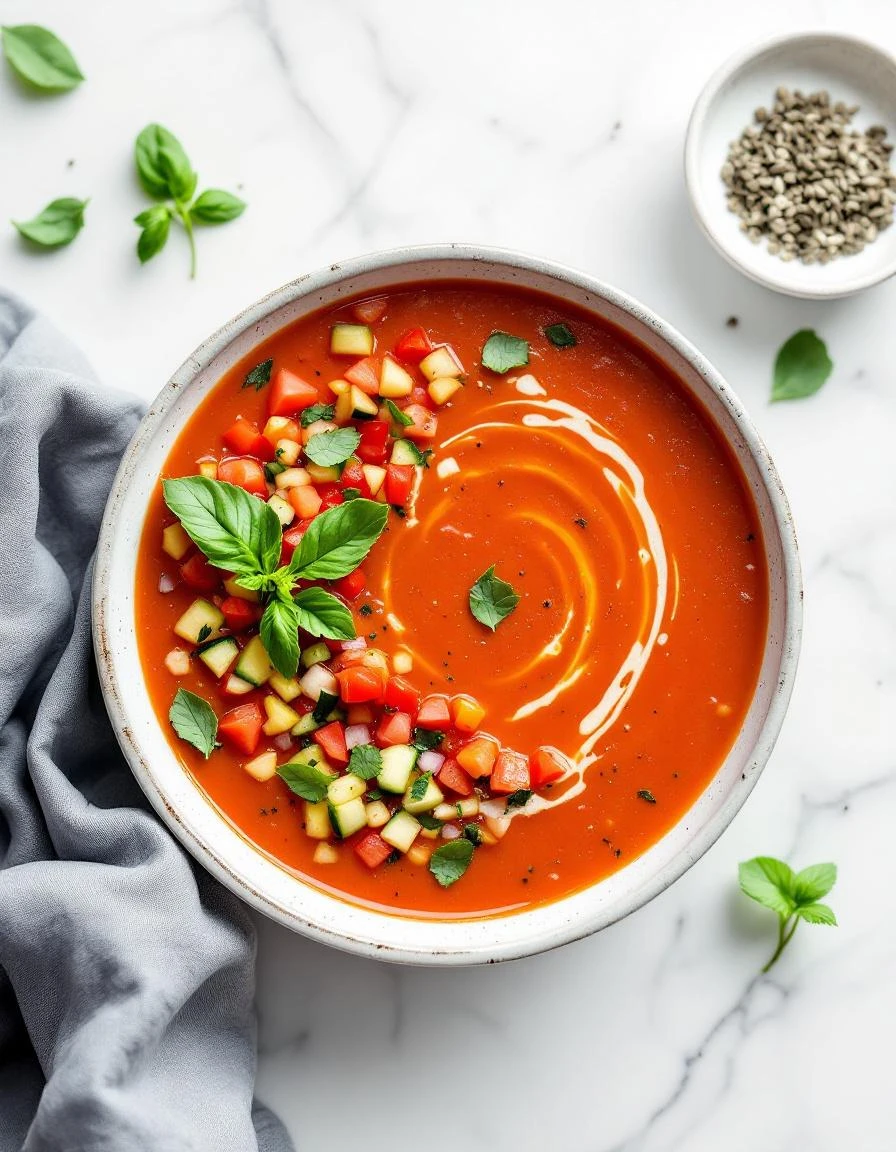
Classic Gazpacho
Ingredients
Equipment
Method
- Roughly chop the tomatoes, squeezing out some of their juices into a bowl, and place them in your blender or food processor.
- Peel or leave the cucumber skins on, then roughly chop and add to the blender with the tomatoes.
- Seed and chop the bell pepper into small pieces, then add to the blender for a touch of sweetness and color.
- Crush the garlic cloves, then let them sit for a minute to mellow their sharpness before adding to the blender.
- Add the vinegar and a pinch of salt, then blend the mixture until it’s slightly chunky but well combined, about 20-30 seconds.
- Pour in the olive oil and blend again briefly to incorporate, producing a glossy, slightly textured mixture.
- If using bread for thickness, tear it into pieces and add to the blender, then blend until smooth and creamy.
- Taste the soup and adjust with more vinegar or salt if needed, blending briefly to mix in any adjustments.
- Transfer the gazpacho to a bowl, cover, and chill in the refrigerator for at least 2 hours to let flavors meld.
- Serve the gazpacho cold, garnished with a drizzle of olive oil or fresh herbs if desired, and enjoy its bright, textured flavor.
Common Gazpacho Mistakes & Fixes
- FORGOT to taste before blending? Fix by adjusting vinegar or salt after blending.
- DUMPED hot water on veggies? Cool them first to keep the flavors fresh.
- OVER-TOASTED the garlic? Use raw or gently roasted for a milder, sweeter note.
- MISSED peeling the peppers? Peeling adds smoothness; skip if you like texture.
Make-Ahead and Storage Tips
- Chop or blend the vegetables a day ahead to save time; store in an airtight container in the fridge. Flavors deepen overnight.
- Gazpacho can be made 24 hours in advance. Keep chilled in the fridge, covered tightly to prevent absorbing other fridge smells.
- The flavors mellow and meld after a day, so expect a slightly more rounded, less vibrant taste if stored overnight.
- Reheat gently if needed—though cold is traditional, a quick stir in the fridge or a cool bowl works best. Avoid microwave reheating to preserve freshness.
- Give it a good stir before serving; textures may settle or separate slightly. Add a splash of water or oil if it thickens too much.
FAQs
1. How should ripe tomatoes feel?
The cold, juicy burst of ripe tomatoes is the first thing you notice—feels almost like a splash on your tongue, with a bright acidity that wakes up your senses.
2. What’s the texture of good cucumbers for gazpacho?
Crisp cucumbers give a satisfying crunch when bitten, and their cool, watery interior provides a refreshing contrast to the acidity.
3. How much vinegar should I add?
Adding a splash of vinegar makes the flavors pop, almost like a bright zing that hits the sides of your tongue, balancing the sweetness of peppers.
4. Should I serve gazpacho cold or warm?
Chilling the soup enhances its refreshing quality—feels like a cool breeze with every spoonful, especially if you let it sit for a bit after blending.
5. How long can I keep gazpacho in the fridge?
Storing in an airtight container in the fridge keeps it fresh for up to 2 days, but the flavor deepens and the texture thickens slightly overnight.

Hi, I’m Lucas Foster, the cook, writer, and everyday food enthusiast behind Totally in the Zone. This space is where my love for cooking meets my belief that food should fit into real life. Not rushed. Not overcomplicated. Just thoughtful, satisfying, and made with intention.