
Making vanilla bean ice cream starts with the mess of scraping those tiny seeds out of the pod, sticky and fragrant. You’ll get your fingers coated in oily specks, and it’s all part of the process, no shortcuts here.
The cream mixture needs a slow, careful simmer to coax out the vanilla’s rich oils and aroma, without boiling over or scorching the bottom. It’s a patience game—waiting for the custard to cool before churning keeps everything smooth and intact.
The gritty sound of scraping vanilla beans from their pods, revealing tiny black specks that stick stubbornly to the spoon, reminds me of the slow, deliberate act of extracting every ounce of flavor.
What goes into this dish
- Vanilla beans: Scraping out those tiny seeds feels slow but rewarding, their oily aroma filling the kitchen. Skip this step by using high-quality vanilla extract if pressed for time, but you’ll lose that flecked visual and rich aroma.
- Heavy cream: Focus on the good stuff—full-fat cream makes it lush and velvety. If you want a lighter version, try half-and-half, but expect a thinner texture and less richness on the palate.
- Whole milk: Adds body without heaviness, balancing the cream’s richness. Skim milk dulls the flavor and makes the custard less creamy, so stick to whole or even a splash of heavy cream for extra richness.
- Sugar: Sweetens and helps the custard set smoothly. Brown sugar can add a caramel hint but will change the color and flavor, so stick to white for classic vanilla.
- Egg yolks: The backbone of custard, providing richness and thickness. Egg whites can be saved for meringue, but omit them here to keep the texture smooth and creamy.
- Salt: Just a pinch enhances the vanilla and balances sweetness. Sea salt flakes add a subtle crunch and flavor; regular table salt works fine too, just use sparingly.
- Vanilla extract (if not using beans): Bright, aromatic, and quick—add it after cooling the custard. Skip it if using fresh beans, but don’t forget to stir it in to boost that vanilla punch.
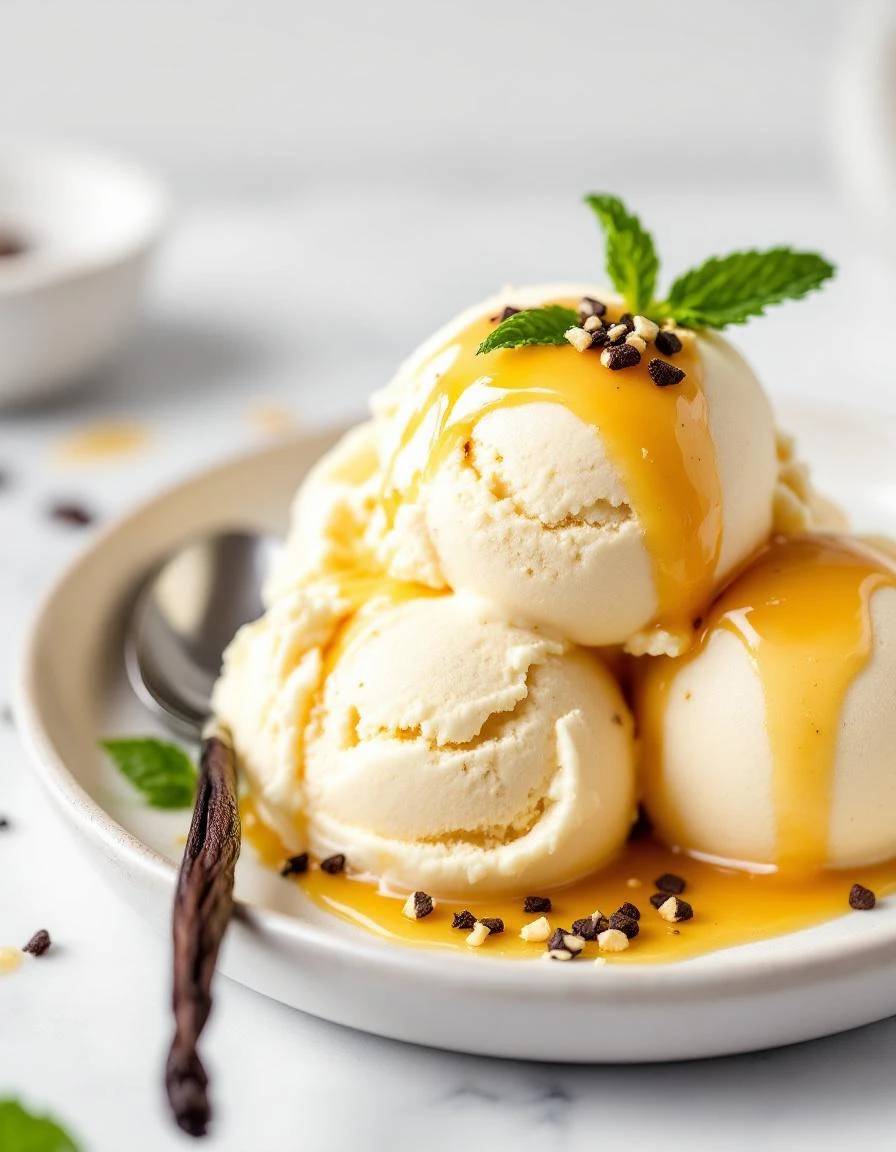
Homemade Vanilla Bean Ice Cream
Ingredients
Equipment
Method
- Begin by slicing the vanilla beans in half lengthwise and scraping out the tiny black seeds with the back of a knife. Place the seeds and pods in a saucepan with the cream, and gently warm the mixture over low heat until just steaming and fragrant, without boiling. This releases the vanilla oils and infuses the cream with flavor.
- Remove the cream from the heat, take out the vanilla pods, and set the infused cream aside to cool slightly. In a separate bowl, whisk the egg yolks and sugar together until smooth and slightly pale, creating a thick, creamy mixture.
- Slowly pour a ladle of the warm cream into the egg mixture, whisking constantly to temper the eggs and prevent curdling. Repeat this process until you've incorporated about half of the cream, then pour everything back into the saucepan.
- Cook the custard over low heat, stirring constantly with a spatula or wooden spoon, until it thickens enough to coat the back of the spoon—about 170°F (77°C). Be careful not to let it boil, as this can cause curdling and off-flavors.
- Pour the hot custard through a fine sieve into a clean bowl to strain out any cooked eggs and vanilla seeds, ensuring a silky smooth texture. Add vanilla extract if you're using it, then stir to combine.
- Place the bowl of strained custard into an ice bath and stir occasionally until it cools to room temperature. Cover and refrigerate for at least 4 hours or overnight to let the flavors meld and the custard chill thoroughly.
- Once chilled, pour the custard into your ice cream maker and churn according to the manufacturer’s instructions. You’ll hear it turn into a thick, creamy consistency and see it expand to fill the bowl.
- Transfer the soft ice cream into a freezer-safe container, smoothing the top with a spatula. Cover tightly with a lid or plastic wrap, and freeze for at least 4 hours or until firm and scoopable.
- Before serving, let the ice cream sit at room temperature for about 10 minutes to soften slightly. This makes scooping easier and enhances the rich vanilla aroma when you enjoy each spoonful.
Notes
Common mistakes and how to fix them
- FORGOT to temper the egg yolks, resulting in curdling—whisk them with hot cream gradually.
- DUMPED the custard before cooling, causing ice crystals—always chill thoroughly for smoothness.
- OVER-TORCHED the mixture on the stove, leading to a cooked egg smell—keep heat low and stir constantly.
- SKIPPED the vanilla seeds, losing depth—scrape every speck from the pod for maximum flavor.
Make-Ahead and Storage Tips
- Prepare the custard base a day ahead; keep it refrigerated to let flavors meld overnight.
- Freeze the churned ice cream for at least 4 hours, preferably overnight, for the best scoopable texture.
- Flavor intensifies as it freezes—allowing it to sit at room temperature for 10 minutes softens the scoop before serving.
- Cover tightly to prevent freezer burn; the ice cream can be stored up to 2 weeks, but flavors may dull over time.
- Reheat slightly in the microwave if it becomes too firm, until just soft enough to scoop with a sensory check for smoothness.
FAQs
1. Can I skip scraping vanilla beans?
Yes, using vanilla extract is quicker and less messy, but you’ll miss that speckled, aromatic burst from the seeds. It’s a different kind of vanilla hit, smoother and more uniform.
2. How cold should the custard be before churning?
Chill the custard until it’s completely cool and slightly thickened, about 4 hours or overnight. It helps prevent ice crystals and keeps a silky texture.
3. How do I soften ice cream for serving?
If the ice cream is too hard straight from the freezer, let it sit at room temperature for 10-15 minutes. You’ll hear it soften with a gentle squish and smell that sweet vanilla aroma.
4. How should I store homemade vanilla ice cream?
Store it in an airtight container, pressing a piece of parchment on top to prevent ice crystals. It keeps for about 2 weeks but taste and texture might dull after a few days.
5. Can I re-soften frozen ice cream?
Reheat in short bursts in the microwave, just until it softens enough to scoop. You should notice a creamy, smooth texture, and smell the vanilla aroma intensify as it warms slightly.

Hi, I’m Lucas Foster, the cook, writer, and everyday food enthusiast behind Totally in the Zone. This space is where my love for cooking meets my belief that food should fit into real life. Not rushed. Not overcomplicated. Just thoughtful, satisfying, and made with intention.