Making a lobster roll starts with the messy task of cracking open lobsters, pulling out the meat, and chopping it into chunks. You’ll feel the slight resistance of the shell and the moist, firm texture of the cooked lobster as you work.
The assembly involves scooping lobster onto a toasted bun, then squeezing lemon or drizzling butter—bare hands and sticky fingers included. It’s a tactile, almost primal process, no finesse required, just honest work and a good sense of timing.
The sound of the bun crunching under your fingers as you take that first bite, mixing the crisp exterior with the tender, juicy lobster inside.
Key Ingredients and Substitutions
- Lobster: I grab live lobsters from the market, the smell of briny seawater still on their shells. If you’re squeamish, frozen cooked lobster meat works, but it’s less juicy and slightly rubbery. Fresh is best for that oozy bite.
- Brioche buns: I like soft, slightly sweet brioche that toast up golden and hold the lobster without falling apart. Skip if you prefer a sturdier roll, but then you lose that tender contrast and subtle sweetness.
- Mayonnaise: I use a good-quality mayo, maybe with a squeeze of lemon for brightness. If you want less richness, swap half for Greek yogurt—it adds tang and cuts the richness but keeps it creamy.
- Lemon: Bright, zesty lemon juice is essential—it cuts through the richness and adds a fresh pop. If you’re out, a splash of vinegar can mimic that tang, though it’s not quite the same.
- Butter: I melt a knob of butter and brush it on the toasted bun for extra flavor and sheen. Skip it for a dairy-free version, but then you miss that rich, toasty aroma and slight crispness.
- Herbs: Chopped chives or parsley add freshness and color. If you don’t have herbs, a sprinkle of celery salt or a dash of Old Bay can give a savory kick—whatever makes you happy.
- Optional: Old Bay or paprika for seasoning. I sprinkle just a pinch for an earthy, smoky undertone. Skip if you want a purer lobster flavor, but it’s a nice touch for depth.
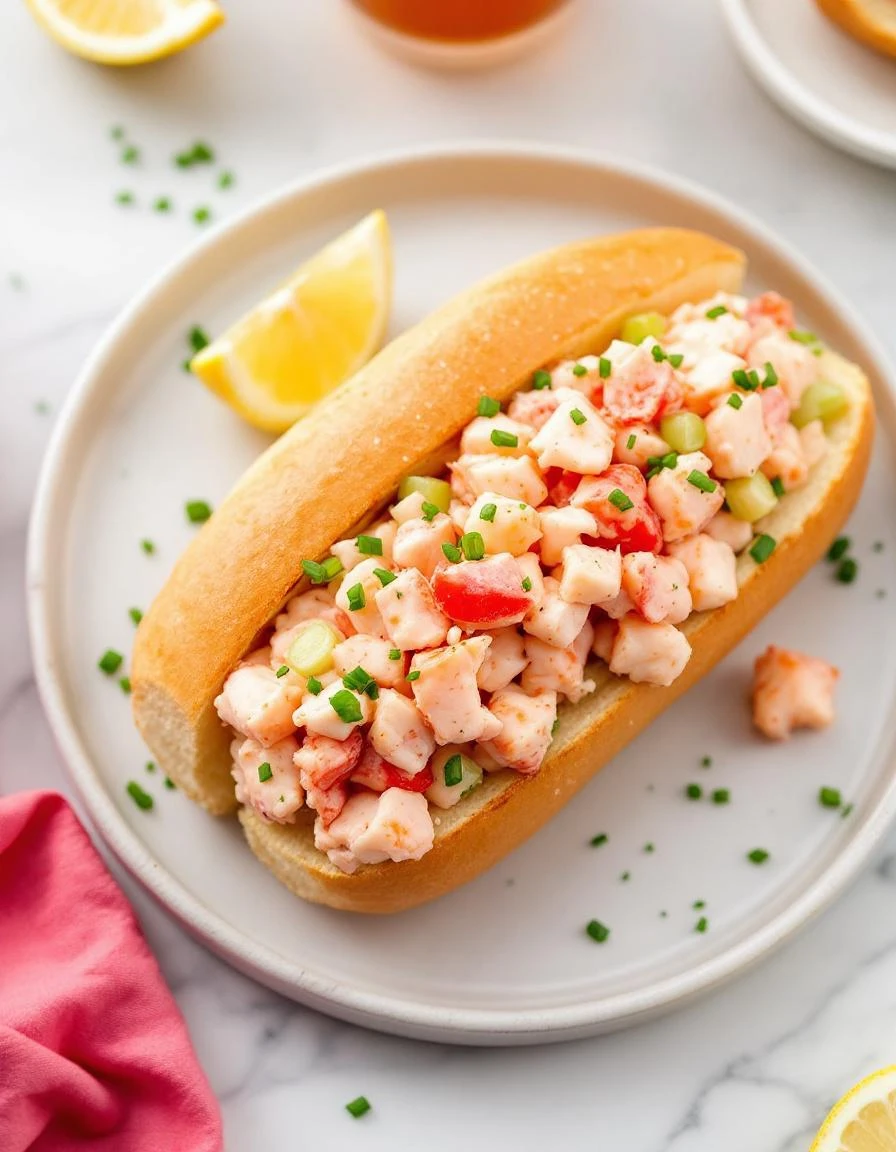
Classic Lobster Roll
Ingredients
Equipment
Method
- If using live lobsters, bring a large pot of salted water to a boil. Add the lobsters and cook for about 8-10 minutes until bright red and cooked through. Remove and let cool slightly. If using pre-cooked lobster meat, skip to the next step.
- Once cooled enough to handle, crack open the lobster shells carefully and extract the meat. Chop the lobster into bite-sized chunks, feeling the moist, firm texture as you work.
- In a mixing bowl, combine the chopped lobster with mayonnaise, lemon juice, chopped herbs, and a pinch of Old Bay or paprika if using. Gently fold everything together until well coated, tasting and adjusting mayo or lemon for balance.
- Slice the brioche buns in half horizontally. Brush the cut sides lightly with melted butter and toast in a skillet or toaster until golden and slightly crispy on the edges, about 2-3 minutes.
- Once toasted, squeeze a little lemon juice onto the buns for extra brightness, then fill each bun generously with the lobster mixture.
- Gently press the top of each bun to settle the filling and serve immediately, allowing the crispy exterior to contrast with the juicy lobster inside for that perfect bite.
Common Mistakes and How to Fix Them
- FORGOT to remove the lobster shell before chopping? Use a pick or your fingers to get every bit.
- DUMPED the lobster meat into the mayo without tasting? Adjust the mayo amount for richness and balance.
- OVER-TORCHED the bun while toasting? Keep a close eye and toast until golden, not burnt.
- MISSED the lemon juice’s brightness? Squeeze fresh lemon right before serving to keep it lively.
Make-Ahead and Storage Tips
- Lobster meat: Cook and remove from shells a day ahead, keep refrigerated for up to 24 hours. Flavors mellow slightly overnight but still good.
- Buns: Toast and butter the buns a few hours before serving. Keep in an airtight container to maintain softness and prevent staling.
- Mayonnaise mixture: Prepare and mix the lobster with mayo, lemon, and herbs a few hours in advance. Store covered in the fridge for up to 4 hours; flavors meld nicely.
- Reheating: Gently rewarm lobster in a warm water bath or microwave in short bursts. The texture might soften but avoid overcooking to keep it juicy.
- Flavor shifts: Lobster flavor becomes slightly muted after a day, so plan on serving within 24 hours for optimal brightness and freshness.
FAQs
1. How can I tell if lobster is fresh?
Fresh lobster will have a briny, ocean scent and a firm, slightly springy texture. If it smells off or overly fishy, it’s best to skip it.
2. What does good lobster meat feel like?
Cooked lobster meat is tender and juicy, with a slight oceanic sweetness. When heated, it should warm through without becoming rubbery.
3. How do I get the perfect bun crunch?
Toasting the bun until golden and slightly crispy on the edges gives that satisfying crunch. If it’s soggy or burnt, adjust the heat or timing.
4. When should I add lemon to the lobster?
Lemon juice brightens the richness with a sharp, tangy note. Squeeze just before serving to keep that fresh, zesty aroma and flavor.
5. How do I reheat lobster without drying it out?
Reheat lobster gently in warm water or short microwave bursts. The meat should feel warm and moist, not rubbery or dried out.

Hi, I’m Lucas Foster, the cook, writer, and everyday food enthusiast behind Totally in the Zone. This space is where my love for cooking meets my belief that food should fit into real life. Not rushed. Not overcomplicated. Just thoughtful, satisfying, and made with intention.